Author Archives: admin
James Keegstra, Dedicated Christian, Free Speech Martyr and Free Thinker Dead at 80
While Keegstra insisted he was defending free speech and the truth, prosecutors argued his poisoning of young, captive minds couldn’t be ignored. After a 70-day trial, the ex-teacher was convicted and fined $5,000 — a decision that was to be overturned by the Alberta Court of Appeal in 1988.
That same year, an arsonist using cans of gasoline tried to torch the ex-teacher’s Eckville home, a move he called “an act of terrorism” and an attempt to muzzle his views.
In December 1990, the country’s supreme court upended the lower court’s ruling by insisting the law was constitutional and the case was sent back to the court of appeal.
A retrial was ordered in April 1991 — a decision many in Keegstra’s hometown decried. ‘I think it’s a silly waste of money … Eckville has been taking lumps for this for the past eight years,’ said the town’s then-mayor Bill Scott. …
Said Keegstra: ‘There’s no freedom of speech in the world — we’re all under Zionist and communist control.’ In the summer of 1992, Keegstra was found guilty and handed a $3,000-fine but the defendant appealed by arguing the judged erred in responding to jurors’ questions. But the Supreme Court of Canada upheld the second conviction and again sent the case back to the Alberta Court of Appeal for sentencing.
By now, Keegstra made his living in Eckville as an auto mechanic —a man his lawyer said had been punished enough, impoverished and vilified by the media. In 1996, he was given a one-year suspended sentence and ordered to perform 200 hours of community service — preferably for victims of discrimination.”
CAFE Submissions in Federal Court of Appeal: Marc Lemire v Canadian Human Rights Commission & Richard Warman
Court File No.: A-456-12
FEDERAL COURT OF APPEAL
BETWEEN:
MARC LEMIRE
Appellant
– and –
CANADIAN HUMAN RIGHTS COMMISSION
THE ATTORNEY GENERAL OF CANADA
RICHARD WARMAN
Respondents
– and –
AFRICAN CANADIAN LEGAL CLINIC
CANADIAN CIVIL LIBERTIES ASSOCIATION
CANADIAN ASSOCIATION FOR FREE EXPRESSION
Interveners
______________________________________________________________________________
MEMORANDUM OF FACT AND LAW OF THE INTERVENER,
THE CANADIAN ASSOCIATION FOR FREE EXPRESSION
______________________________________________________________________________
Solicitor for the Intervener,
The Canadian Association for Free Expression:
Barclay W. Johnson
1027 Pandora Avenue
Victoria, BC V8V 3P6
Phone: 250-418-3255
Fax: 250-370-1655
PART I: STATEMENT OF FACTS:
- In Mr. Lemire’s case, the Canadian Human Rights Tribunal found a single infraction of Section 13(1), in regard to an article on Mr. Lemire’s website that he did not write. The website in question was located on a server in the United States. Similar material is legally available to Canadians from many other servers, located in the United States and other locations. There is no evidence that anybody aside from the complainant downloaded and read the particular article in question.
- In these circumstances, no evidence exists which could possibly tie the obscure article in question to any of the negative effects of hate propaganda described by the Supreme Court of Canada in Canada (Human rights commission) v. Taylor, [1990] 3 SCR 892 and Saskatchewan (Human Rights Commission) v. Whatcott, 2013 SCC 11.
- In considering the case of Whatcott, the Supreme Court of Canada did not have the benefit of expert testimony to review the Kaufman Report, which was a substantial portion of the Cohen Report relied upon by Parliament when passing Section 13(1) of the Canadian Human Rights Act. The testimony of Dr. Michael Persinger, a professor of psychology and biology who testified before the Canadian Human Rights Tribunal on February 22, 2007, demonstrates that the Kaufman Report used an outdated psychological methodology in dealing with the issue of “hate”:
“MR. CHRISTIE: Now, in neuropsychological, do you use the term hate?
DR. PERSINGER: We don’t use the term hate. We use the term aversive stimuli. Hate is a subjective experience and is just simply one of the many labels that people apply to aversive experiences. So we study aversive experiences very, very significantly and frequently including looking at the correlates of brain function. But the term hate is simply one of the many labels that can be applied to an aversive experience.
MR. CHRISTIE: Why wouldn’t you use the term hate in any of your research?
DR. PERSINGER: Primarily because it’s arbitrary. Secondly, because it’s highly subjective, and third very difficult to quantify because it’s a term that’s used so indiscriminately that you really can’t use it effectively. The term aversive stimulus also is not as pejorative. In other words, it doesn’t have connotations.” [See Examination of Dr. Michael Persinger, pg. 2884(3 – 22)]
- Dr. Persinger goes on to explain why the context of the internet is far less likely to generate adverse stimulus than that of a telephone answering machine (as in Taylor) or unsolicited pamphlets delivered door-to-door (as in Whatcott). On the internet, messages are only delivered to willing recipients who specifically request them. In addition, internet message boards (such as Lemire’s website) are interactive and allow readers to respond:
“MR. CHRISTIE: If I were to give you a hypothetical where there are messages in one location which you must go and find, but you also have the option of placing messages equally accessible to the whole world about your own point of view, could you explain how that would affect the ability of an individual to adapt to aversive stimuli?
DR. PERSINGER: I think I understand the context. If, for example, there is an aversive message posted?
MR. CHRISTIE: That’s correct. If I could use a specific example, hoping not to offend anyone if I were to say, I saw a message somewhere that said, all scots are mean, bitter, vicious, dower, penny-pinching, overly aggressive individuals. But I had the option of putting up a message that said that that’s only me and a few other scots and there are some good ones, would that affect the capacity to adapt to what was an aversive stimuli?
DR. PERSINGER: Certainly. There are two options here. One, if it’s a free operant society in the sense that you have choice to read it or not, okay –
MR. CHRISTIE: That’s one premise?
DR. PERSINGER: That’s the important feature. I mean, if you read it and become offended, you also have an opportunity in a free operant setting not to read it and to avoid it. That’s also your choice, if you had that opportunity. On the other hand, you also have a chance to respond to overcome what I guess would be the most appropriate explanation, the categorical error. And a categorical error is over-inclusiveness, to say all scots are this way, all scots are that way. That’s the limit of human language.” [See Examination of Dr. Michael Persinger, pg. 2891(16) – 2892(25)]
PART II: STATEMENT OF ISSUES
- The internet is a new and unique medium, not contemplated by the Supreme Court of Canada in Taylor, and not considered in Whatcott. Section 13(1) of the Canadian Human Rights Act, insofar as it applies to the internet, does not meet the rational connection portion of the Oakes Test, and is therefore not a reasonable limit on Section 2(b) of the Charter of Rights and Freedoms.
PART III: SUBMISSIONS
- It will be respectfully submitted that Section 13(1) of the Canadian Human Rights Act, insofar as it relates to the totally new medium of the internet, does not pass the Oakes Test and is therefore an unconstitutional infringement on the right to freedom of expression. In Canada (Human Rights Commission) v. Taylor, [1990] 3 SCR 892, when Section 13(1) was upheld by the narrowest of margins by the Supreme Court of Canada, the Respondent was accused of disseminating hateful views using the telephone, a medium which the court found was “particularly suited” to the distribution of hate propaganda, and linked to its negative effects:
Simply to label telephone communications as “private”, however, does not justify the conclusion that s. 13(1) is overbroad. As was noted by the CCLA, the telephone is a medium which allows numerous organizations to present information and views to a sizable proportion of the public, whether through active calling or the use of recorded messages. While conversations almost always take place on a one-to-one basis, the overall effect of phone campaigns is undeniably public, and the reasonable assumption to make is that these campaigns can have an effect upon the public’s beliefs and attitudes. Indeed, in the recent case of Nealy, supra, expert evidence presented to the Human Rights Tribunal by Dr. René-Jean Ravault, who also appeared before the Tribunal in Taylor, suggests that the telephone is ideally suited to the effective transmission of prejudicial beliefs, and in this respect the Tribunal stated (at pp. D/6485-86):
This brings us to the second and more specific contextual reason which justifies the compass of the provision and that is the medium through which the hate messages are communicated. We have earlier pointed to the important testimony of Dr. Ravault as to the attractions and advantages of telephone communication to racists and white supremacists in terms of connecting with and attempting to influence those in the community who are for one reason or another bewildered or disaffected by events and forces over which they feel they have no control. Dr. Ravault was also able to demonstrate how the authors of hate messages are able through subtle manipulation and juxtaposition of material to give a veneer of credibility to the content of the messages. The combination of the telephonic medium and the material is, we believe, particularly insidious, because, while a public means of communication is used, it is one which gives the listener the impression of direct, personal, almost private, contact by the speaker, provides no realistic means of questioning the information or views presented and is subject to no counter-argument within that particular communications context.
I agree with the Tribunal’s comments regarding telephone communications and hate propaganda, and find its observations to be helpful in rebutting the contention that the private nature of telephone conversations makes especially difficult the imposition of constitutionally valid limitations upon expressive telephonic activity. Those who repeatedly communicate messages likely to expose others to racial or religious hatred or contempt are seeking to gain converts to their position. The evidence of the Cohen Committee, referred to extensively in Keegstra, and expert testimony given before the Tribunals in both Taylor and Nealy, suggest that hate propaganda often works insidiously to spread a message of intolerance and inequality, and that the telephone is particularly suited to this mode of communication.” [Emphasis added]
- The case at bar is clearly distinguishable in principle as a totally different method of communication. To search out and access a website requires a conscious choice of an internet user to read the content within. Furthermore, the internet is interactive in nature, allowing for response, dialogue, and debate. Finally, the type of content being prohibited is legally available from any number of private internet sources outside of Canada. Without a corresponding prohibition on downloading and reading hate propaganda, the prohibition against Canadians uploading hate propaganda does nothing to make hate propaganda less accessible to Canadians.
- In Taylor, all members of the Supreme Court of Canada acknowledged that Section 13(1) infringed upon the right to freedom of expression, as protected by Section 2(b) of the Charter of Rights and Freedoms. The majority (by a 4-to-3 margin), however, found that this infringement was justified as a reasonable limit under Section 1 of the Charter, in accordance with the Oakes test, described by the court as follows:
The tests for determining whether an infringement on a constitutionally guaranteed right or freedom is reasonable and justified in a free and democratic society were established in R. v. Oakes, supra, and have been adhered to ever since. Two requirements must be satisfied. First, the objective which the limit is designed to serve must be of sufficient importance to warrant overriding a constitutionally protected right. Second, if such an objective is established, the party invoking s. 1 must show that the means chosen to attain the objective are reasonable and demonstrably justified in a free and democratic society. To conclude that the means chosen are reasonable and demonstrably justified, the Court must be satisfied of three things:
1. The measures designed to meet the legislative objective (in this case s. 13(1) of theCanadian Human Rights Act) must be rationally connected to the objective;
2. The means used should impair as little as possible the right or freedom in question; and
3. There must be proportionality between the effect of the measures which limit theCharter right or freedom and the legislative objective of the limit on those rights. This involves balancing the invasion of rights guaranteed by theCharter against the objective to which the limitation of those rights is directed.
- The majority decision, penned by Chief Justice Dickson, found that Section 13(1) could be justified under the Oakes Test because it had the valid objective of preventing harm:
“It can thus be concluded that messages of hate propaganda undermine the dignity and self-worth of target group members and, more generally, contribute to disharmonious relations among various racial, cultural and religious groups, as a result eroding the tolerance and open-mindedness that must flourish in a multicultural society which is committed to the idea of equality.”
Section 13(1) can only pass the Oakes Test insofar as it is rationally connected to preventing the aforementioned individual and social harms of hate propaganda.
- In 2001, Parliament passed subsection 13(2) of the Canadian Human Rights Act to extend subsection 13(1) to apply to the internet:
“(2) For greater certainty, subsection (1) applies in respect of a matter that is communicated by means of a computer or a group of interconnected or related computers, including the Internet, or any similar means of communication, but does not apply in respect of a matter that is communicated in whole or in part by means of the facilities of a broadcasting undertaking.”
Therefore, Lemire is a case of first instance, the first constitutional challenge of Section 13 in the context of the internet. In this context, it will be respectfully submitted that Section 13(1) has no rational connection to the protection of dignity and self-worth of target group members, nor to the prevention of social harms associated with hate propaganda.
Dignity and Self-Worth of Target Group Members:
- In regard to the harm caused to members of the target group, the same reasoning cannot and does not apply to the internet as would apply to a publicly-advertised telephone hotline. In the context of the internet, material is transmitted at the request of the recipient. Internet users are free to choose from a wide variety of sources, originating around the world and certainly not limited to Canada. In Lemire’s case, the material was never in fact located “in Canada.” A Canadian such as Richard Warman had to seek the material in the United States to be offended. If and when applied to the internet, Section 13(1) of the Canadian Human Rights Act empowers the Tribunal to award “compensation” to the complainant for communication solicited by and deliberately downloaded by the complainant himself. The content is not even “in Canada” until requested. The act of making data available to those who seek it out is tantamount to a private conversation, not to the public dissemination of hate propaganda to those sincerely wishing to avoid it. The communication only occurs when requested by the recipient and is not normally available to anyone else. It is certainly distinct from the active communication of ideas through public speech to people who might or might not want to hear them. It is also distinguishable from a communication broadcast to all who have not requested it.
- In the recent case of Saskatchewan (Human Rights Commission) v. Whatcott, 2013 SCC 11, the Supreme Court of Canada upheld the hate speech provision in Saskatchewan’s Human Rights Act on the grounds that it prohibits only public and not private communications:
“[83] … The prohibition only limits the display or publication of representations, such as through newspapers or other printed matter, or through television or radio broadcasting. In other words, it only prohibits public communications of hate speech. The Saskatchewan legislature does not restrict hateful expression in private communications between individuals. While one would expect private expressions of hateful messages might inflict significant emotional harm, they do not impact the societal status of the protected group.”
- The application of Section 13(1) of the Canadian Human Rights Act to private conversations would not be a reasonable limit on freedom of expression under the Oakes Test for the simple reason that policing private conversations between consenting adults is not rationally connected to the objective of shielding target groups from hate propaganda. Even more so, it is not proportional to the objective. Like most private conversations, the groups know nothing about it to be insulted, defamed, or injured. Those individuals who were not party to the conversation would not be aware of any effects of hate propaganda in the first place; therefore, banning the conversation would not protect them from any harmful effects. The application of Section 13(1) to the internet is likewise not rationally connected to the protection of target groups because the internet, by its very nature, involves choice on the part of the recipient. Just as criticized groups can choose not to engage in private conversation with individuals who disseminate hate propaganda, they can choose not to visit websites which disseminate hate propaganda.
- In the defamation case of Crookes v. Newton, 2011 SCC 47, the Supreme Court of Canada made clear that merely making something available does not amount to “communication”:
“Hyperlinks thus share the same relationship with the content to which they refer as do references. Both communicate that something exists, but do not, by themselves, communicate its content. And they both require some act on the part of a third party before he or she gains access to the content.” [See Crookes v. Newton para. 30, emphasis added]
The Supreme Court of Canada relied upon an extensive body of law in coming to this conclusion, including constitutional principles stemming from the Charter of Rights and Freedoms. Justice Abella, writing for the majority, found that the implementation of the Charter, together with technological advancement, had increased the prevalence of freedom of expression considerations in defamation cases:
“Pre-Charter approaches to defamation law in Canada largely leaned towards protecting reputation. That began to change when the Court modified the “honest belief” element to the fair comment defence in WIC Radio Ltd. v. Simpson, 2008 SCC 40, [2008] 2 S.C.R. 420, and when, in Grant, the Court developed a defence of responsible communication on matters of public interest. These cases recognize the importance of achieving a proper balance between protecting an individual’s reputation and the foundational role of freedom of expression in the development of democratic institutions and values (Grant, at para. 1; Hill, at para. 101) … Interpreting the publication rule to exclude mere references not only accords with a more sophisticated appreciation of Charter values, but also with the dramatic transformation in the technology of communications.” [See Crookes v. Newton para. 32, emphasis added]
- Like the defendant in Crookes v. Newton, Mr. Lemire did not write the content in question, nor did he promote or advertise it. He merely made it available for those who wished to engage in a private conversation or debate.
- In Crookes v. Yahoo, 2007 BCSC 1325, the BC Supreme Court found at paragraph 26 of its decision that “communication” of defamatory content takes place at the time such content is downloaded, not when it is uploaded to a web server:
“[26] With respect to internet communications, the site of the alleged defamation is where the damage to reputation occurs: Dow Jones Co. Inc. v. Gutnick, (2002), 194 Aust. L.lR. 433 (H.C.); Barrick Gold Corp. v. Blanchard and Co., [2003] O.J. No. 5817 (S.C.). It is when a person downloads the impugned material from the internet that the damage to the reputation may be done, and it is at that time and place that the tort of defamation is committed.” [Emphasis added]
- Thus, it is clear that if the message causes group defamation (as set out in Section 13(1)), it is Warman’s download that committed it. The presence of hate propaganda on the internet does not necessarily affect the dignity and self-worth of target group members. Such material will only be seen by those who seek it out.
Social Harms Associated with Hate Propaganda:
- Likewise, imposing punitive sanctions against the content of the internet is not rationally connected to the legislative objective of preventing the social harms associated with hate propaganda. There is no rational justification for prohibiting a person from making available an expression which is readily available to someone who seeks it elsewhere by the same means. If it is hate speech and readily available, imposing sanctions on a Canadian does not connect to or advance the prohibition of availability because an American source which is quite legal is just as available and beyond the reach of our law. This would be and is a ridiculous law against availability from a Canadian. It is equivalent to a codex of books prohibited to Catholics which are freely available to Protestants, with one serious exception – the Protestants can go to jail for making it available.
- The internet is huge, complex, repetitive, and passive unless sought out by the requesting recipient. Any and all of the content alleged against Marc Lemire is available from a wide range of other sources made available by Americans in America, where it is perfectly legal, protected by the First Amendment. (See R.A.V. v. City of St. Paul, 505 U.S. 377 (1992) in the U.S. Supreme Court where, by a 9-to-0 margin, the Court struck down the Minnesota hate law, a content-based restriction on freedom of expression. This case occurred after Taylor was decided.)
- It can never be a rational objective to punish the expression by Canadians of words, phrases, content, analysis, or opinions which are readily available from others who are not Canadians in the same place (the internet), at the same time, by the same means, and legally available to all other Canadians. This makes it illegal for a Canadian to make available to Canadians what is just as available to other Canadians from a foreign source, just as easily. Such cannot be a pressing and substantial concern, and is not rationally connected to the legislative objective of shielding vulnerable groups from the effects of hate propaganda. It would only be rationally connected if the prohibition had the effect of making the messages unavailable from any source.
- Likewise, the application of Section 13(1) to the internet is not proportional, but impractical, unfair, and based upon irrational considerations. This is because the same effect is as readily available from other sources on the internet. Further, the effects are not delivered by anyone to another against their will. It is totally irrational to punish expression because of the national origin of the speaker. It is more so to punish expression which is not communicated to anyone in Canada unless requested specifically by the pretended victim.
- In the recent case of Whatcott, the Supreme Court of Canada applied its previous reasoning in Taylor to a situation involving pamphlets distributed door-to-door. The court unanimously clarified that a legal inquiry into the issue of hate speech must focus on the likely effects of the hate speech in question:
“[52] An assessment of whether expression exposes a protected group to hatred must therefore include an evaluation of the likely effects of the expression on its audience. Would a reasonable person consider that the expression vilifying a protected group has the potential to lead to discrimination and other harmful effects? This assessment will depend largely on the context and circumstances of each case.
[53] For example, in the normal course of events, expression that targets a protected group in the context of satire, or news reports about hate speech perpetrated by someone else, would not likely constitute hate speech. Representations made in private settings would also not be captured by provisions prohibiting publication, display or broadcast of the expression, such as in s. 14(1)(b) of the Code. It may also make a difference whether the expression contains a singular remark that comes close to violating the prohibition, or contains a multitude of or repeated, delegitimizing attacks.
[54] Dickson C.J. emphasized this need to focus on the effects of the expression in his reasons in Taylor. He noted that “the purpose and impact of human rights codes is to prevent discriminatory effects rather than to stigmatize and punish those who discriminate” (p. 933 (emphasis added)). The focus of the prohibition against hate propaganda in s. 13(1) of the CHRA is “solely upon [its] likely effects” (p. 931). Dickson C.J. reasoned that the preoccupation with the discriminatory effects was understandable, given that systemic discrimination is more widespread than intentional discrimination. Tribunals must focus on the likely effects of impugned expression in order to achieve the preventive goals of anti-discrimination statutes.”
- In light of the Supreme Court’s reasoning in Whatcott, it will be respectfully submitted that the application of Section 13(1) to the internet is not rationally connected to the prevention of the social harms of hate propaganda. It is indisputable that alleged hate propaganda of all kinds is available on the internet. Much of this material originates outside of Canada. Section 13(1) does nothing to prevent Canadians from making the choice to download hateful material, which many Canadians (including the complainant in this case) have done.
- The dissemination of hate propaganda on the internet is less likely to attract Canadians to its cause than it is to provoke critical assessment and response. Punitive sanctions against Canadians who make such content available do not make the propaganda less available or less attractive. Internet users have free reign to disagree and object to material they read on a website, and Mr. Lemire’s website (a discussion forum) was specifically designed with this purpose in mind. In any event, the prosecution of Canadians who merely make material available on the internet has no impact on the ability of other Canadians to download hateful material, and therefore no rational connection to preventing social harms caused by such material merely being posted.
- For the aforementioned reasons, it will be respectfully submitted that Section 13(1) of the Canadian Human Rights Act, insofar as it applies to the internet, is not rationally connected to the objectives set out in Taylor, and is therefore not a “reasonable limit” to freedom of expression in accordance with Section 1 of the Charter of Rights and Freedoms.
- In conclusion, it is respectfully submitted that the Supreme Court in Taylor did not pronounce on the constitutionality of Section 13(1) in all contexts, but upheld it by the narrowest of margins using Section 1 of the Charter analysis in telephone answering machine context, where no response or debate is possible. Such analysis does not have any relevant applicability to the totally different context of the then-unforeseeable internet and is no longer valid in this context. Using the same Section 1 analysis and principles, Section 13(1) does not pass constitutional muster.
PART IV: STATEMENT OF ORDER SOUGHT
- The Canadian Association for Free Expression requests an order as follows:
“A declaration that Section 13(1) of the Canadian Human Rights Act, insofar as it relates to the internet, is an unreasonable violation of Section 2(b) of the Charter not saved by Section 1 thereof, and therefore inoperative pursuant to Section 52 of the Constitution Act, 1982.”
ALL OF WHICH IS RESPECTFULLY SUBMITTED this ___ day of May, 2013.
|
_______________________________ BARCLAY W. JOHNSON Barrister & Solicitor 1027 Pandora Avenue Victoria, BC V8V 3P6
Telephone: (250) 418-3255 Fax: (250) 370-1655 Counsel for the Intervener Canadian Association for Free Expression Inc.
|
Christian Football Player Denounced by Stampeders for Objecting to First Openly Homosexual NFL Player
The fanatical establishment hatred of Christianity has claimed another victim — actually several victims. A Calgary Stampeders wide receiver who objected to the hiring by the NFL of an open homosexual has been fined and denounced by his own team. Other players who criticized this past weekend’s selection by the St. Louis Rams of homosexual Michael Sam (complete with a hug and kiss from his White lover) have also been fined and one has been sent to a Soviet-style “re-education” camp.
CAFE has warned that the homosexual agenda which now seems triumphant in Canada and the U.S. will severely restrict freedom of religion and freedom of speech. If you’re not a fan of buggery, you’d better shut up.
CBC News (May 13, 2014) reported: “Calgary Stampeders receiver Maurice Price has been fined an undisclosed amount by the CFL for inappropriate comments about the NFL’s St. Louis Rams draft pick, Michael Sam. ‘The CFL will not tolerate discrimination of any kind,” said CFL commissioner Mark Cohon. ‘Whether it’s race, religion or sexual preference, our values are of acceptance and equality. We fully support openly gay athletes in our league, and in the sports community in general.’” Well, that’s not quite true, Mr. Cohon. You are quite ready to silence and persecute players who proclaim their Christian faith. So much for inclusiveness and tolerance. Believing Christians seem to be neither ‘accepted’ nor tolerated under your regime!
The CBC report continued: “Calgary Stampeders’ Maurice Price now faces a fine after ‘inappropriate negative comments on social media’ towards St. Louis Rams defensive end Michael Sam and openly gay professional athletes.” There’s that vacuous politically correct term of condemnation “inappropriate.” Cohon should have been honest and admitted Price is being punished because he is a professed Christian.
The story continued: “Sam is the first openly gay player to be drafted by an NFL team.’My faith won’t let me accept what took place over the weekend. Sorry, not sorry! #AdamAndEve #NotAdamAndAdam,’ tweeted Price.
‘And it’s highly disturbing that under the current constitution individuals have been fined for verbalizing their thoughts.'” Indeed it is! Homosexuals are the new privileged minority du jour. People who might object to publish flaunting of homosexuality, whether for personal or religious reasons, had better keep their mouths shut in the new grim politically correct order. Price is a Negro but this status is trumped by homosexuality in the hierarchy of minority privilege.

His own team rudely hurled Price under the bus and firmly solidified its pro-homosexual, anti-Christian credentials: “The Stampeders also condemned the tweets, saying the team was outraged by the offensive comments. ‘The comments are repugnant and in no way reflect the organization’s views or values,’ the team tweeted Monday. Price, an African-American athlete who was born in Orlando, Fla., has played the last two seasons in Calgary.” Of course, Price never said he was speaking for anyone but himself.
However, Price isn’t the only victim of the triumphant homosexual agenda: “There have been other disciplinary actions relating to Sam:
- The CFL fined Montreal Alouettes wide receiver Arland Bruce in February for urging Sam on social media to “submit fully to God.”
- Winnipeg Blue Bombers defensive tackle Bryant Turner Jr. was fined for a tweet saying “Michael Sam locker-room gonna come with complimentary robes.”
- In the NFL, Miami Dolphins safety Don Jones was fined an undisclosed amount and will undergo educational training after he tweeted “OMG” and “Horrible” shortly after Sam’s name was announced Saturday. The tweets were taken down a short time later.
Jones apologized for his comments and described them as inappropriate. The Dolphins said Jones has been excused from all team activities until he completes training related to his comments.
Former Mississippi basketball player Marshall Henderson also tweeted that he did not agree with ESPN’s coverage of Sam at the draft and was going to boycott SportsCentre until the network stopped running the footage.”
“Educational retraining?” It sounds like Maoist re-education and indoctrination — all for expressing a politically incorrect thought. And this latter atrocity in the supposed “land of the free.”
______________________________
____ Let the management of the Calgary Stampeders know what you think of their anti-Christian persecution of Maurice Price. You can phone or write to them or e-mail them online:
Calgary Stampeders,
1817 Crowchild Tr., NW
Calgary, AB T2M 4R6
Or reach them by phone:
Main switchboard: 403-289-0205
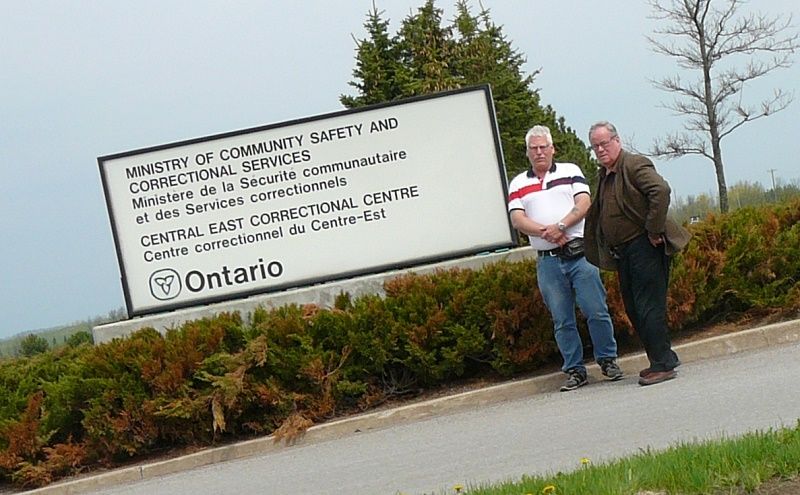
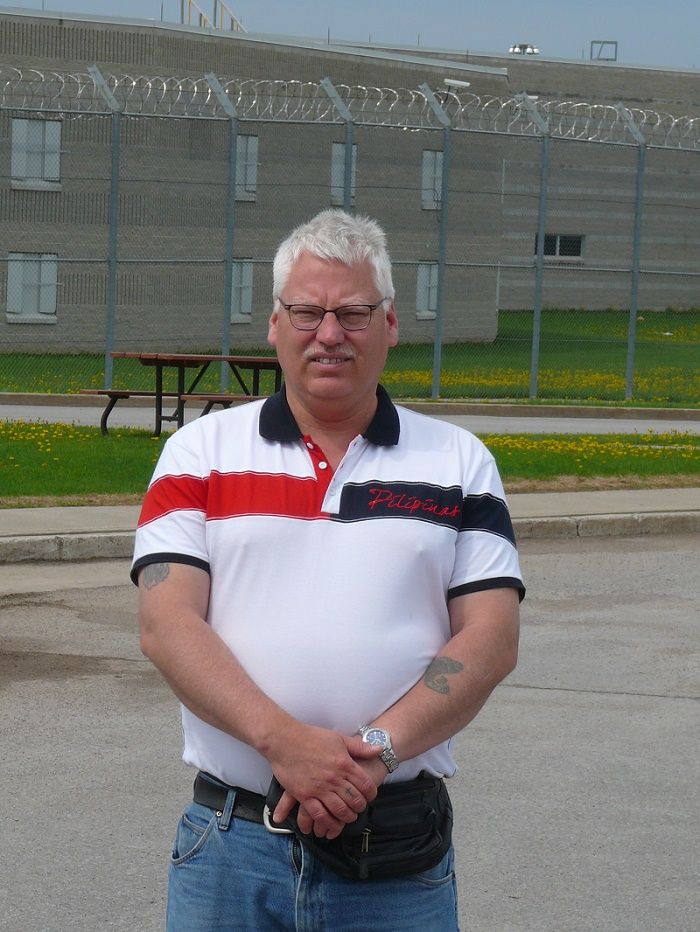
Fromm & Whatcott Visit Political Prisoner Brad Love

“The real Canada is not what newspapers tell their readers about,” Mr. Love told his visitors. Free speech is fine, they say, if you speak your mind in the Ukraine. Look at the favourable publicity for all those protests in the Ukraine. But not here. If you criticize immigration or Jewish groups, they give you the Brad Love treatment,” he explained.


Paul Fromm is Back With “The Fighting Side of Me” Radio Show Daily at Midnight; 8:00 a.m. and 4:00 p.m.
Paul Fromm

Paul Fromm earned his Bachelor of Arts and Master of Arts degrees in English Language and Literature from the University of Toronto and a Bachelor of Education at the University of Toronto. He did post graduate work at Webster College in St. Louis, Missouri and Waterloo University in Waterloo, Ontario, Canada. He spent 25 years as an instructor in the Ontario, Canada public school system. He is the director of the Canadian Association for Free Expression and a longtime advocate for free speech. He is widely traveled and lectures at events throughout the United States and Canada.
This Week:
* More outrages in Canada’s Temporary Foreign Workers’ Programme — Canadians fired; foreigners hired
* Houston’s homosexual mayor imposes unisex washrooms
* Sharia “honour killings” in Pakistan. Do we want this “diversity” here?
* “Micro-aggression” the latest anti-White censorship campaign on North American campuses
* Update on the Terry Tremaine free speech case in Canada
And MUCH MUCH MORE!
| Monday | Tuesday | Wednesday | Thursday | Friday | Saturday | Sunday | ||
| 12:00 AM | Fightin’ Side of Me / Paul Fromm | Fightin’ Side of Me / Paul Fromm | Fightin’ Side of Me / Paul Fromm | Fightin’ Side of Me / Paul Fromm | Fightin’ Side of Me / Paul Fromm | Fightin’ Side of Me / Paul Fromm | Fightin’ Side of Me / Paul Fromm | |
| 12:30 AM | ||||||||
| 1:00 AM | Old Time Radio Show | Amos and Andy | Old Time Radio | The Lone Ranger | Little Annie Oakley | Old Time Radio | Old Tme Radio | |
| 1:30 AM | Music | Music | Music | Music | Music | Music | Music | |
| 2:00 AM | Stories from Grandma | Stories from Grandma | Stories from Grandma | Stories from Grandma | Stories from Grandma | Stories from Grandma | ||
| 2:15 AM | Global Minority Report | Global Minority Report | Global Minority Report | Global Minority Report | Global Minority Report | Global Minority Report | ||
| 2:30 AM | This is The Klan / Robb and Pendergraft | The “Every Day Joe” Show / Bryan Morgan | American Hero Classics | Bob’s Prepper show | On the Beat | Music | ||
| 3:00 AM | Music | Under the Gun / Dave Long | Music | Music | Christian Revival Center Classics | |||
| 3:30 AM | Sword of Truth / Randy Gray | Music | Radio New America / Billy Roper | Political WatchDog / Thomas Robb | ||||
| 4:00 AM | Money Matters / Scotch Templeton | On the Move / Movement News / Roper | Music | Cross Examine / Jason Robb | Old Time Radio | OLD Time Radio | Music | |
| 4:30 AM | Music | Music | White Women’s Perspective | Music | Old Tme Radio | |||
| 5:00 AM | The White Side / Rachel May Pendergraft | Christian Revival Center Classics | Billy’s friend | Music | American Hero Classics | |||
| 5:30 AM | Music | Music | Christian Revival Center Classics | Sunday, Around the dinner Table | ||||
| 6:00 AM | Youth Focus | Music | Teen Talk / Andrew Thomas | Christian Revival Center Classics | Music | |||
| 6:30 AM | Old Time Radio Show | Music | Music | Music | ||||
| 7:00 AM | Music | Old Time Radio Show | Old Time Radio | Music | ||||
| 7:30 AM | Music | Music | Old Time Radio | |||||
| 8:00 AM | Fightin’ Side of Me / Paul Fromm | Fightin’ Side of Me / Paul Fromm | Fightin’ Side of Me / Paul Fromm | Fightin’ Side of Me / Paul Fromm | Fightin’ Side of Me / Paul Fromm | Fightin’ Side of Me / Paul Fromm | Fightin’ Side of Me / Paul Fromm | |
| 8:30 AM | ||||||||
| 9:00 AM | Old Time Radio Show | Amos and Andy | Old Time Radio | The Lone Ranger | Little Annie Oakley | Old Time Radio | Old Tme Radio | |
| 9:30 AM | Music | Music | Music | Music | Music | Music | Music | |
| 10:00 AM | Stories from Grandma | Stories from Grandma | Stories from Grandma | Stories from Grandma | Stories from Grandma | Stories from Grandma | ||
| 10:15 AM | Global Minority Report | Global Minority Report | Global Minority Report | Global Minority Report | Global Minority Report | Global Minority Report | ||
| 10:30 AM | This is The Klan / Robb and Pendergraft | The “Every Day Joe” Show / Bryan Morgan | American Hero Classics | Bob’s Prepper show | On the Beat | Music | ||
| 11:00 AM | Music | Under the Gun / Dave Long | Music | Music | Christian Revival Center Classics | Word of Truth LIVE Broadast Christian Revival Center | ||
| 11:30 AM | Sword of Truth / Randy Gray | Music | Radio New America / Billy Roper | Political WatchDog / Thomas Robb | ||||
| 12:00 PM | Money Matters / Scotch Templeton | On the Move / Movement News / Roper | Music | Cross Examine / Jason Robb | Old Time Radio | OLD Time Radio | Music | |
| 12:30 PM | Music | Music | White Women’s Perspective | Music | Old Tme Radio | |||
| 1:00 PM | The White Side / Rachel May Pendergraft | Christian Revival Center Classics | Billy’s friend | Music | American Hero Classics | |||
| 1:30 PM | Music | Music | Christian Revival Center Classics | Sunday, Around the dinner Table | ||||
| 2:00 PM | Youth Focus | Music | Teen Talk / Andrew Thomas | Christian Revival Center Classics | Music | |||
| 2:30 PM | Old Time Radio Show | Music | Music | Music | ||||
| 3:00 PM | Music | Old Time Radio Show | Old Time Radio | Music | ||||
| 3:30 PM | Music | Music | Old Time Radio | |||||
| 4:00 PM | Fightin’ Side of Me / Paul Fromm | Fightin’ Side of Me / Paul Fromm | Fightin’ Side of Me / Paul Fromm |
…
| Monday | Tuesday | Wednesday | Thursday | Friday | Saturday | Sunday | |
| 8:00 AM | Fightin’ Side of Me Paul Fromm | Fightin’ Side of Me Paul Fromm | Fightin’ Side of Me Paul Fromm | Fightin’ Side of Me Paul Fromm | Fightin’ Side of Me Paul Fromm | Fightin’ Side of Me Paul Fromm | Music |
| 8:30 AM | |||||||
| 9:00 AM | Old Time Radio Show | Amos and Andy | Old Time Radio | The Lone Ranger | Little Annie Oakley | Old Time Radio | Old Tme Radio |
| 9:30 AM | Music | Music | Music | Music | Music | Music | Praise Music for All Ages |
| 10:00 AM | Stories from Grandma | Stories from Grandma | Stories from Grandma | Stories from Grandma | Stories from Grandma | Stories from Grandma | |
| 10:15 AM | Stories of our People | Stories of Our People | Stories of our People | Stories of our People | Stories of Our People | Stories of our People | |
| 10:30 AM | This is The Klan Robb/ Pendergraft | Making of a Hero | American Hero Classics | Bob’s Prepper show | On the Beat | Music | |
| 11:00 AM | Music | Series | Music | Music | Christian Revival Center Classics | ||
| 11:30 AM | Sword of Truth Randy Gray | Music | Radio New America Billy Roper | Political WatchDog Thomas Robb | |||
| 12 Noon | Money Matters Scotch Templeton | On the Move (News) | Music | Cross Examine Jason Robb | Old Time Radio | OLD Time Radio | Praise Music |
| 12:30 PM | Music | Music | White Women’s Perspective | Music | Old Tme Radio | ||
| 1:00 PM | The White Side Rachel May | Christian Revival Center Classics | Freedom Forum | Music | American Hero Classics | ||
| 1:30 PM | Music | Music | Christian Revival Center Classics | Sunday, Around the dinner Table (Talk) | |||
| 2:00 PM | Youth Focus | Music | Teen Talk / Andrew Thomas | Christian Revival Center Classics | Music | ||
| 2:30 PM | Old Time Radio Show | Music | Music | Music | |||
| 3:00 PM | Music | Old Time Radio Show | Old Time Radio | Music | |||
| 3:30 PM | Music | Music | Old Time Radio | ||||
| 4:00 PM | Fightin’ Side of Me Paul Fromm | Fightin’ Side of Me Paul Fromm | Fightin’ Side of Me Paul Fromm | Fightin’ Side of Me Paul Fromm | Fightin’ Side of Me Paul Fromm | Fightin’ Side of Me Paul Fromm | Music |
| 4:30 PM | |||||||
| 5:00 PM | Old Time Radio Show | Amos and Andy | Old Time Radio | The Lone Ranger | Little Annie Oakley | Old Time Radio | Old Tme Radio |
| 5:30 PM | Music | Music | Music | Music | Music | Music | Praise Music for All Ages |
| 6:00 PM | Stories from Grandma | Stories from Grandma | Stories from Grandma | Stories from Grandma | Stories from Grandma | Stories from Grandma | |
| 6:15 PM | Stories of Our people | Stories of Our People | Stories of Our People | Stories of Our People | Stories of Our People | Stories of Our People | |
| 6:30 PM | This is The Klan Robb/ Pendergraft | Making of a Hero | American Hero Classics | Bob’s Prepper show | On the Beat | Music | |
| 7:00 PM | Music | Series | Music | Music | Christian Revival Center Classics | (PENDING) Word of Truth LIVE Broadast Christian Revival Center | |
| 7:30 PM | Sword of Truth Randy Gray | Music | Radio New America Billy Roper | Political WatchDog Thomas Robb | |||
| 8:00 PM | Money Matters / Scotch Templeton | On the Move Movement News | Music | Cross Examine Jason Robb | Old Time Radio | OLD Time Radio | Praise Music |
| 8:30 PM | Music | Music | White Women’s Perspective | Music | Old Tme Radio | ||
| 9:00 PM | The White Side Rachel May Pendergraft | Christian Revival Center Classics | Freedom Forum | Music | American Hero Classics | ||
| 9:30 PM | Music | Music | Christian Revival Center Classics | Sunday, Around the dinner Table (Talk) | |||
| 10:00 PM | Youth Focus | Music | Teen Talk / Andrew Thomas | Christian Revival Center Classics | Music | ||
| 10:30 PM | Old Time Radio Show | Music | Music | Music | |||
| 11:00 PM | Music | Old Time Radio Show | Old Time Radio | Music | |||
| 11:30 PM | Music | Music | Old Time Radio | ||||
| 12:00 AM | Fightin’ Side of Me Paul Fromm | Fightin’ Side of Me Paul Fromm | Fightin’ Side of Me Paul Fromm | Fightin’ Side of Me Paul Fromm | Fightin’ Side of Me Paul Fromm | Fightin’ Side of Me Paul Fromm | Music |
| 12:30 AM | |||||||
| 1:00 AM | Old Time Radio Show | Amos and Andy | Old Time Radio | The Lone Ranger | Little Annie Oakley | Old Time Radio | Old Tme Radio |
| 1:30 AM | Music | Music | Music | Music | Music | Music | Praise Music for All Ages |
| 2:00 AM | Stories from Grandma | Stories from Grandma | Stories from Grandma | Stories from Grandma | Stories from Grandma | Stories from Grandma | |
| 2:15 AM | Stories of our People | Stories of Our People | Stories of Our People | Stories of Our People | Stories of Our People | Stories of Our People | |
| 2:30 AM | This is The Klan Robb/ Pendergraft | Making of a Hero | American Hero Classics | Bob’s Prepper show | On the Beat | Music | |
| 3:00 AM | Music | Series | Music | Music | Christian Revival Center Classics | ||
| 3:30 AM | Sword of Truth Randy Gray | Music | Radio New America Billy Roper | Political WatchDog / Thomas Robb | |||
| 4:00 AM | Money Matters Scotch Templeton | On the Move Movement News | Music | Cross Examine Jason Robb | Old Time Radio | OLD Time Radio | |
| 4:30 AM | Music | Music | White Women’s Perspective | Music | Old Tme Radio | ||
| 5:00 AM | The White Side Rachel May | Christian Revival Center Classics | Freedom Forum | Music | American Hero Classics | ||
| 5:30 AM | Music | Music | Christian Revival Center Classics | Sunday, Around the Dinner Table (Talk) | |||
| 6:00 AM | Youth Focus | Music | Teen Talk / Andrew Thomas | Christian Revival Center Classics | Music | ||
| 6:30 AM | Old Time Radio Show | Music | Music | ||||
| 7:00 AM | Music | Old Time Radio Show | Old Time Radio | Music | Music | ||
| 7:30 AM | Music | Music | Old Time Radio | ||||
TORONTO. May 16, 2014. About 30 protesters held a noon-time vigil outside the Law Society of Upper Canada in downtown Toronto today. An eclectic group of Christian spokesmen and free speech supporters joined by the Canadian Association for Free Expression denounced a recent decision by the Law Society of Upper Canada (LSUC) to not recognize graduates of the planned Trinity Western University Law School because of their fundamentalist Christian principles.
Trinity Western University is an evangelical Christian college in Langley, BC. It requires faculty and students to pledge to follow traditional Christian morality including refraining from sex outside of marriage. Critics say this pledge discriminates against homosexuals. No one is required to attend Trinity Western University. There is a wide variety of secular alternatives.
The proselytizers of the homosexual agenda who have led a campaign, first to deny graduates of this university the right to teach in B.C.(eventually overturned by the Supreme Court of Canada) and then to deny the planned law school legal accreditation (the move failed) now have pressured provincial law societies in to declare that graduates of the law school will not be granted accreditation. So far, the anti-Christian campaign has succeeded in Nova Scotia and Ontario.
One of the protest leaders Rev. David Lynn, founder of Christian Positive Space (www.christianpositivespace.com) said much of Ontario’s curriculum is “biblephobic.” He noted that well over 70 per cent of Canada is Christian. “We say to the Law Society of Upper Canada: ‘You have to be more tolerant. You are saying Christians do not have the right to practise law in Ontario,. You are anti-Canadian.”
Gary McHale, an activist who led protests against the failure by the Ontario Provincial Police to enforce court injunctions against radical Indians who occupied and still occupy private (now Crown) land in Caledonia, Ontario, noted there was an effort to ban graduates of Trinity Western from teaching in British Columbia. “The case went all the way to the Supreme Court of Canada and they ruled that religious views should not exclude a person from the classroom. Now, the Law Society of Upper Canada wants to exclude Christians from the practise of law.”
The story of Mr. McHale’s battle against politically correct policing — soft on native thugs occupying land in defiance of an injunction, and harsh on White resident merely driving through their own community or trying to counter-protest the occupation — has just been published by Freedom Press (www.freedompress.ca). It is entitled Victory In the No-Go Zone: Winning the Fight Against Two-Tier Policing.
A contingent from FreedomPress, led by President Tristan Emmanuel, also attended the protest.
Bill Whatcott spoke of his campaign to keep radical homosexual material — including discussions of anal sex — excluded from elementary school in Saskatchewan. His leafleting led to human rights complaints, a conviction and a $17,5000 fine. He fought this all the way to the Supreme Court which overturned the Saskatchewan Court of Appeals reversing Mr. Whatcott’s conviction. The Supreme Court , “and shame on them,” Mr. Whatcott said, upheld anti-Christian speech censorship and ruled that truth, intent, sincerely held religious beliefs or political opinions were irrelevant. “It was determined that making statements like this is hate. They acknowledged that although my flyers might be factual, if used for a hateful purpose — and they weren’t — advocating traditional Christian views on sexual behaviour could be censored. I have been left with over $100,000 in legal costs” payable to the Saskatchewan Human Rights Commission.
Paul Fromm Director of the Canadian Association for Free Expression, called the Law Society of Upper Canada “Christian haters.”
“The issue here,” he said, “is the decision by the Law Society of Upper Canada to not allow graduates of the planned Trinity Western University Law School to practise in the Province of Ontario. The ironic thing is that Trinity Western has not even opened its law school yet and hasn’t graduated a single student. That is the definition of bigotry — to make a decision before the facts are in. The LSUC is very much under the control of the homosexual lobby. The privileges of homosexual trump the rights of Christians. It’s wrong. And we’re standing here for free speech.”
Click on the picture below for the link to hear Paul Fromm’s remarks.
Political Prisoner Brad Love to Be Freed, June 15 — Still Not Allowed to Send Mail From Prison

Free Speech Meeting in Toronto, 2009.
Canadian Association for Free Expression
Box 332,
Rexdale, Ontario, M9W 5L3
Ph: 905-566-4455; FAX: 905-566-4820
Paul Fromm, B.Ed, M.A. Director
April 10, 2014
Malcolm Ross attended the second day of the trial as an observer. Paul Fromm in foreground
Happiness
Happiness may seem a strange topic for me to raise in my report to you. However, on January 27, I was standing in the lobby of the Courthouse in St. John, waiting for John Hughes, lawyer for the McCorkill Estate, and CAFÉ’s lawyer Andy Lodge. The hearing in regards to efforts by powerful forces to hijack the McCorkill will’s bequest to the National Alliance as “contrary to public policy” was over and the decision in the hands of the judge. We were in the middle of a media scrum. With me was former teacher Malcolm Ross and his brother. I saw the lawyers for the four parties seeking to overturn the will walk by.
I wondered whether they were happy. I wondered this because beside me stood a man who deep down is serene and happy. Twenty years ago, Malcolm Ross was removed from the classroom in Moncton because of his political and religious views published in books, booklets and letter-to-the-editor on his own time. A “human rights” (they do not include free speech) tribunal had ruled that Mr. Ross’s very presence, as a conservative, anti-Zionist Christian, created a “poisoned” environment. The person complaining against him was the daughter of a prominent Atlantic Jew. She claimed some students had made anti-Semitic comments to her. Now, she did not attend the school where Malcolm Ross taught. He had not taught her. She had never met him, Nor had he taught the students who allegedly made comments to her.
Neither reason nor common sense mattered. Mr. Ross had poisoned the environment and he was out. The case, argued by Doug Christie, went all the way to the Supreme Court. The Supremos even back then were hard core Christian haters. Sure, they agreed, Mr. Ross had the right to his religious views, just not the right to express them and hope to keep his job. The same nine Cultural Marxists would, a decade or so later, dream up the obligation of “reasonable accommodation.” If some Sikh wants to pack his dagger to go to school, despite a zero weapons policy, we must make reasonable accommodations for his peculiarities. But, in this environment of inclusiveness and “reasonable accommodation” there was no room for a Malcolm Ross. All the while, Mr. Ross was reviled in a host of news stories and was even the object of semi-obscene cartoons that mocked his Christian faith.
So, Malcolm Ross, with a young family, was out of a job. It would be understandable if he were bitter or angry. But, he picked himself up, did other work and persevered. His deep Christian faith and belief that what he had written was true and right make him a serene and happy man. Not jumping up and down happy as a person who has just scored a big win in a lottery might be, but profoundly secure and happy.
I too felt elated that what CAFÉ had done with our very costly intervention and the powerful factum (brief) and presentation of our lawyer Andy Lodge would have a good effect. We had come to preserve a man’s right to pass on his estate to a group whose views might be unpopular or politically incorrect. I wondered how the lawyers on the other side felt. On one level, happy, I suppose because they could pocket fat fees from their well-funded backers. But how could they feel about trying to hijack a will and replace a man’s wishes with the politically correct whims of the moment?
The Year Ahead
We are already deep into the McCorkill case. This case MUST be won or meddlers and troublemakers may try to hijack a bequest to any group. We have made a strong case and await the judge’s decision.
CAFÉ continues to publicize Brad Love’s 11-year ordeal and efforts to continue to gag him. I have had articles published in a number of papers about his plight. Canada continues to back and publicize Terry Tremaine’s 10 year battle against Sec. 13 “human rights” (Internet censorship) and Sec. 319 (“hate law”) charges. The Sec. 319 charges were stayed in 2012, thanks to Doug Christie’s heroic efforts. On May 28/29, the last episode in his case will be his appeal against his sentence in a “contempt of court” charge brought against him, as were all the others, by Richard Warman.
And, of course, there is Arthur Topham. As of March 13, he faces a full blown trial on “hate charges” for comments, some of them satirical, on his website Radicalpress.com. He is also threatened with horrific bail conditions, including having to shut down his Radicalpress.com website and to post NOTHING on the Internet. CAFÉ will be helping and advising him at the hearing date, April 9 in Quesnel, British Columbia. The date for the trial has not yet been set.
One of our biggest challenges is to alert more people to the free speech cause – to turn them on to freedom and to make them aware of the very real threats to free speech and free thought in Canada. We have already held meetings in five provinces – New Brunswick, Quebec, Ontario, Alberta and B.C. this year. Our publicly advertised meeting in St. John attracted a number of new people to the cause.
We are proud of the CAFÉ website that we were able to construct because of your generosity – http://cafe.nfshost.com.
Your Support Pledge
And the well deserved praise “generosity” brings me to my request that you continue to support CAFÉ. None, and I mean none, of this activity is possible without the resources, without your financial support. We had initially budgeted $10,000 for the McCorkill will intervention. The costs have ballooned and now top $30,000. Many years ago, when I was much younger, a pompous old man wagged a finger at me and pronounced: “If it’s about freedom, it should be free.” What a fool!
Those seeking to crush free speech spend large sums of their money and the public money to pursue their goal. Similarly, defending freedom has serious costs – people’s energy, people’s time, people’s courage and, yes, the funding to make the activities possible.
I know, as in the past, I can count on your support and generosity. Please use the enclosed coupon and post paid envelope.
For freedom,
Paul Fromm
Director
CAFE, Box 332, Rexdale, Ontario, M9W 5L3
__ Here’s my donation of ____to help CAFÉ’s Spring programme.
__ Here’s my special donation of _____ to help CAFE pay off its legal bills in the McCorkill will case.
__ Please renew my subscription for 2014 to the Free Speech Monitor ($15).
Please charge ______myVISA/Mastercard#______
Expiry date: __________ Signature:____________________
Name:_________________________
Address:______________________
Huge Victory for Free Speech in Topham Case: Judge Refuses Crown’s Demand that Bail Require Shutdown of Radicalpress.com
- Crown Counsel Jennifer Johnston acted as if it had already been established that some of the contents on Radicalpress.com, including a satire of the book Germany Must Perish, was “hate” and that some of Mr. Topham’s recent writings are also “hate”. Her say so was enough to make it so, in her submissions. She said: “There is strong evidence that Mr. Topham continues to promote hatred of people of Jewish origin, in such articles as Salute to Zionism, on his website. The Crown is asking for bail to prevent Mr. Topham from continuing to publish ‘hate’ and compound the same offence while on bail. ” Then, with totally muddled reasoning, she continued: “The mere possibility that Mr. Topham might be successful with one of the defences is not enough to continue to publish ‘hate.'” But, clearly, if the defence were successful, the publications would not be hate. Even she admitted that only a small portion of Radicalpress.com dealt with Jews or Zionism. “There’s other stuff going on there, yes.”
![Photo: Huge Victory for Free Speech in Topham Case: Judge Refuses Crown's Demand that Bail Require Shutdown of Radicalpress.com
It is a sign of how degraded a country we have become that we must hail the fact that a British Columbia Criminal Court judge refused demands by the Crown to impose as a bail condition in new "hate law" charges against publisher and blogger Arthur Topham that he remove ALL content from his website Radicalpress.com and that he not post on ANY website.
In other words, before any trial as to whether the contents of a small portion of Radicalpress.com constituted "wilful promotion of hate" under Canada's notorious "hate law", Mr. Topham was to be gagged.
The case for new bail conditions was argued in Quesnel, British Columbia on April 9.
•Crown Counsel Jennifer Johnston acted as if it had already been established that some of the contents on Radicalpress.com, including a satire of the book Germany Must Perish, was "hate" and that some of Mr. Topham's recent writings are also "hate". Her say so was enough to make it so, in her submissions. She said: "There is strong evidence that Mr. Topham continues to promote hatred of people of Jewish origin, in such articles as Salute to Zionism, on his website. The Crown is asking for bail to prevent Mr. Topham from continuing to publish 'hate' and compound the same offence while on bail. " Then, with totally muddled reasoning, she continued: "The mere possibility that Mr. Topham might be successful with one of the defences is not enough to continue to publish 'hate.'" But, clearly, if the defence were successful, the publications would not be hate. Even she admitted that only a small portion of Radicalpress.com dealt with Jews or Zionism. "There's other stuff going on there, yes."
As a precedent, she cited the judgment in the "hate law" case against Bill Noble, who was self represented. He was sentenced to six months in jail for Internet postings and a three year gag preventing him from posting on the Internet or owning a computer or any device like a smart phone capable to accessing the Internet. This pretty piece of Stalinism was imposed, not in North Korea or Cuba, but in Canada.
Mr. Topham, although self represented, marched into court with a masterful submission which had been prepared for him and a three-inch thick Book of Authorities.
Mr. Topham's Memorandum argued that penalties were being imposed before an finding of fault. "Even if the order sought was capable of suppressing hate propaganda, it would not be justifiable in this case as it would not minimally impair the Respondent's Charter rights. The conditions sought by the Crown would not merely prohibit the Respondent from publishing hateful material, but would, in fact, prevent him from publishing any material."
A comment Judge Morgan made offered a clue to his decision: "Where the dividing line is between free speech and the limits on speech in society is the crux of this case."
Here are the key paragraphs of the decision refusing to impose a gag order bail condition on the beleaguered Quesnel publisher.
Decision:
[32] Considerations of bail in section 319(2) prosecutions (willfully promoting hatred) are somewhat different from the usual criminal prosecutions. This is because the central issue at trial will not be what occurred , but will be what effect resulted. The publicly communicated statements will have to be established by the Crown to promote ‘hatred’ as the word is defined in Canadian jurisprudence.
[33] The primary remedy sought by the Crown if successful at trial will be to prevent Mr. Topham (and thereby perhaps others) from posting hate promoted material. The Crown is, in effect, seeking the same remedy pre-trial through a cease and desist bail order. To be successful the court would have to be satisfied that on the test of a balance of probabilities all aspects of Crown’s case will be made out, including that the effect of the communications of concern will meet the threshold of promoting hatred. In effect, the court is being asked to decide the case on the balance of probability standard.
[34] On the other hand, it is an initially forceful consideration when dealing with material that is clearly repugnant and offensive, to ask what harm would result by simply shutting it down until the matter can be decided at trial. One can easily imagine situations where the material is so repugnant and offensive that even solely from the judge’s perspective and without direct evidence of harm, the likely risk of harm will be evident and outweigh a temporary curtailment of Charter rights.
[35] However, court ordered prior restraint on a person’s s. 2(b) Charter right to freedom of thought, belief, opinion and expression, has the risk of being overbroad and should be granted only in clear cases.
[36] In the case before me, the material of concern is primarily material written by others and allegedly posted by Mr. Topham on his website. The one document I was referred to that involved a minor amount of originality is entitled ‘Israel Must Perish’ and is based on a document written many years ago by someone else entitled ‘Germany Must Perish’. In ‘Israel Must Perish’ the accused is alleged to have replaced all references to ‘Germany’ with ‘Israel’ and all references to ‘Germans’ with ‘Jews’. Mr. Topham has published both versions on his website. Mr. Topham says – and is not contradicted by the Crown – that all of the material of concern is available on other internet sites not controlled by him, including notable sites such as Amazon.com and Archive.org.
[37] There is some evidence that Mr. Topham uses his website to publish other materials that are not alleged to foster hate, and to use it for other reasons, such as providing a voice to other fringe persons or groups. As of late, he has been using his website in an attempt to raise money to pay for a lawyer to defend him against the present charges.
[38] Although I give Crown credit for being open to finding ways to minimally impair Mr. Topham’s rights while at the same time addressing the concern of the publication of the offensive material, I find that in this case, ordering Mr. Topham to shut down his website may well be an over broad prior restraint and that, based on the evidence before me, the effect on reducing any harm caused may well be minimal given the material is primarily not original and is available from other internet sources.
[39] I agree with Ms. Johnston that ordering Mr. Topham to remove from his website any reference to people of Jewish religion or ethnic origin would be like having him pick out pepper. What I foresee from this is any effort to carve a fine balance would very possibly lead to breach related charges arising from confusion and misinterpretation.
[40] The Crown’s goal of stopping Mr. Topham from putting on his website offensive material will of course depend on whether Crown is successful at trial in establishing the offensive material has the effect of promoting hate. If the Crown proves its case, the sentencing judge will be in a much informed position in determining the appropriate breadth of restraint orders and other sanctions.
[41] Although I decline to order as a condition of bail that Mr. Topham stop operating his entire website or to order that he cease and desist from posting any materials referencing people of the Jewish religion or ethnic origin, I am satisfied that his Undertaking should be amended to include a condition that he not post on any internet site or otherwise publish the names of the two civilian complainants already referred to in condition 2. of his present Undertaking, and that he immediately remove their names from any internet site he has direct or indirect control of . I find that there may be a risk of harm or intimidation in posting the names of these civilian complainants.
R.D. Morgan
Provincial Court Judge
This final condition is odd and one which Mr. Topham may appeal. Under his original bail conditions, he is already not allowed to contact or communicate (except through his lawyer) with the two chronic complainants. Thus, he is not to publish the names of Richard Warman or Harry Abrams on Radicalpress.com or "any internet site he has direct or indirect control of . I find that there may be a risk of harm or intimidation in posting the names of these civilian complainants."
Both these men are long-time antagonists of Mr. Topham. They are players and have repeatedly sought to silence people with whom they disagree or who, in their view, have hateful ideas. Why shouldn't they be named? Allowing for semi secret complaints would seem to undermine the openness of our legal system. Abrams was the original complainant in the case against Radicalpress.com in 2007 under the now repealed Sec. 13 of the Canadian Human Rights Act. When the case was adjourned sine die in 2009 and it appeared that the section was about to be repealed by Parliament, Abrams was joined by Warman in 2011 in making complaints to the B.C. "Hate" Squad under Sec. 319 of the Criminal Code.
No evidence was submitted to the Court of any "harm or intimidation" that had been done to the complainants as a result of their names being mentioned on Radicalpress.com over the seven year life of the efforts to gag the anti-Zionist dissident.
Mr. Topham notes: " I've had to file another application to question the new condition that says I can't have either Warman's or Abrams' name on my website. That would eliminate all the legal documents with their names on them. Rather weird. I can see removing the names from my own articles, commentary, etc. but not court documents."
Paul Fromm
Director
CANADIAN ASSOCIATION FOR FREE EXPRESSION](https://scontent-a-ord.xx.fbcdn.net/hphotos-ash3/t1.0-9/p480x480/10177507_295039177328996_5698668603404241241_n.jpg)