| : Air Canada ordered to compensate pilots fired for refusing Covid jab Seven Air Canada pilots who refused complying with controversial Covid-19 vaccine mandates on religious grounds will soon be compensated by the airline Seven Air Canada pilots who refused complying with controversial Covid-19 vaccine mandates on religious grounds will soon be compensated by the airline after an arbitrator ruled that their rights had been violated.In his ruling, Arbitrator James Hayes stated, “All of the grievors testified honestly and the substantive nexus between their religious beliefs and objections to the employer mandatory vaccination policy was manifest.” Additionally, Hayes noted that the Air Canada union “has made out a prima facie case of workplace religious discrimination pursuant to the Collective Agreement and the Canadian Human Rights Act.”Air Canada was ordered to compensate the pilots, most of whom were captains, within 60 days for denying their religious exemptions. The arbitration decision stated that the arbitrator would “remain seized in the unlikely event that calculation of those damages becomes an issue.”The pilots were part of a group called Free to Fly, which advocates for workers affected by refusing to adhere to government COVID-19 vaccination mandates .“I am thrilled these seven men (Colin Finlay, David Sibley, Aric Verduyn, Darren Tucker, Matthew Griffin, Christopher Olson, and Kale Haley) were able to bring glory to God throughout this arduous process,” wrote Free to Fly co-founder Greg Hill in a statement on Thursday. “They gave powerful, Biblical reasons for the hope that is within them – the only true source of hope and light for our dark world!”Hayes ruled that the seven pilots should have been “placed on initial paid leaves of absence, as had been their pilot colleagues granted exemptions at the outset” instead of being fired.The COVID-19 vaccine mandate, implemented in October 2021 under former prime minister Justin Trudeau, placed an unprecedented and sweeping burden on federal workers and those in the transportation sector. Those who chose to abstain were prohibited from travelling by air, boat, or train, both domestically and internationally, resulting in thousands of Canadians losing their livelihoods for failing to comply.“God speaks to us in many ways through a well-formed moral conscience and often we can be to distracted to listen. But in this case, I heard Him clearly in my heart and soul: that to take the vaccine would be to go against His will for me,” said Air Canada Captain Colin Finlay.Finlay, who is Catholic, said his faith prevented him from getting the shot because of its connection to aborted fetal cells.“For me, this was not a matter of personal preference or politics. It was a matter of obedience to God and fidelity to my Catholic faith,” he added.Air Canada Captain Christopher Olson also objected to the vaccine because fetal cell lines from aborted babies were used in the making of the mRNA shots.“My faith is with me at all times and informs all of my decisions, including decisions about what I allow into my body. Therefore, as companies around Canada began discussing mandatory COVID-19 vaccination policies, I immediately recognized the potential conflict with my faith,” wrote Olson.According to Hayes, the rationale for seeking religious exemptions by Olson, Finlay and the five other pilots was “sincere.”“I find without hesitation that Captain Olson’s objection to vaccination was grounded in sincere religious conviction,” reads the ruling. The ruling follows a similar decision last year that saw Canada’s second-largest airline, WestJet, ordered to compensate an employee “wrongfully terminated” for refusing to be vaccinated.Calgary Justice Aldo Argento ordered the airline to pay Duong Yee $65,587.72—the equivalent of 11 months’ salary—after her termination on Dec. 1, 2021, when she declined to be vaccinated.“The plaintiff’s refusal to comply with the company’s vaccination policy did not impact her job performance,” Argento wrote in his decision. “It did not endanger the defendant’s employees or the public as the plaintiff was working from home. While a future, partial return to work was anticipated, that was not yet implemented.” | |
Category Archives: Uncategorized
Restore free speech in BC: Abolish section 7 of the Human Rights Code
Featured
Restore free speech in BC: Abolish section 7 of the Human Rights Code
- By John Carpay, President of the Justice Centre for Constitutional Freedoms
- Feb 23, 2026 Updated Feb 23, 2026
- 1
BC’s “Human Rights” Tribunal last week ordered former Chilliwack School Board Trustee Barry Neufeld to pay $750,000 to the Chilliwack Teachers Association over injury to the “dignity, feelings and self-respect” of a small but unknown number of LGBT teachers and staff.
What vile hatred did Mr. Neufeld promote to warrant a $750,000 punishment? Did he suggest that all the gay teachers in Chilliwack should be fired? Or forced to undergo conversion therapy?

Here is the first of dozens of comments made by Mr. Neufeld from 2017 to 2022, reprinted by the BC “Human Rights” Tribunal in its 50,000-word, 64-page ruling:
“The Sexual Orientation and Gender Identity (SOGI) program instructs children that gender is not biologically determined, but is a social construct. … allowing little children to choose to change gender is nothing short of child abuse. But now the BC Ministry of Education has embraced the LGBTQ lobby and is forcing this biologically absurd theory on children in our schools.”
And here is the last comment of Mr. Neufeld that the Tribunal reprinted in its lengthy decision:
“… if an anorexic person is suffering, you don’t pat them on the back and say, here, here, I’ll give you some diet pills, and you don’t have to eat as much. Sometimes the loving thing is saying something very challenging to a person who’s struggling with a problem. If an alcoholic is suffering because they can’t find any booze, you don’t hand them a case of beer. You tell them to, you know, buckle up and do without. Give them a cup of coffee instead.”
The other opinions expressed by Mr. Neufeld from 2017 to 2022 are like the first and last comments here above: standard, run-of-the-mill citizen opposition to radical transgender ideology.
The local teachers’ union was outraged that an elected Trustee would publicly and repeatedly state his belief that there are only two sexes, that children should not be exposed to transgender ideology in schools, and that gender-confused children should be provided with compassionate help rather than with puberty blockers, opposite-sex hormones and eventual gender-reassignment surgeries.
The teachers’ union found a like-minded ally in the BC Human Rights Tribunal. Both organizations fervently embrace unscientific transgender ideology. Neither organization understands that free expression is the cornerstone of a democracy that embraces a diversity of opinions, and that facilitates healthy debate about controversial issues. Like other censors throughout human history, they believe in “free speech for me, but not for thee.”
Rather than seeking to persuade parents and other citizens to support SOGI (Sexual Orientation and Gender Identity), the teachers’ union and the “Human Rights” Tribunal instead use coercive state power to silence and punish their political opponents. They use section 7 of BC’s Human Rights Code, which prohibits “discriminatory publications” that indicate “discrimination” or even “an intention to discriminate” against a person or group, or that is likely to expose a person or group to hatred or “contempt.”
Section 7 pertains only to speech. It does not prohibit discrimination in services, tenancies, property purchases, job ads, wages, employment and trade union membership. Section 7 applies to all speech in all public places, everywhere in BC, online and off-line. Non-criminal, non-hateful “discriminatory” speech in public is illegal in BC. Only fully private communications are exempted.
Mr. Neufeld is not the first person whose basic human right to speak freely has been trampled into the ground by the Tribunal.
In 2019, the Tribunal ordered political activist William Whatcott to pay $55,000 to unsuccessful NDP candidate Morgane Oger, who felt offended by a plain-spoken election flyer titled “Transgenderism vs. Truth.” The flyer included the following: “Because gender is God-given and immutable, “transgenderism” is an impossibility. A male cannot “transition” into a female, nor can a female “transition” into a male. One can only cross dress and disfigure themselves with surgery and hormones to look like the gender they are not.” The Tribunal ruled that Mr. Whatcott violated section 7 of the Human Rights Code because the flyer demonstrated “an intention to discriminate against Morgane Oger in a critical area of public life, namely participation in an election as a candidate for public office.”
Barry Neufeld has been punished for expressing opinions intended to support, protect, and advocate for the well-being of young people. British Columbians who love freedom and democracy should be outraged by the Tribunal imposing its woke ideology on citizens by censoring conservative and libertarian speech. Citizens should not be punished for speaking out to protect young people from irreversible harm (such as permanent infertility) that results from unscientific transgender ideology.
But the real culprit is not the Tribunal. It’s BC’s Human Rights Code that makes non-criminal political speech punishable in the first place.
The best way to prevent further injustices of this kind is to repeal section 7 from BC’s Human Rights Code.
Some might argue that repealing section 7 opens the door to signage like “Apartments for Whites only” or “women need not apply.” But signs like that are clearly prohibited by sections 8-14 of the Human Rights Code. Sections 8-14 already outlaw discrimination in any accommodation, service or facility customarily available to the public, including hiring and employment practices.
Repealing section 7 would place all people in BC on an equal footing, by removing the Tribunal’s power to punish speech that it disagrees with under the false pretext of “promoting human rights.” The federal Criminal Code prohibition against the wilful promotion of hatred against an identifiable group (section 319) would not be impacted in any way. The amended Human Rights Code – without section 7 – would continue to prohibit discrimination in the provision of goods and services, the same way that it does now.
John Carpay is the President of the Justice Centre for Constitutional Freedoms
Another Victim of Woke Fanaticism: Ted Vizzutti Fired For Opposing Name Change of His Town
Forced Out of His Job for Opposing City Name Change
It was supposed to be all about reconciliation with First Nations.
But that’s not how it turned out for Powell River born and raised paramedic Ted Vizzutti, forced out of his job based on unsubstantiated allegations of racism.
The Tla’amin First Nation took umbrage with the town’s namesake, Israel Wood Powell, and asked that the City change its name.
Like thousands of other townsfolk, Ted Vizzutti pushed back.
Disapproving of the name change cost Vizzutti his job.
BC Emergency Health Services (“BCEHS”) forced the 38-year veteran out of his beloved career, accusing him of racism.
Vizzutti, as described in some detail below, spent 38 years doing often life-saving work for people in his community, regardless of their background.
Like a lot of paramedics, Vizzutti fits the profile of the heroic first responder.
How and why did Ted Vizzutti get drummed out of his job?
The name change discussions date to the City of Powell River’s formation of a “Joint Working Group” in 2021, which led to an ultimately inconclusive city-wide consultation process in 2022.
A detailed, July 2022 report, summarizing the consultations revealed broad-based community opposition to the name change leading the working group to stand down and call for a “time of reflection.”
As illustrated in the below graphic, survey data included in the Working Group report revealed that a majority of both “racialized” and “white” residents were either “strongly opposed” to or “leaning no” on the proposed name change.

Despite the “time of reflection,” proponents and opponents of the name change continued to advocate for their positions.
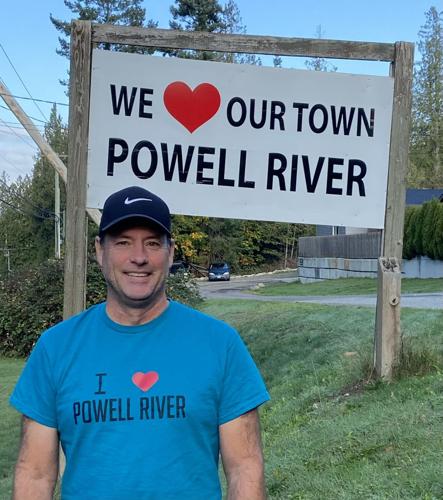
According to news reports, on May 4th, 2023, Vizzutti appeared with a group of other residents at Powell River City Hall to voice opposition to a proposal to change the City’s name, some wearing “I (heart) Powell River” t-shirts.
Vizzutti had made a post to his personal Facebook page inviting people to the City Hall gathering. The post was entitled “Say no to the name change of Powell River.”
Vizzutti’s Facebook post about the event seemed entirely benign.
“We, the citizens of Powell River,” wrote Vizzutti, “are coming together to tell elected officials that we are not in favour of a name change for our city. Please come out in support with your signs and voices. Two wrongs don’t make a right.”
According to Vizzutti, a group of protesters in favour of the name change gathered outside Powell River City Hall for the May 4th council meeting. Vizzutti says one of the protesters, threatened to have him fired from his job.
The next day, May 5th, Vizzutti received a severe Code of Conduct violation letter from Sheree Haydu, Manager, Clinical Operations, Sunshine Coast for BCEHS, demanding he appear at a meeting to address alleged “racism.”
According to Haydu, “On May 4, 2023, the Employer was made aware of your involvement in the following allegations: Circulating racist, anti-indigenous, and defamatory content on social media and door to door.”
According to Vizzutti, counter-protestor approached him and yelled close to his face “We’re going to get you fired!”
Sure enough, the next day, Vizzutti was summoned to the disciplinary meeting.
A series of meetings and correspondence ensued, resulting in Vizzutti leaving the employ of BCEHS.
A May 30th letter from Haydu included an expanded list of new vague and inflammatory allegations against the 58-year-old Mr. Vizzutti, including:
“You have impacted community members and made them feel unsafe.”
“Your comments and actions have impacted the Tla’amin First Nations community wherein they do not feel safe to call 911.”
“You have directly impacted your colleagues where they feel unsafe.”
Vizzutti says, upon reading the allegation that Tla’amin members felt “unsafe” calling 911, he phoned a friend within that community. The community member, according to Vizzutti, said that he was unaware of anyone declining to call 911 due to feeling “unsafe.”
The New Westminster Times spoke to Sheree Haydu by phone to ask questions and seek comment. Haydu declined to comment and referred the New Westminster Times to BCEHS media relations.
A series of questions were sent to Haydu by email seeking evidence that would substantiate the serious allegations leveled at Vizzutti.
Those questions were forwarded to BCEHS Manager, Media and Issue Communications Bowen Osoko, who responded via email: “We are unable to comment on confidential human resources matters as per privacy legislation, including any of the personal information you provided.”
Prior to a scheduled meeting with BCEHS, Vizzutti’s union representatives told him that he was going to be fired at the meeting. The union reps told Vizzutti that if he retired before they fired him, he could avoid loss of income and a lengthy fight.
In the face of the total loss of his income, the prospect of a lengthy dispute, Vizzutti decided to retire.
In response to Vizzutti’s retirement, the investigation was put in abeyance, but to Vizzutti’s great surprise, the BCEHS letter from Haydu included new threats, restrictions and insults.
“Should you choose to pursue employment with BC Emergency Health Services or Provincial Health Services Authority in the future, we reserve the right to re-commence and conclude the investigative process,” wrote Haydu, effectively cutting off any future BCEHS employment prospects for Vizzutti indefinitely.
“Often when paramedics retire, they work part-time or move to other locations where they offer their services if needed,” said Vizzutti in an interview. “With this threat of reopening the investigation, they have blackballed me across the entire province.”
Another Haydu directive was particularly humiliating to Vizzutti.
“Furthermore, as indicated in the initial 11.04 notice, you are prohibited from visiting any BCEHS property, including all stations and offices. I will arrange for any personal items currently stored at Station 229 to be returned to you as well as for you to return any BCEHS property including, but not limited to keys, ID Badge, and uniforms.”
“I was made persona non grata in a field where I had performed admirably and enjoyed a great deal of respect and seniority,” said Vizzutti. “I never did anything wrong but I am being treated like dirt.”
Based on our investigation, Ted Vizzutti was just one of thousands of Powell River residents voicing concern over the name change proposal.
Powell River Mayor Ron Woznow, elected in 2022, spoke candidly about the name change, which he said suffered from “a very flawed process.”
“The challenge with that was the majority of people in Powell River felt it was not a meaningful consultation,” said Woznow. “So what the city did was, rather than just going to talk to the residents of Powell River about this request, they put together a consultation process where the people from Powell River couldn’t go and ask a question.”
“So I think basically, where we’re at now, it’s been my position since I ran, is we have a request from the Nation, and it’s important that each member of Powell River has an opportunity to learn about the significance of this and then cast a vote as to whether or not they would like to do this or not,” said Woznow. “And if 50.1% want to do it, then council would take that to the provincial government and ask, if 50.1% or more don’t want to do it, then we’ll politely say to our neighbours, with regard to your request, the majority of people in Powell River would not like to do that.”
Despite the fact that City of Powell River’s public engagement process on the name change was by its own admission inconclusive and, as Woznow put it, “flawed,” the issue has suddenly been put back on the agenda.
At its January 16, 2024 Committee of the Whole meeting, a draft of the City’s “Strategic Priorities” was tabled that included this bombshell priority: “Take real steps towards a name change.”
The surprise inclusion of the name change as a “priority” brought out a large crowd to City Hall, some holding signs. It was evident at the January 16th meeting that the strategic plan was not unanimously supported.
At the meeting, councillors voted 6:1 to bring forward the plan for debate and possible adoption at the City’s February 15th, 2024 meeting.
Vizzutti, whose opposition to the name change seems very common in the town, feels that he has been unfairly singled out by BCEHS.
“The BCEHS is not only trying to take away my right to freedom of expression, their discriminatory actions are robbing me of my right to work,” said Vizzutti. “I’m at a time in my career where I can be helping new recruits learn the ropes, but they are blocking me from saving lives in the community like I used to.”
“I love my job,” said Vizzutti. “I wanted to keep serving my community, but they didn’t want me. It’s not fair.”
Who is Ted Vizzutti?
The bustling lunch crowd at popular Powell River Julie’s Airport Café seemed more like a family reunion for Ted Vizzutti. The hugs, high-fives, and “hey-how-are-ya’s” evoked a warm sense of community connection that people often associate with a small town.
When the New Westminster Times met with Vizzutti, he said he had told no one in town why he was not at work. The truth is BCEHS had muzzled him.
When asked about his stand-out paramedic stories, Vizzutti recounted the kind of harrowing tails that regularly lead people to describe first responders as heroes.
“One thing about being a paramedic in a small town is that you often end up on calls where you know the people you are trying to help,” explained Ted. “It can make the job more emotional.”
A vivid memory Vizzutti shared was his first car accident.
“It turned out two of my high school friends went off the road at high-speed on their way back from Lund,” explained Vizzutti. “The car was going so fast when it hit the tree that the engine flew out and was found hundreds of feet away. The vehicle was suspended six feet in the air. When I managed to climb up to the wreckage, I found my young friend dead at the scene, impaled on a branch.”
Then there was the radio call from an injured logger, miles from nowhere, in a mountain up Powell Lake during a snowstorm, in the middle of the dense, slippery, and dangerous coastal forest.
“There were no roads in, so me and my partner commandeered a boat to head up Powell Lake to get closer to the guy,” explained Ted. “The boat malfunctioned, so we had to turn around and get ourselves another boat. We ended up at a trail head into the logger’s location and embarked on a multi-hour hike. Having no spiked boots, I almost broke my leg when I slipped on a log, but managed to free my pinned foot and carry on. The person had been struck by a fallen tree to his back and had been spitting up blood. We packaged him up and slid him down on the snow. This call lasted 6 hours. At that time I was making a call out wage of approximately $10 an hour.”
It was the kind of story that makes you ask yourself “why would anyone want to do this job?”
“I’m like everyone else who does my job. We don’t think of ourselves heroes,” says Ted, humbly. “We’re just doing our jobs.”
Vizzutti’s undeserved ouster from his job as a paramedic comes at a time of extreme staffing shortages across the entire BC healthcare system.
After several calls to the Tla’amin First Nation for comment, Director of Communications Davis McKensie called back. McKensie said that he was “new” and didn’t know much about the name-change topic, and said that he needed time to speak with others and back to us with possible comments.
As it turns out, contrary to what McKenzie told the New Westminster Times on the phone, McKensie appears in fact to be very knowledgeable about the Powell River name change process.
McKensie was a member of the above noted Working Group, formed in 2021.
Also, as disclosed and discussed at Powell Rivers’ January 16, 2024 Committee of the Whole meeting at City Hall (archived on video), McKenzie is in the midst of producing a documentary on behalf of the Tla’amin First Nation about the Powell River name-change process.
In an email, McKenzie stated: “I checked around and it looks like the Nation would decline to comment on this.”
The Ted Vizzutti story epitomizes the now common overreach of zealous Canadian bureaucrats seeking to rob citizens of their constitutionally protected right to freedom of expression.
Across Canada indigenous calls for geographic place name changes are put forward in the name of reconciliation with First Nations and “decolonization.”
As the story of Ted Vizzutti illustrates, “decolonization” could turn out to be the opposite of reconciliation.
Isn’t This “Hate Speech”? “White people are subhuman,” Says Tla’amin Leader as Powell River Name Change Poll Now Set for 2026
“White people are subhuman,” Says Tla’amin Leader as Powell River Name Change Poll Now Set for 2026
“The white people in Canada are subhuman because of what they’ve allowed to happen,” said former Chief Councillor of the Tla’amin First Nation KWAST-en-ayu (Maynard Harry) in a 90 minute phone interview with The New Westminster Times about the City of Powell River’s controversial name change proposal.

KWAST-en-ayu reached out to The New Westminster Times following our story about veteran Powell River paramedic Ted Vizzutti, drummed out of his job after 39 years and called “racist” by BC Emergency Health Services for opposing his City’s proposed name change.
KWAST-en-ayu is the founder of Indigenous Insight. He runs a seminar called “Colonizer Rehab,” and is credited with shaping the City of Powell River’s “Community Accord” through collaborative work with former Powell River mayor Stewart Alsgard.
The 2003 Community Accord, which laid the groundwork for Powell River’s ongoing engagement with the Tla’amin First Nation, states: “Paramount is the respect for and appreciation of each other’s diverse backgrounds.”
If KWAST-en-ayu is any indication, Tla’amin respect for people outside their community has dwindled to near zero.
“White people need to acknowledge their culture is lost,” said KWAST-en-ayu bluntly. “White settler culture is a lost culture because nothing good defines white people.”
“If I insult white people, I don’t give a sh-t,” admitted KWAST-en-ayu.
Judging from KWAST-en-ayu’s recent comments to this paper, and the strident vitriol of other Powell River activists, many proponents of the name change are also seeking to further a hard-left ideological agenda.
Latest Developments
On January 30th, 2024, Powell River City Council passed a motion whereby the City will engage in public consultation on the name change, leading to an official vote on the question coinciding with the next municipal election in 2026.
Why Bill C-9 Is a Solution in Search of a Problem
Why Bill C-9 Is a Solution in Search of a Problem
Why Bill C-9 Is a Solution in Search of a Problem
Feb 19, 2026
In recent weeks, public discourse in Canada has turned sharply toward Bill C-9, the Combatting Hate Act. On its face, it sounds reasonable: strengthen our ability to address hate crimes and online hate speech.
But protecting Canadians from real harm is not the same thing as expanding criminal law into areas that are already covered by existing legislation — and that expansion carries real risks to charter rights, free expression, and ordinary citizens.
This isn’t a fringe concern. It’s a constitutional concern.
⚖️ Canadian law already addresses hate conduct ⚖️
Canada’s Criminal Code already contains robust provisions to deal with hate-motivated offences:
- Section 318 prohibits advocating genocide.
- Section 319 makes it a criminal offence to publicly incite hatred or willfully promote hatred against identifiable groups.
- Separate provisions exist for threats, intimidation, and mischief based on protected characteristics.
Courts have used these provisions to convict individuals engaged in actual harm, not merely offensive speech. Law-enforcement agencies already have the tools they need to prosecute violent conduct, including hate-motivated violence.
In other words: we are not defending a legal vacuum. The current law already covers serious criminal conduct.
Bill C-9 expands, rather than clarifies, legal discretion
One of the most troubling changes proposed by Bill C-9 is the removal of the requirement that the Attorney General’s consent be obtained before hate-propaganda charges proceed.
For decades, this safeguard ensured that prosecutors would exercise legal judgment and discretion before bringing charges involving nuanced and sensitive issues of expression. Removing this gatekeeper opens the door to expanded prosecution — and potential misuse — of criminal laws against speech.
That’s not theoretical. It’s legal advice echoed by civil-liberties organizations who warn that discretion without checks inevitably leads to inconsistent and ideologically skewed enforcement.
This is not about protecting extremists — it’s about ensuring that ordinary citizens are not drawn into criminal proceedings for controversial but non-violent expression.
The definitions remain unclear — and that matters
Bill C-9 attempts to define “hatred” more precisely, but precision in law enforcement isn’t created simply by putting words on paper. Many terms remain subjective and open to interpretation.
What one person sees as strong political opinion, another might see as “hate.” Historically, courts have been cautious about defining these concepts because:
- Context matters,
- Intention matters,
- And words have different meanings in different settings.
Yet Bill C-9 lowers the threshold for criminal charges and shifts the burden toward the speaker — not the listener.
That’s why legal scholars worry that the threat of prosecution — even if convictions are rare — can chill free speech, peaceful protest, and legitimate debate.
Removing the “good-faith” safeguard is dangerous
Currently, the Criminal Code contains a section — Section 319(3) — that protects statements made in a good-faith attempt to describe or discuss religious texts or beliefs, even if those statements might offend.
A recent committee vote accepted an amendment that would remove this defence entirely. This has profound implications:
- Reading from religious scripture in a devotional context could be misinterpreted as “promoting hatred.”
- Preachers, teachers, and authors could be exposed to criminal investigation for discussing sacred texts.
This “removal of the good-faith defence” isn’t a minor technical tweak — it’s a substantive change that affects how ordinary citizens engage in religious and philosophical discourse.
This matters because free expression is a foundation of Canadian democracy
The Supreme Court of Canada has repeatedly held that freedom of expression is protected under Section 2(b) of the Canadian Charter of Rights and Freedoms. That protection includes speech that is controversial, offensive, or unpopular, so long as it doesn’t directly cause harm.
Bill C-9 tilts the balance toward criminalization of speech that is non-violent and controversial — and in doing so, it risks eroding confidence in our legal system as a protector of fundamental rights, not a weapon against dissent.
We do not have to choose between safety and freedom. But we do have to defend the established legal framework that already holds violent and threatening conduct to account.
What citizens can do now
Parliamentarians are elected to represent the views and interests of Canadians. When a bill touches on core freedoms, citizens have every right — and every reason — to engage:
- Speak to your Member of Parliament.
- Get involved!
- Ask hard questions about charter rights.
- Encourage thoughtful, evidence-based debate rather than reactionary politics.
Our rights are not granted by Parliament — they are protected by law and deserve protection from overreach.
In closing
Bill C-9 may be well-intentioned in its aspirations, but intention is not law.
We do not need legislation that duplicates existing protections.
We should not accept laws that expand criminal liability in ways that chill free expression and jeopardize civil liberties.
A strong democracy protects people from harm, but also from the overreach of its own institutions.
Let’s defend both.
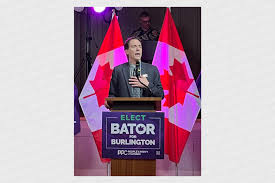
Anti-Democratic NDP Won’t Even Approve Traditional First Reading of Bill to Abolish Fanatical B.C. Human Rights Tribunal
Kelowna MLA’s bill to repeal BC Human Rights Code quickly voted down
Another Armstrong bill fails
Colin Dacre – Feb 26, 2026 / 1:22 pm | Story: 600905

Photo: BC Legislative Assembly
Tara Armstrong in the BC Legislature on Thursday.
Another bill from Kelowna-area MLA Tara Armstrong has been voted down at the earliest possible opportunity.
Armstrong, independent MLA for Kelowna-Lake Country-Coldstream, tabled the Human Rights Code Repeal Act Thursday in the legislature.
“The purpose of this bill is to end the assault on freedom of speech by our human rights tribunal,” she said.
Armstrong’s bill was motivated by a recent $750,000 fine issued by the BC Human Rights Tribunal against former Chilliwack school trustee Barry Neufeld over his comments about LGBTQ people.
The ruling came after the BC Teachers’ Federation and Chilliwack Teachers’ Association filed the human rights complaint against Neufeld in 2017 on behalf of their members, specifically those who identified as LGBTQ from October 2017 through 2022.
They sought $750,000 to be distributed equally among those members, and the decision says the tribunal was satisfied the award was appropriate.
Armstrong, on Thursday, said the repeal of the BC Human Rights Code “is the only solution to this assault on our rights.”
“This bill will protect the freedom of speech of Canadians. It will abolish the Human Rights Tribunal, a kangaroo court, and repeal the Human Rights Code that the left is using to punish and profit from anyone who doesn’t adopt their views.”
Like several bills proposed by Armstrong so far, it was dead-on-arrival in the legislature and was voted down at first reading with 50 votes opposed and 37 in favour. The BC Conservative caucus voted in support.
First reading politicized
Legislation has traditionally been granted first reading in the house as a courtesy to encourage debate. Conservative MLA for Kamloops-North Thompson Ward Stamer, after his party voted in support of Armstrong’s bill last week to ban youth gender transitions, told Castanet News his party has decided to continue that practice in an effort to avoid the “politicization” of first reading and allow the public to see bills.
In a news release Thursday after the vote, the BC NDP acknowledged “it is rare to vote against bills at first reading,” but pointed to other issues—like a ban on land acknowledgements or to cancel the stat holiday for the National Day for Truth and Reconciliation—that the Conservatives voted against at first reading.(Castanet, February 26, 2026)
The BC Human Rights’ Tribunal’s Hetero-Hating, Christian-hating, Censorship-loving Rulings Have Cost Vancouver Visit By Comedian John Cleese
The BC Human Rights’ Tribunal’s Hetero-Hating, Christian-hating, Censorship-loving Rulings Have Cost Vancouver Visit By Comedian John Cleese
John Cleese is among the most gifted comic writers and actors of the late 20th Century. After last week’s hideous $750,000 penalty meted out to former school trustee Barry Neufeld for challenging the SOGI gender-bending school sex-education curriculum. The brutal penalty was assessed against an 80-year old man living on his pension in a 40-year old trailer with his 1990s car.
John Cleese, who, like Mr. Neufeld, believes that there are two sexes — man and woman — loves Vancouver but doesn’t want to risk persecution by the human rights STASI. Cleese said: “I won’t be able to risk doing any shows in British Columbia. ….Cleese has previously mocked the policy of self-identified gender. In 2020, he wrote in a social media post “deep down, I want to be a Cambodian police woman. Is that allowed, or am I being unrealistic?”
John Cleese says he’s now avoiding B.C. because of crackdown on gender ideology criticism
B.C. Human Rights Tribunal cases have been brought against non-citizens such as Cleese, and also against comedians making comments as part of a performance
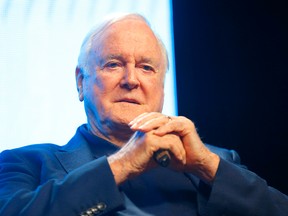
British comedy elder John Cleese has announced that he will be steering clear of British Columbia on an upcoming Canadian tour, owing to fears that he will be prosecuted for non-adherence to gender ideology.
Cleese, 86, made the declaration in a Saturday social media post issued in response to a $750,000 fine being imposed on a former Chilliwack, B.C. school trustee who refuses to believe that gender is a “social construct.”
“What a pity! I’m arranging a theatrical tour of Canada this Fall, and now I won’t be able to risk doing any shows in British Columbia,” wrote Cleese, adding, “I was really looking forward to coming.”
In a Feb. 18 ruling by the B.C. Human Rights Tribunal, former trustee Barry Neufeld was ordered to pay $750,000 to an unnamed consortium of transgender teachers because he had publicly questioned the province’s policy that an individual’s gender is whatever he or she declares it to be.
The 143-page decision specified that one of Neufeld’s chief violations was his stated belief that “separating gender identity from assigned biological sex is a fiction and an ‘ideology’ to be opposed.”
As such, Neufeld was declared to have engaged in “extremely serious and damaging” speech, as well as transgender “erasure.”
A long-serving trustee for the Chilliwack School District, Neufeld had been an early public critic of efforts to enshrine gender identity within the B.C. school curriculum. It’s for that reason that his case before the tribunal was brought by the B.C. Teachers Federation.
But the decision was not limited to Neufeld’s actions as a trustee. Under the terms of the decision, anyone in B.C. could presumably face similar sanction under the B.C. Human Rights Code for echoing the same views as Neufeld.
“A person does not need to believe in Christianity to accept that another person is Christian. However, to accept that a person is transgender, one must accept that their gender identity is different than their sex assigned at birth,” the tribunal decision read.
Cleese has previously mocked the policy of self-identified gender. In 2020, he wrote in a social media post “deep down, I want to be a Cambodian police woman. Is that allowed, or am I being unrealistic?”
B.C. Human Rights Tribunal cases have been brought against non-citizens such as Cleese, and they’ve also been pursued against comedians making comments as part of a performance.
In 2011, the B.C. Human Rights Tribunal ordered comedian Guy Earle to pay $15,000 to an audience member who had alleged “lasting physical and psychological effect” from her objection to his set.
Cleese is one of four surviving members of the legendary Monty Python sketch comedy troupe, and was the creator of the British sitcom Fawlty Towers.
B.C. has been a regular stop of his, particularly in recent years.
In 2013, he scheduled multiple sold-out Vancouver show dates as part of his Last Time To See Me Before I Die tour. In 2022, Vancouver was one of the stops on his An Evening of Exceptional Silliness tour.
“God I love this city,” he told CBC during a 2014 visit to Vancouver as part of a book tour. “It’s wonderful to have the sea around you… and wonderful Chinese food. It’s just a great place.” (National Post, February 25, 2026)
The BC Human Rights’ Tribunal’s Hetero-Hating, Christian-hating, Censorship-loving Rulings Have Cost Vancouver Visit By Comedian John Cleese
John Cleese is among the most gifted comic writers and actors of the late 20th Century. After last week’s hideous $750,000 penalty meted out to former school trustee Barry Neufeld for challenging the SODI gender-bending school sex-education curriculum. The brutal penalty was assessed against an 80-year old man living on his pension in a 40-year old trailer with his 1990s car.
John Cleese, who, like Mr. Neufeld, believes that there are two sexes — man and woman — loves Vancouver but doesn’t want to risk persecution by the human rights STASI. Cleese said: “I won’t be able to risk doing any shows in British Columbia. ….Cleese has previously mocked the policy of self-identified gender. In 2020, he wrote in a social media post “deep down, I want to be a Cambodian police woman. Is that allowed, or am I being unrealistic?”
John Cleese says he’s now avoiding B.C. because of crackdown on gender ideology criticism
B.C. Human Rights Tribunal cases have been brought against non-citizens such as Cleese, and also against comedians making comments as part of a performance
British comedy elder John Cleese has announced that he will be steering clear of British Columbia on an upcoming Canadian tour, owing to fears that he will be prosecuted for non-adherence to gender ideology.
Cleese, 86, made the declaration in a Saturday social media post issued in response to a $750,000 fine being imposed on a former Chilliwack, B.C. school trustee who refuses to believe that gender is a “social construct.”
“What a pity! I’m arranging a theatrical tour of Canada this Fall, and now I won’t be able to risk doing any shows in British Columbia,” wrote Cleese, adding, “I was really looking forward to coming.”
In a Feb. 18 ruling by the B.C. Human Rights Tribunal, former trustee Barry Neufeld was ordered to pay $750,000 to an unnamed consortium of transgender teachers because he had publicly questioned the province’s policy that an individual’s gender is whatever he or she declares it to be.
The 143-page decision specified that one of Neufeld’s chief violations was his stated belief that “separating gender identity from assigned biological sex is a fiction and an ‘ideology’ to be opposed.”
As such, Neufeld was declared to have engaged in “extremely serious and damaging” speech, as well as transgender “erasure.”
A long-serving trustee for the Chilliwack School District, Neufeld had been an early public critic of efforts to enshrine gender identity within the B.C. school curriculum. It’s for that reason that his case before the tribunal was brought by the B.C. Teachers Federation.
But the decision was not limited to Neufeld’s actions as a trustee. Under the terms of the decision, anyone in B.C. could presumably face similar sanction under the B.C. Human Rights Code for echoing the same views as Neufeld.
“A person does not need to believe in Christianity to accept that another person is Christian. However, to accept that a person is transgender, one must accept that their gender identity is different than their sex assigned at birth,” the tribunal decision read.
Cleese has previously mocked the policy of self-identified gender. In 2020, he wrote in a social media post “deep down, I want to be a Cambodian police woman. Is that allowed, or am I being unrealistic?”
B.C. Human Rights Tribunal cases have been brought against non-citizens such as Cleese, and they’ve also been pursued against comedians making comments as part of a performance.
In 2011, the B.C. Human Rights Tribunal ordered comedian Guy Earle to pay $15,000 to an audience member who had alleged “lasting physical and psychological effect” from her objection to his set.
Cleese is one of four surviving members of the legendary Monty Python sketch comedy troupe, and was the creator of the British sitcom Fawlty Towers.
B.C. has been a regular stop of his, particularly in recent years.
In 2013, he scheduled multiple sold-out Vancouver show dates as part of his Last Time To See Me Before I Die tour. In 2022, Vancouver was one of the stops on his An Evening of Exceptional Silliness tour.
“God I love this city,” he told CBC during a 2014 visit to Vancouver as part of a book tour. “It’s wonderful to have the sea around you… and wonderful Chinese food. It’s just a great place.” (National Post, February 25, 2026)
Lisa Bildy: Human rights rules on gender ideology are just blasphemy laws https://
Lisa Bildy: Human rights rules on gender ideology are just blasphemy laws
$750,000 fine proves human rights tribunals cannot be saved
Last week, the B.C. Human Rights Tribunal ordered Barry Neufeld, a former school board trustee, to pay $750,000. Neufeld had boldly criticized curriculum for young children that embedded gender ideology. LGBTQ teachers in the Chilliwack school board, who make up about 16 per cent of the staff, will get the money. Blasphemy laws have returned to Canada.
They don’t resemble the blasphemy laws of old. Through much of history, the state’s powers were used to punish challengers to the religious orthodoxy of the day. The Enlightenment’s focus on individual liberties hastened their decline in Western societies. For a time, freedom of speech, thought, and religion were seen as antidotes to oppressively enforced beliefs.
Oppressively enforced beliefs are back. But those beliefs don’t emanate from pulpits. It’s no longer Christianity demanding adherence to beliefs, but the secular religion of social justice. Neufeld learned the hard way that gender identity is now an unquestionable tenet of this new faith. Human rights tribunals are its enforcers under the guise of punishing “discrimination.” The curriculum he criticized, introduced in 2016, roughly coincided with “gender identity” becoming a protected class under human rights codes across Canada.
Traditionally, discrimination meant denying access to services, employment, or accommodation based on immutable qualities. Now, human rights tribunals use state power to enforce progressive dogma.
This shift is not entirely new. In 2006, publisher Ezra Levant faced a discrimination complaint for reprinting the Danish cartoons of Mohammed. He and Mark Steyn, who faced similar complaints for commentary on Islam published in Maclean’s magazine, drew attention to tribunal overreach, leading to the repeal of section 13 of the Canada Human Rights Act, which had empowered the tribunal to punish “hate speech.” But section 13’s proponents are becoming emboldened again. Court decisions rendered in the interim have only encouraged them.
Neufeld’s case, under provincial human rights law, is the kind you would expect under the federal Online Harms Bill, introduced by the previous Liberal government and floated again by the current government. It proposes to restore those hate speech enforcement powers to the Canadian Human Rights Tribunal. Under this bill, individuals who feel “harmed” by online speech would have the power to drag the speaker through a costly, multi-year process, at no cost to themselves. But that’s obviously already happening, at least in British Columbia. In an interim decision in Neufeld’s case, B.C.’s Human Rights Tribunal decided that, although previous decisions of the tribunal had found otherwise, it actually does have the power to regulate online posts under its existing legislation. Other provinces have similar legislative powers.
- t
Those who follow free speech cases are no longer surprised by such decisions. Over the past two decades, courts, governments, and tribunals have expanded the limits on free expression, rarely reinforcing broad conceptions of this fundamental freedom. The balancing act is often couched in phrases like, “Free speech is sacrosanct in our democracy, but of course there are limits …”
This case expands limits on freedom of expression in two significant ways. First, disparaging gender ideology — even when targeting ideas, not people — was found to be discriminatory. B.C.’s human rights commissioner argued that’s the way it should be. Excluding opinions on matters of “legitimate public interest” from the tribunal’s authority, she argued, created a loophole that should be closed. Mark Steyn avoided punishment for his commentary on Islam, also litigated in B.C., because it was considered political commentary within the bounds of free expression. Today’s human rights functionaries won’t abide such limits on their power.
Second, the expanded interpretation was applied to an elected trustee, whose role is to challenge policies and raise concerns about educational changes. Bureaucrats now dictate what elected officials can say on public policy matters.
The tribunal’s decision also included a passage chastising those who do not believe in gender identity, positing that failure to do so constitutes discriminatory “erasure” of transgender people. Expressing beliefs against gender identity — such as skepticism about changing one’s sex or concerns about males entering women’s spaces — may therefore be severely penalized if deemed “discriminatory” or “hateful” by the administrative state.
The $750,000 fine against Neufeld is unprecedented in the human rights context. While framed as compensation for “harm” to LGBTQ teachers, it was clearly intended to financially ruin him for his speech and refusal to embrace gender identity. It also serves as a warning to anyone considering criticism of the new faith. Blasphemy laws are back.
Public outrage is growing, and politicians are being pressured to act. Reining in these star chambers is no longer good enough. Legislatures must abolish them, along with the human rights codes that they enforce. That requires political backbone, so don’t hold your breath. Instead, call, write, or sign a petition like ours at the Free Speech Union to let your political leaders know how many Canadians oppose financial ruin for expressing opinions on issues affecting themselves and their children. (NATIONAL POST, February 26, 2026)
Lisa Bildy is a lawyer and executive director of the Free Speech Union of Canada. She can be found on X at @LDBildy.
Inclusiveness
The Philosophy of Information, Interview With Paul Fromm, Canadian Association for Free Expression, With Andre Meloche
Paul Fromm, Director of the Canadian Association for Free Expression, with Andre Meloche.