Canadian Constitution Foundation Warns: Liberal Hate Crimes Bill (C-9) Raises Free Speech Concerns

Canadian Constitution Foundation Warns: Liberal Hate Crimes Bill (C-9) Raises Free Speech Concerns

The Canadian Constitution Foundation (CCF) is concerned that key aspects of the Carney government’s proposed hate crimes legislation would unduly infringe on freedom of expression. 

Among other changes to the Criminal Code, Bill C-9 would establish a standalone hate crime provision that would allow for up to life in prison for committing an act motivated by hatred, would create new intimidation and obstruction crimes related to buildings used for religious worship or primarily by identifiable groups, and would establish a new crime of wilfully promoting hatred by displaying certain symbols such as terrorist flags or Nazi swastikas in a public place. [But not the communist hammer and sickle or the Israeli flag.]

The CCF has identified the following concerns: 

  • Overbreadth of the hate-symbol provision (s. 319(2.2)): It could chill legitimate speech in cases where it is unclear whether a symbol is “principally associated with a terrorist group” or “resembles a symbol” outlawed under the provision;
  • Extreme sentencing under the new hate crime offence (s. 320.1001): A person who commits mischief against property motivated by hatred could face up to seven years in prison, rather than the current two years;
  • Removal of Attorney General oversight: The bill would allow police to charge a person with hate speech without receiving the Attorney General’s consent, which is an important safeguard for freedom of expression that has been part of Canada’s law for decades; and
  • Lowering the threshold for “hatred”: The definition of “hatred” added as a new section 319(7) appears to lower the bar for hate speech set by the Supreme Court of Canada in cases like R v Keegstra and R v Whatcott, which could chill speech and public debate.

CCF Executive Director Joanna Baron questioned the need for parts of the bill considering Canada already has “robust hate propaganda laws. Creating new offences for hate-motivated crimes and lowering safeguards like Attorney General oversight is unnecessary and invites excessive prosecutions,” she said. ‘The new hate symbol offence only targets displays done with the intent to promote hatred, but without Attorney General consent as a safeguard, there is a real risk that people using these symbols in art, journalism, or protest will be charged first and vindicated later,” Baron added.

“I’m also very wary that banning hate symbols could be a slippery slope,” Dehaas said. “In free countries, we ought to criminalize violence, not speech, so this sets a worrying precedent.” (Canadian Constitution Foundation, September 19, 2025)
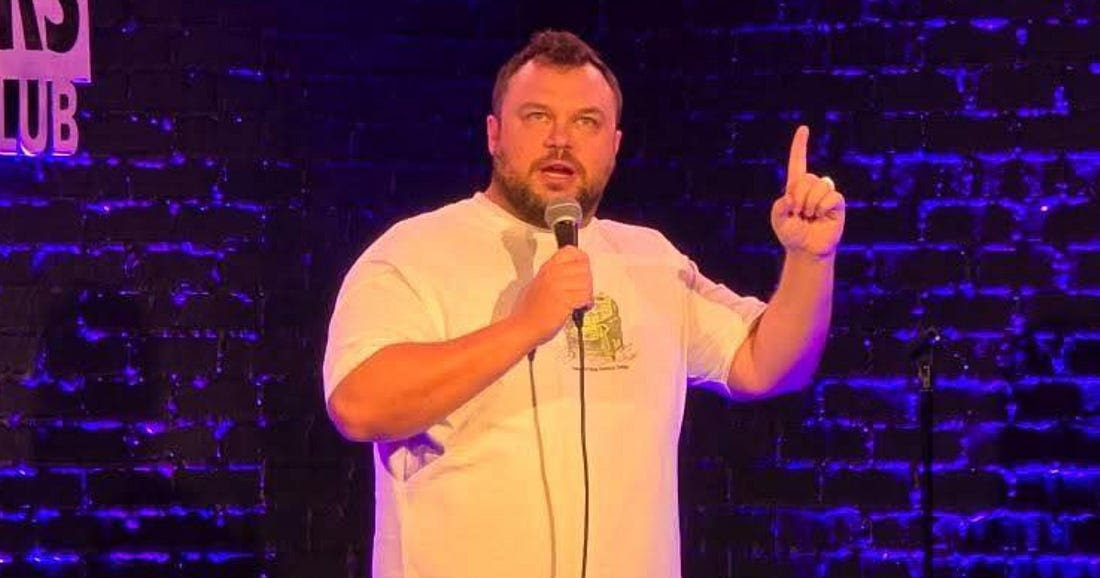
CANCEL CULTURE: THEY DIDN’T LAUGH AND YOU WON’T GET THE CHANCE: Calgary venue cancels comedian Ben Bankas over Indigenous joke

: Calgary venue cancels comedian Ben Bankas over Indigenous jokes

A Calgary casino cancelled a performance by Toronto comedian Ben Bankas after receiving two complaints about jokes he made regarding residential schools.

Oct 9


READ IN APP
 
Source: Facebook

Author: Quinn Patrick

A Calgary casino cancelled a performance by Toronto comedian Ben Bankas after receiving two complaints about jokes he made regarding residential schools.

“They said that they got two complaint emails, and they forwarded one of them to me,” Bankas told True North. “I guess some woman saw the video on Facebook and was offended.”

The video, posted to social media by Bankas on the National Day for Truth and Reconciliation, showcases him from a previous set saying that he’d just returned from Winnipeg, and it was like “an Indigenous zombie apocalypse.”

“I was thinking it’d be nice if there’s, you know, some sort of school we could send them to,” he continued. “Unfortunately, that ship has sailed. Say what you want about the residential schools, but you know, it’s nice architecture… I’m just saying it like those schools… If you wanted to go to a residential school now, in 2025 it’d be like $40,000 a year. Those motherf**kers got it for free.”

He was scheduled to play at the Grey Eagle Casino on the Tsuut’ina Nation in Calgary on Oct. 24, but the venue cancelled after receiving two complaints.

“This comedian goes by the name of ‘Ben Bankas,’ is due to perform at your event centre on October 24 2025 as advertised on social media,” reads the complaint shared with Benkas. “I would strongly advise your team to reconsider unless some sort of public apology is made to the Indigenous people of Canada.”

The comedian had performed in Calgary several times at the Yuk Yuk’s comedy club in recent years before moving to the Deerfoot Inn & Casino for larger seating capacity.

“For two years I was doing sold out shows at Yuks and then we stepped up to Deerfoot, and then this was like the next step up,” said Benkas. “I think they still should have done the show even though they were offended,” reflected Benkas. “But with everything that’s going with Bill C-8 and C-9, it’s a…weird time.”

Bill C-8 is currently before Parliament for its second reading, which would make changes to the Telecommunications Act. Section 15.2 (1) of one of the Bill’s parts enables the federal government to “prohibit a telecommunications service provider from providing any service to any specific person, including a telecommunications service provider.”

The justification for doing so includes “any reasonable grounds to believe it is necessary to do so to secure the Canadian telecommunications system against any threat, including that of interference, manipulation, disruption, or degradation.”

Meanwhile, Bill C-9, entitled An Act to amend the Criminal Code (hate propaganda, hate crime and access to religious or cultural places), was introduced last month.

The proposed legislation would define “hatred” in the Criminal Code.

When asked whether he faced any other backlash from the video, Bankas said there were a few “death threats and weird DMs (direct messages).”

“One person said they ‘were going to hunt me down like the animal I was,’” he said.

Before the show was cancelled, roughly 1,700 of 2,300 available tickets had been sold. While those who purchased tickets have been refunded, the two parties involved are still sorting out payment.

“It’s unconfirmed if they’re going to pay me because there was a guarantee,” he said. “It wasn’t a percentage of ticket sales. So it’s up in the air whether they’re going to pay me or not. I think they should.”

When True North contacted Grey Eagle Casino, they stated the show was cancelled due to “unforeseen circumstances” but declined to comment on Bankas’ financial situation.

Outside of the recent venue cancellation, Bankas said his career is going great.

“Audiences love it. The shows are all selling out. Pretty much everything is sold out for the next two months,” he said. “I just put out a special aimed mostly towards a Canadian audience called Invasion. It’s on my YouTube channel.”

The show at Grey Eagle Casino has been relocated to Yuk Yuk’s comedy club in Calgary for seven shows between October 24 and 27.

Canadian Constitution Foundation Warns Liberal Hate Crimes Bill Raises Free Speech Concerns

  1. s
Liberal hate crimes bill raises free speech concerns

Liberal hate crimes bill raises free speech concerns

The Canadian Constitution Foundation (CCF) is concerned that key aspects of the Carney government’s proposed hate crimes legislation would unduly infringe on freedom of expression. 

Among other changes to the Criminal Code, Bill C-9 would establish a standalone hate crime provision that would allow for up to life in prison for committing an act motivated by hatred, would create new intimidation and obstruction crimes related to buildings used for religious worship or primarily by identifiable groups, and would establish a new crime of wilfully promoting hatred by displaying certain symbols such as terrorist flags or Nazi swastikas in a public place.

The CCF has identified the following concerns: 

  • Overbreadth of the hate-symbol provision (s. 319(2.2)): It could chill legitimate speech in cases where it is unclear whether a symbol is “principally associated with a terrorist group” or “resembles a symbol” outlawed under the provision;
  • Extreme sentencing under the new hate crime offence (s. 320.1001): A person who commits mischief against property motivated by hatred could face up to seven years in prison, rather than the current two years;
  • Removal of Attorney General oversight: The bill would allow police to charge a person with hate speech without receiving the Attorney General’s consent, which is an important safeguard for freedom of expression that has been part of Canada’s law for decades; and
  • Lowering the threshold for “hatred”: The definition of “hatred” added as a new section 319(7) appears to lower the bar for hate speech set by the Supreme Court of Canada in cases like R v Keegstra and R v Whatcott, which could chill speech and public debate.

CCF Executive Director Joanna Baron questioned the need for parts of the bill considering Canada already has “robust hate propaganda laws.”

“Creating new offences for hate-motivated crimes and lowering safeguards like Attorney General oversight is unnecessary and invites excessive prosecutions,” she said.

“The new hate symbol offence only targets displays done with the intent to promote hatred, but without Attorney General consent as a safeguard, there is a real risk that people using these symbols in art, journalism, or protest will be charged first and vindicated later,” Baron added.

CCF Counsel Josh Dehaas said that while he’s pleased to see that the federal government has tailored its provisions on intimidation and obstruction of places of worship to capture criminal conduct rather than protected speech and protest, he is concerned that the new definition of “hatred” will chill legitimate expression.

“I’m also very wary that banning hate symbols could be a slippery slope,” Dehaas said. “In free countries, we ought to criminalize violence, not speech, so this sets a worrying precedent.”