The Midnight Man, [1/5/2026 1:20 AM] “I am a Canadian, free to speak without fear, free to worship in my own way, free to stand for what I think right, free to oppose what I believe wrong, or free to choose those who shall govern my country. This heritage of freedom I pledge to uphold for myself and all mankind.” John Diefenbaker
Well, not any more. If you dissent, our wretched leadership and powerful minorities want to shut you up
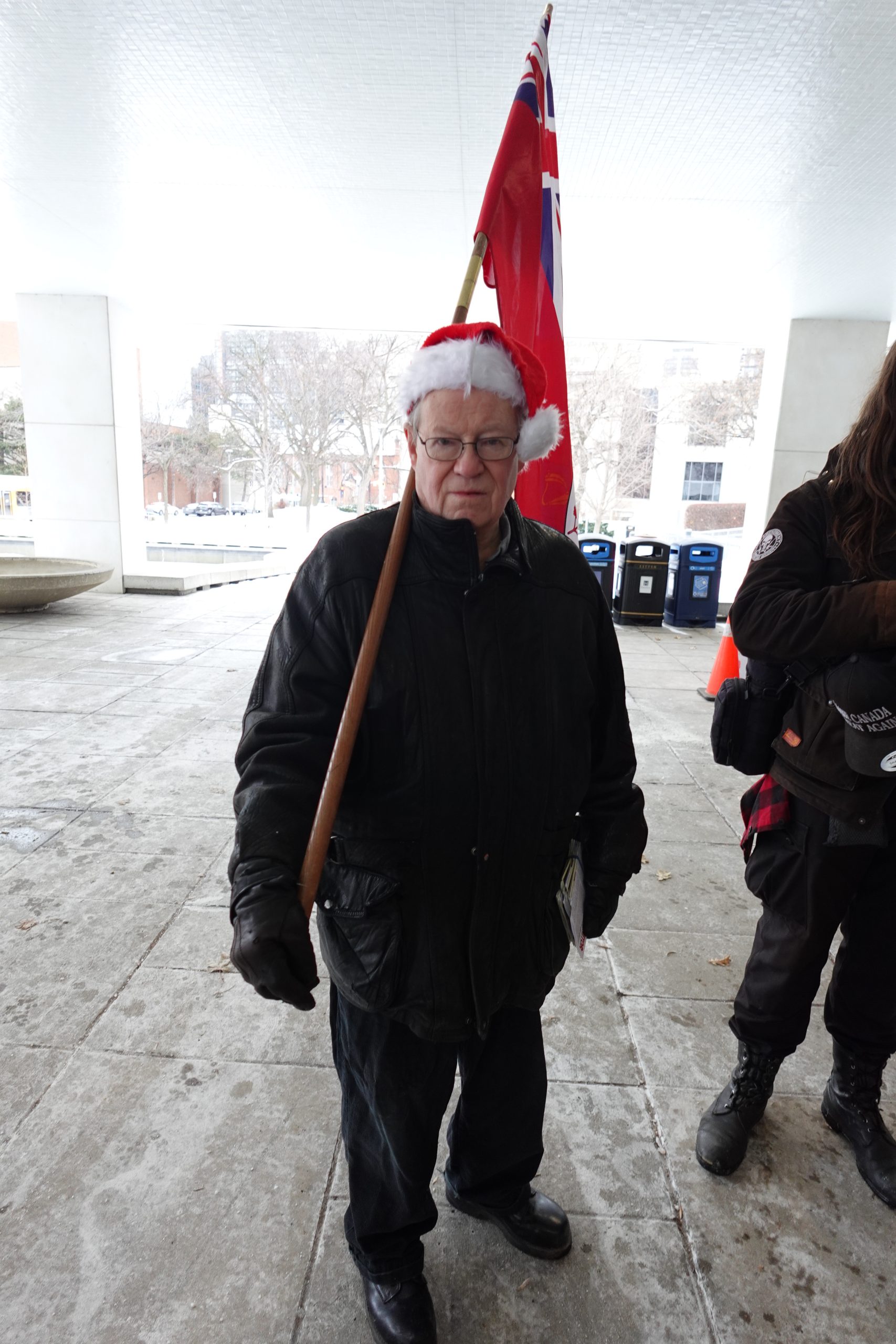
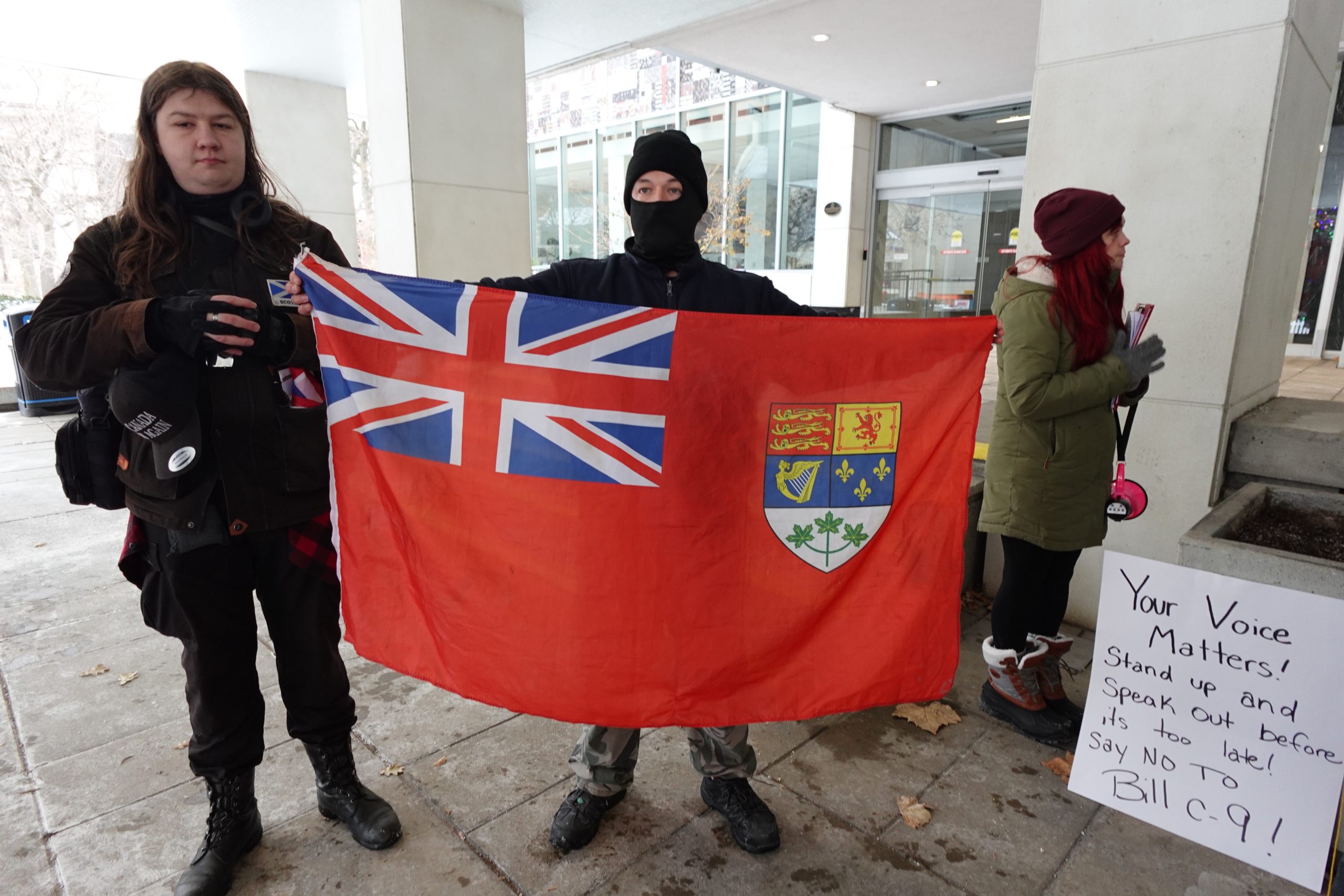
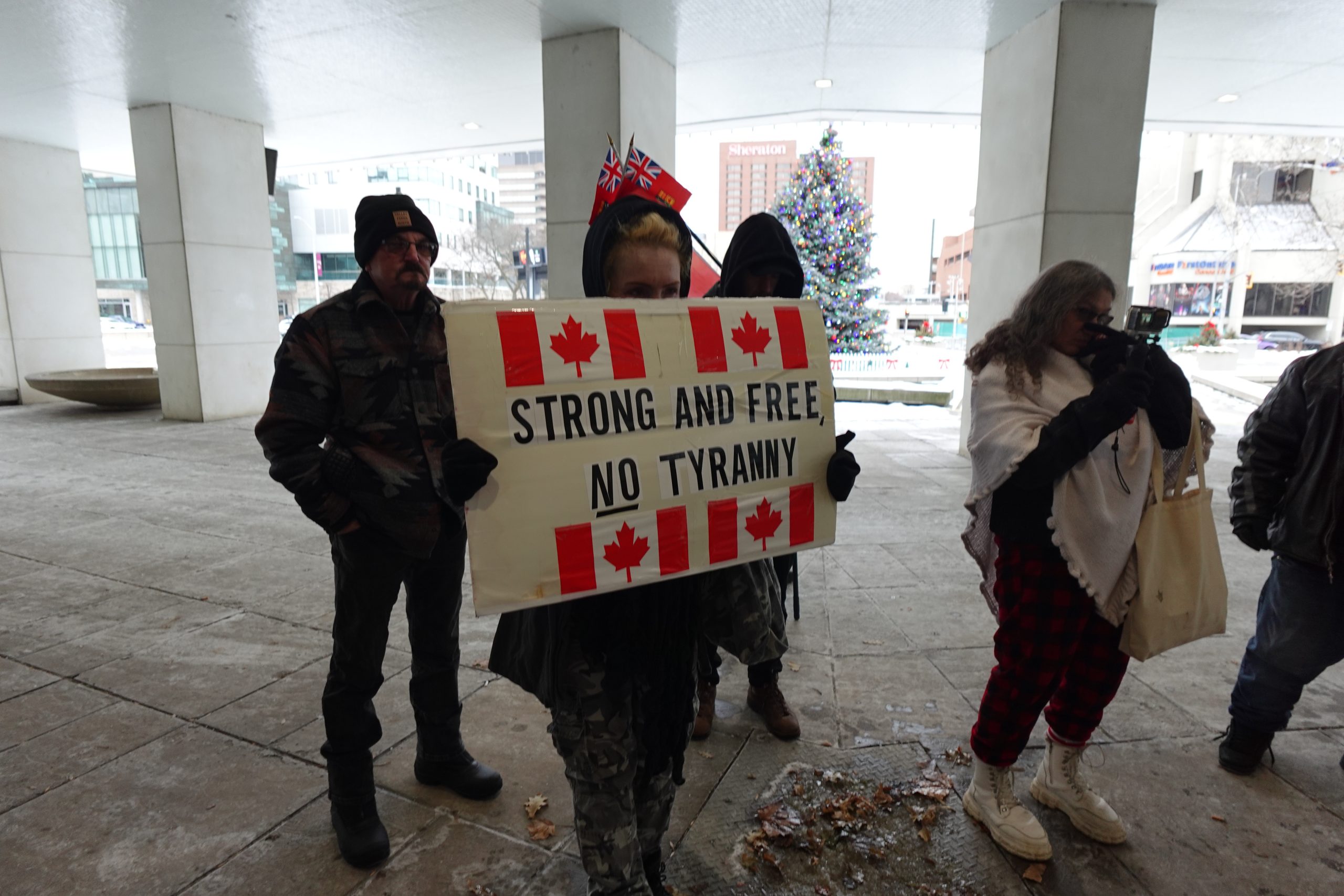
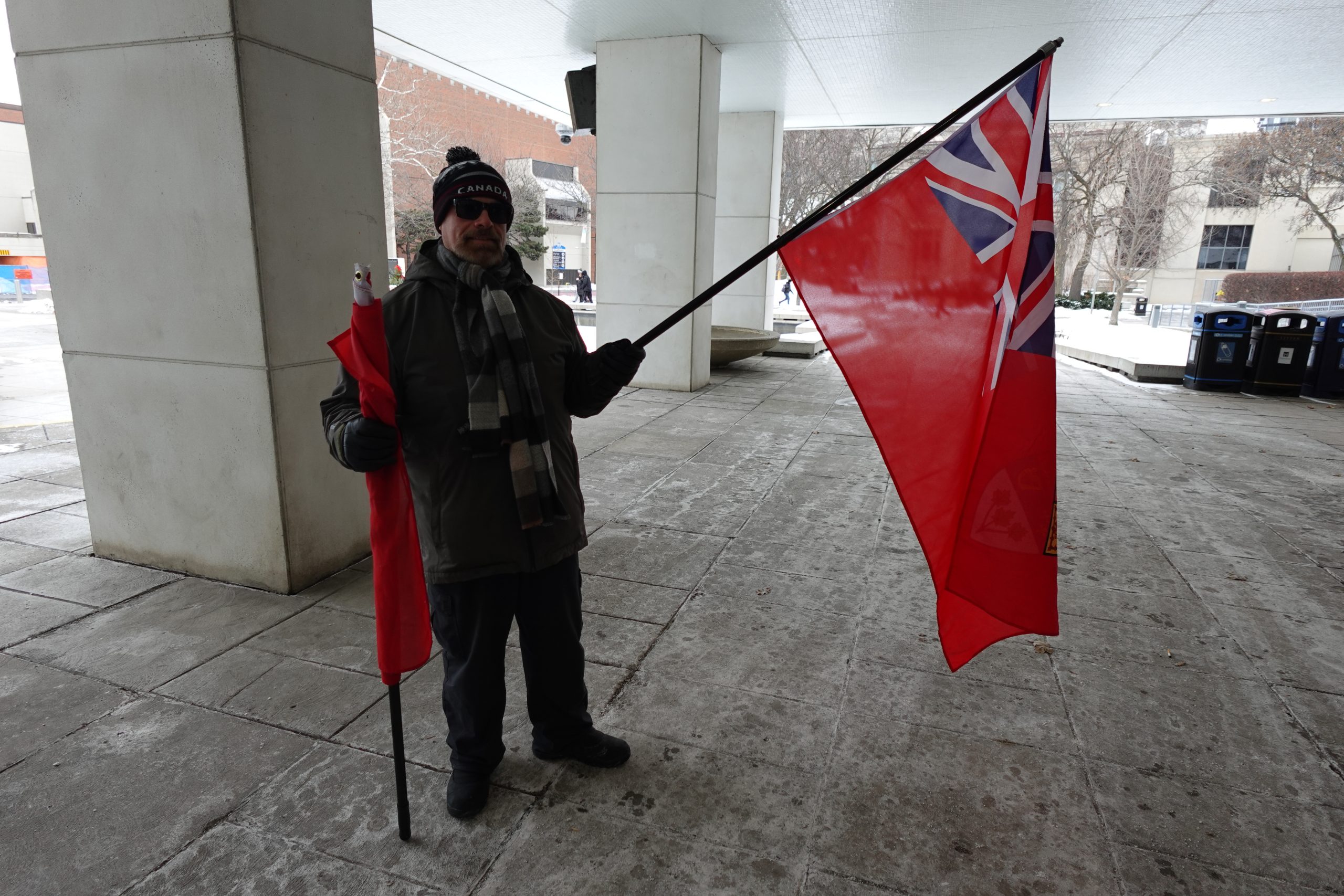
I’ve seen the Canada of my youth that cherished free speech become a crabbed, mean cancel culture, now contemplating even greater restrictions. So, on my birthday I braved bitter cold to lead about 15 CAFE associates to join a rally at Hamilton City Hall to oppose the Liberals’ latest forays into thought control on the Internet. [I fly the Red Ensign the flag of the REAL Canada.]
CAFE supporters contributed the bulk of the 30 people who gathered at Hamilton City Hall to oppose the police state censorship bills C-8 AND C-9.
Stop the Muzzle and Monitor Bill Before It Destroys Free Speech and Privacy
CitizenGO – started this petition to Minister of Industry Mélanie Joly, Minister of Public Safety Gary Anandasangaree, and all MPs – 2025/10/08
Bill C-8, officially titled An Act respecting cyber security, has passed Second Reading and now moves through committee toward a final vote. Although framed as a cybersecurity measure, it functions as the Muzzle and Monitor Bill, a sweeping law designed to silence dissent and monitor citizens without oversight.
If passed, the bill grants the Minister of Industry the power to order telecom companies to disconnect individuals from internet, mobile, and payment services in secret.
No warrant. No judge. No public explanation. No appeal. No process. No transparency.
One internal directive is enough to erase someone’s digital presence.
The bill also enforces a mandatory gag order. Any person disconnected must remain silent. Speaking to friends, journalists, or even the courts triggers immediate fines: $25,000 for a first offence and $50,000 for each repeat offense.
Businesses face up to $15 million in penalties for warning customers, refusing an order, or going public. Company executives who object will face criminal charges and jail.
Censorship is only the beginning. Bill C-8 also builds the legal foundation for mass surveillance. It allows government agents to collect Canadians’ browsing history, location data, and financial records, all without a warrant.
Encryption backdoors become possible. Privacy disappears. Once a backdoor is created, it will not stay in government hands. Hackers and foreign adversaries will find it.
While civil liberties collapse, critical infrastructure remains unprotected. No new safeguards apply to hospitals, schools, or essential systems. The bill strips freedoms without securing anything.
Bill C-8 does not stand alone. It forms part of a broader framework that now includes:
Bill C-9, the so-called “Online Harms Act,” better described as the Everything is Hateful Bill, which redefines broad categories of expression as punishable “hate.”
Bill C-2, the “Strong Borders Act,” better described as the Peeping on Canadians Bill, introduces sweeping powers to monitor, collect, and centralize private data across government agencies.
Together, these bills create a legal regime of censorship, surveillance, and ideological control.
Speech is regulated. Privacy is erased. Dissent is punished.
Legal scholars, human rights advocates, and cybersecurity experts have all raised the alarm.
This is not a debate about safety.
It is a shift toward authoritarian governance.
Call on Minister of Industry Mélanie Joly, Minister of Public Safety Gary Anandasangaree, and all MPs to vote NO on Bill C-8, the Muzzle and Monitor Bill, and to defend our rights to free expression, privacy, and lawful access to digital services.
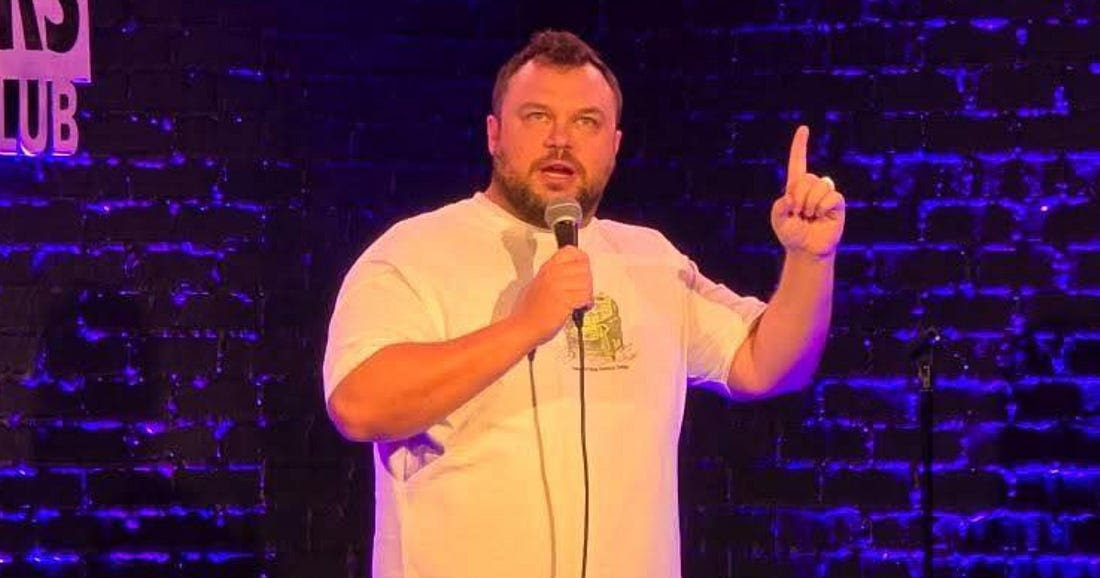
A Calgary casino cancelled a performance by Toronto comedian Ben Bankas after receiving two complaints about jokes he made regarding residential schools.
A Calgary casino cancelled a performance by Toronto comedian Ben Bankas after receiving two complaints about jokes he made regarding residential schools.
“They said that they got two complaint emails, and they forwarded one of them to me,” Bankas told True North. “I guess some woman saw the video on Facebook and was offended.”
The video, posted to social media by Bankas on the National Day for Truth and Reconciliation, showcases him from a previous set saying that he’d just returned from Winnipeg, and it was like “an Indigenous zombie apocalypse.”
“I was thinking it’d be nice if there’s, you know, some sort of school we could send them to,” he continued. “Unfortunately, that ship has sailed. Say what you want about the residential schools, but you know, it’s nice architecture… I’m just saying it like those schools… If you wanted to go to a residential school now, in 2025 it’d be like $40,000 a year. Those motherf**kers got it for free.”
He was scheduled to play at the Grey Eagle Casino on the Tsuut’ina Nation in Calgary on Oct. 24, but the venue cancelled after receiving two complaints.
“This comedian goes by the name of ‘Ben Bankas,’ is due to perform at your event centre on October 24 2025 as advertised on social media,” reads the complaint shared with Benkas. “I would strongly advise your team to reconsider unless some sort of public apology is made to the Indigenous people of Canada.”
The comedian had performed in Calgary several times at the Yuk Yuk’s comedy club in recent years before moving to the Deerfoot Inn & Casino for larger seating capacity.
“For two years I was doing sold out shows at Yuks and then we stepped up to Deerfoot, and then this was like the next step up,” said Benkas. “I think they still should have done the show even though they were offended,” reflected Benkas. “But with everything that’s going with Bill C-8 and C-9, it’s a…weird time.”
Bill C-8 is currently before Parliament for its second reading, which would make changes to the Telecommunications Act. Section 15.2 (1) of one of the Bill’s parts enables the federal government to “prohibit a telecommunications service provider from providing any service to any specific person, including a telecommunications service provider.”
The justification for doing so includes “any reasonable grounds to believe it is necessary to do so to secure the Canadian telecommunications system against any threat, including that of interference, manipulation, disruption, or degradation.”
Meanwhile, Bill C-9, entitled An Act to amend the Criminal Code (hate propaganda, hate crime and access to religious or cultural places), was introduced last month.
The proposed legislation would define “hatred” in the Criminal Code.
When asked whether he faced any other backlash from the video, Bankas said there were a few “death threats and weird DMs (direct messages).”
“One person said they ‘were going to hunt me down like the animal I was,’” he said.
Before the show was cancelled, roughly 1,700 of 2,300 available tickets had been sold. While those who purchased tickets have been refunded, the two parties involved are still sorting out payment.
“It’s unconfirmed if they’re going to pay me because there was a guarantee,” he said. “It wasn’t a percentage of ticket sales. So it’s up in the air whether they’re going to pay me or not. I think they should.”
When True North contacted Grey Eagle Casino, they stated the show was cancelled due to “unforeseen circumstances” but declined to comment on Bankas’ financial situation.
Outside of the recent venue cancellation, Bankas said his career is going great.
“Audiences love it. The shows are all selling out. Pretty much everything is sold out for the next two months,” he said. “I just put out a special aimed mostly towards a Canadian audience called Invasion. It’s on my YouTube channel.”
The show at Grey Eagle Casino has been relocated to Yuk Yuk’s comedy club in Calgary for seven shows between October 24 and 27.
Bill C-8, now before Parliament, would hand Ottawa sweeping new powers over Canadians’ internet access. Buried within the bill is a clause amending the Telecommunications Act, which hands the industry minister—now Mélanie Joly—the authority to order telecom giants like Rogers or Telus to cut off internet access for “any specified person.” No warrant, no court approval, no oversight before the fact. A citizen could be cut off from the online world entirely on the minister’s say-so, with judicial review only possible after the order is executed.
The Carney government justifies the bill as a tool to defend against cyber-attacks, hackers, and foreign interference. Public Safety Minister Gary Anandasangaree argues it’s about stopping ransomware and hostile state actors. But the scope goes far beyond that. The bill allows the government to direct telecoms to “do anything or refrain from doing anything,” wording critics say could be used to impose mass surveillance, weaken encryption, or force companies to hand over data on Canadians without their knowledge.
This is not an isolated measure. Bill C-8 follows a series of Liberal-championed laws that have steadily tightened federal control over the digital sphere:
The Online News Act (2023) forced social media platforms into deals with news outlets and led Facebook to ban news sharing in Canada altogether.
The Online Streaming Act (2023) put podcasts, YouTubers, and streaming platforms under Canadian content rules — requiring platforms to artificially boost some content while burying others.
While Canada has signed international declarations that internet access is a fundamental human right and even helped found the Freedom Online Coalition to oppose state restrictions, the government is now moving in the opposite direction—claiming emergency powers to decide who can access the internet at all.
Bottom line: Bill C-8 isn’t just about cybersecurity. It’s about control. By granting ministers unilateral authority to pull internet access and compel telecoms to cooperate in secret, the bill creates a framework for surveillance, censorship, and political targeting. It puts the very foundation of digital freedom in Canada at risk, and it does so under the guise of “protecting” Canadians.

 CitizenGO – started this petition to Minister of Industry Mélanie Joly, Minister of Public Safety Gary Anandasangaree, and all MPs – 2025/10/08