Canada’s Digital Guillotine: How Your Words Are About to Be Policed

https://www.facebook.com/100009569256346/posts/pfbid0vvbjp1kSx5nhmso5RCiLz3EWUZEwqUoKD5c9KP3t8exkph1GSBDXyLnb32S5qvW4l/

“Street-Level Warning” for Canadians living under this legislation.

Canada’s Digital Guillotine: How Your Words Are About to Be Policed

The first Monday of 2026 has come and gone, and Ottawa is already sending a clear message: your voice online is no longer yours.

Prime Minister Mark Carney and his Liberals are moving faster than most Canadians realize, reviving the Online Harms Act, the same bill that died last year, but now armed with even bigger budgets, bigger bureaucracies, and bigger ambitions.

This is not about child safety. That’s the story they tell to make it seem harmless. The truth is far darker. This law gives a government commission the power to decide what is “harmful” and what isn’t. It gives platforms the choice to remove anything that might offend regulators or risk fines. In practice, this means anything you post, share, or even joke about could vanish. Your opinion, your commentary, your criticism, your religion, your art, all under the shadow of a $200 million bureaucracy designed to watch, judge, and silence.

It doesn’t matter if you’re careful, if you follow the rules, if you never break a law. This law is vague on purpose. It’s not meant to catch criminals. It’s meant to catch thinkers, questioners, people who challenge the narrative, people who refuse to stay silent. Ordinary Canadians like you and me could be flagged simply for sharing something a bureaucrat doesn’t like. A political cartoon could disappear. A video questioning government policy could be taken down. Even a private discussion could be scrutinized.

And the platforms will comply, because the fines are massive, and the government isn’t joking. They want control, and the easiest way to get it is to make everyone self-censor. 

You post, you hesitate, you delete before anyone sees it, just to be safe. That’s the plan. That’s the real effect. This is how freedom dies quietly, without headlines, without drama, with people convinced they are just “being careful.”

Carney’s government is fast-tracking this. They are not waiting, not debating, not listening to the alarm bells that have been ringing since the first iteration of this bill in 2024. Consultations have been quiet, conversations behind closed doors, decisions made in rooms Canadians cannot enter.

The machinery is being built now, the rules written in shadow, the system designed to sweep every word, every post, every thought under the watchful eye of the state.

And make no mistake, this is just the beginning. The law is part of a larger plan. Expanded surveillance powers, AI monitoring, digital oversight, platforms acting as extensions of government judgment, it is all connected. Canada is on the edge of a digital panopticon, where the things you say, think, and share are never private, never safe, and never yours alone.

The first Monday of 2026 is more than a date. It’s a warning. The government is ready to take action, and if Canadians do not act, we will wake up one day in a country where free expression is conditional, where speaking out is risky, where silence is survival. This is the Canada Carney is building. Watch your words. Question everything my friends. Share this everywhere. If you do not, you may find your voice erased, and the freedoms you took for granted gone forever. This is not joke.

Step-by-Step Descent Since 2024

Feb 26, 2024: Bill C‑63 introduced. Digital Safety Commission and platform duties proposed. Public warned of chilling effects.

2024: Parliamentary debate; critics cry foul over vague definitions and administrative censorship.

Dec 4, 2024: Bill split into “child safety” and “broader harms” components, a tactical move to push through censorship.

Jan 6, 2025: Parliament prorogued, Bill dies. Liberals quietly vow to return.

2025: Behind-the-scenes consultations hint at regulating AI, deepfakes, political speech, and religious commentary.

Early 2026: Signals show Carney’s Liberals pushing full throttle to reintroduce the bill, with $200M+ bureaucracy poised to monitor, flag, and erase online content.

The Chilling Effect

Imagine a Canada where:

Your opinion can be removed instantly, judged by unelected bureaucrats.

Political criticism is censored before it reaches an audience.

Religious beliefs are monitored, flagged, and potentially suppressed.

Platforms remove lawful content preemptively to avoid fines, meaning your voice disappears because corporations are too afraid to defend it.

This isn’t dystopian fiction. The UK’s Online Safety regime shows how quickly regulation can criminalize digital expression, and Canada is now following the same path, only faster, under Carney.
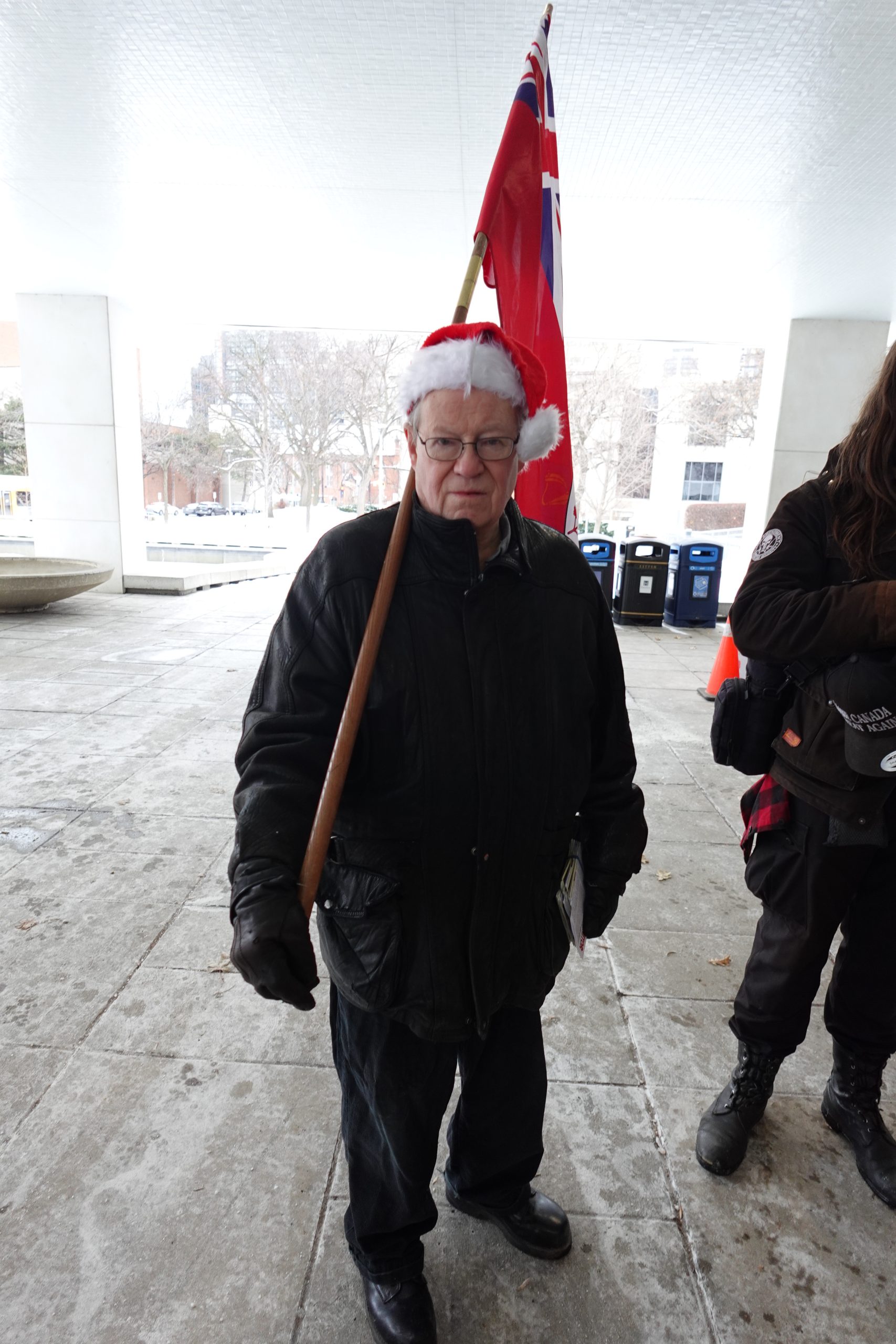
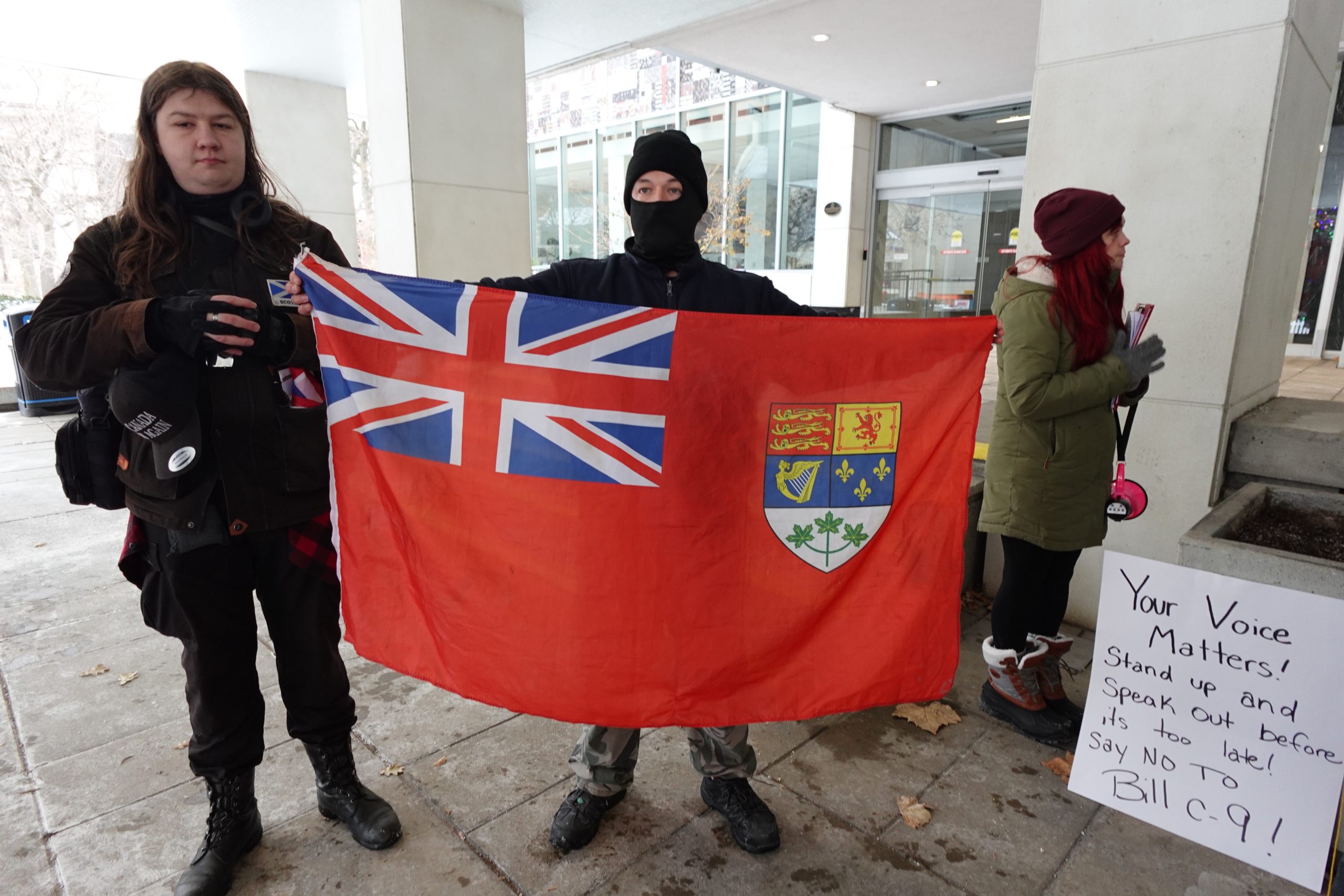
CAFE PROTESTS BILLS C-8 & C-9

CAFE OPPOSES BILLS C-8 & C-9

https://www.bitchute.com/video/RGjKuqoWagsb

The Midnight Man, [1/5/2026 1:20 AM]
“I am a Canadian, free to speak without fear, free to worship in my own way, free to stand for what I think right, free to oppose what I believe wrong, or free to choose those who shall govern my country. This heritage of freedom I pledge to uphold for myself and all mankind.”
John Diefenbaker

Well, not any more. If you dissent, our wretched leadership and powerful minorities want to shut you up

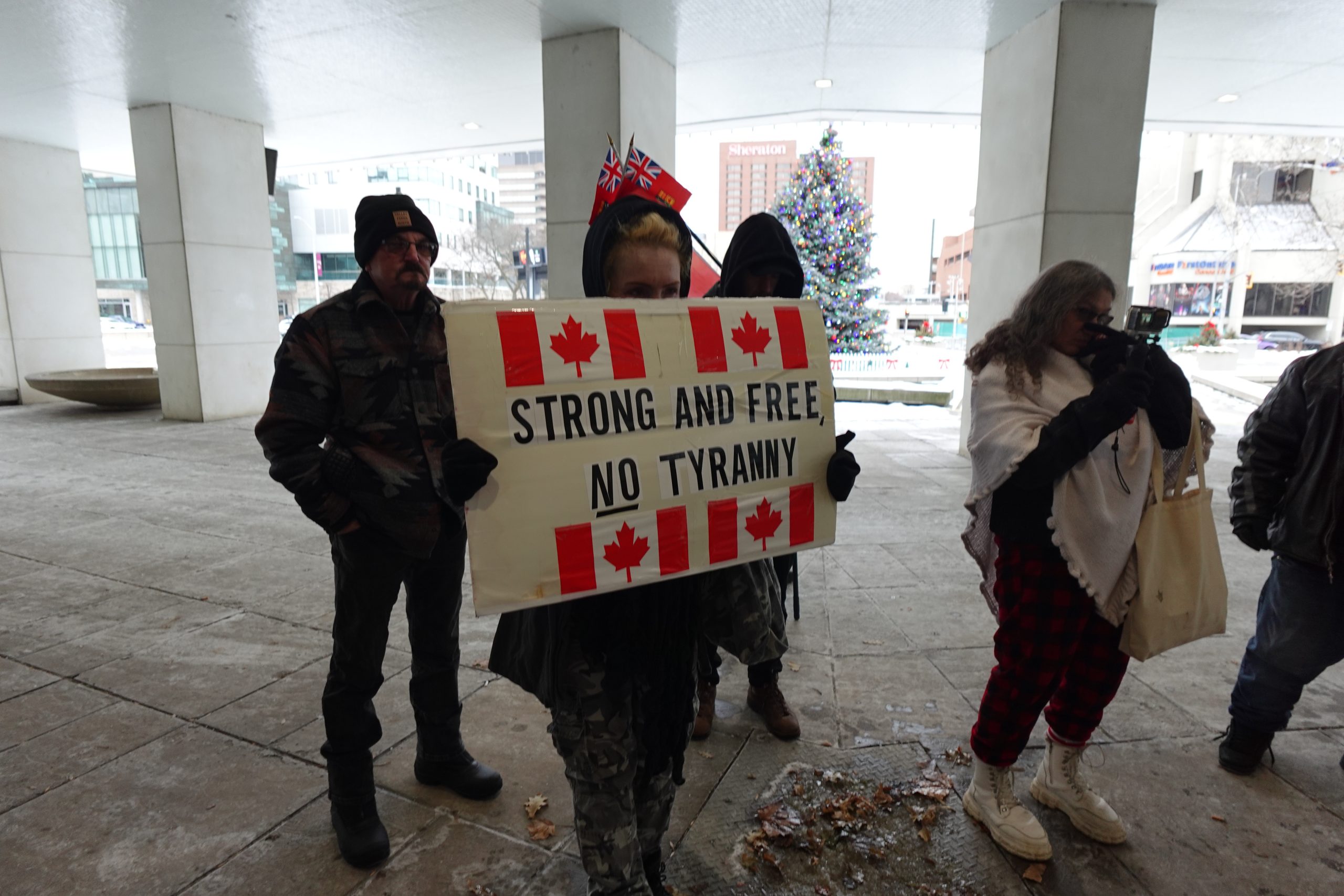
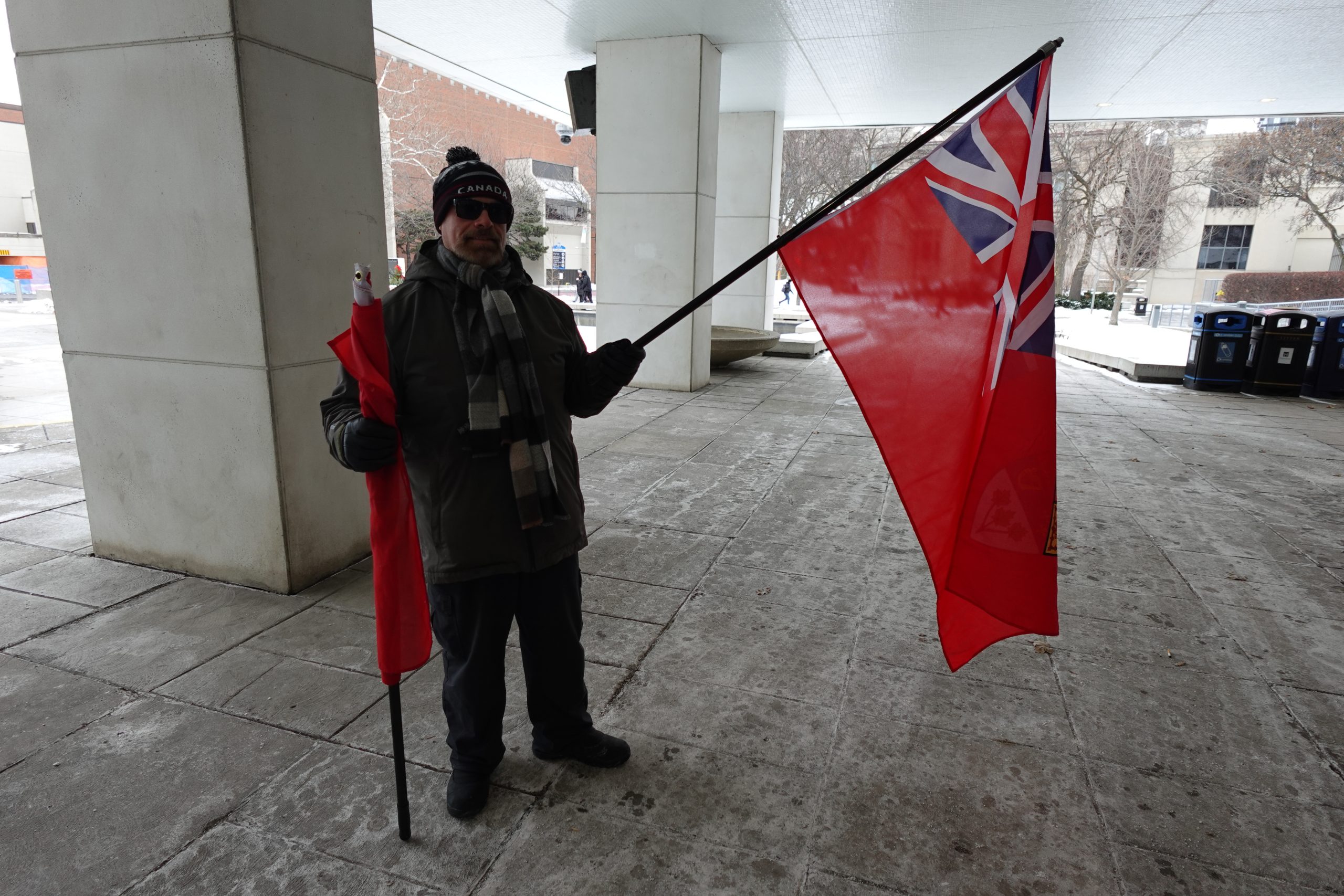
I’ve seen the Canada of my youth that cherished free speech become a crabbed, mean cancel culture, now contemplating even greater restrictions. So, on my birthday I braved bitter cold to lead about 15 CAFE associates to join a rally at Hamilton City Hall to oppose the Liberals’ latest forays into thought control on the Internet. [I fly the Red Ensign the flag of the REAL Canada.]


CAFE supporters contributed the bulk of the 30 people who gathered at Hamilton City Hall to oppose the police state censorship bills C-8 AND C-9.


https://www.bitchute.com/video/RGjKuqoWagsb

OP-ED: What loyalty really means in Canada’s time of moral confusion

OP-ED: What loyalty really means in Canada’s time of moral confusion

“In recent years, loyalty has become a suspicious word in Canadian public life. To express attachment to one’s culture, values, or historical narrative is increasingly treated as a moral flaw.”

Source: Rawpixel

Author: Dotan Rousso

In recent years, loyalty has become a suspicious word in Canadian public life. To express attachment to one’s culture, values, or historical narrative is increasingly treated as a moral flaw rather than a virtue. We are often told that strong identification with a group signals exclusion or prejudice, as if rootedness itself were a barrier to be overcome. This view is mistaken. It misunderstands something fundamental about what it means to be human.

From an evolutionary perspective, loyalty was never optional. For most of human history, survival depended on belonging to a group and remaining faithful to it. Shared norms, mutual obligation, and collective memory were not abstract ideals; they were the conditions of survival. Group loyalty was not a moral excess; it was the mechanism through which individuals lived. That reality did not disappear with the advent of modern liberal democracies. Identity does not emerge in a vacuum. Language, moral instincts, and traditions are inherited before they are chosen. Acknowledging this does not undermine pluralism; it explains how a stable society becomes possible in the first place.

Yet in times of moral confusion, this basic truth is inverted. Under the banner of progressiveness, Canadians are encouraged to treat strong cultural attachment as morally suspect. Commitment is confused with intolerance, and loyalty is portrayed as a refusal to accept others. This framing is false, and its impact is not merely academic. We see it in the hushed debates over municipal holiday displays and the quiet removal of historical figures from the public square. When we scrub the “particular” to make room for the “universal,” we aren’t creating a more inclusive space; we are creating an empty one. We are asking Canadians to stand on a foundation of air.

Consider the irony of Remembrance Day. On this day, Canadians are encouraged to honor sacrifice, continuity, and national memory as unifying virtues. These rituals are widely understood as dignified. Yet, when similar language of loyalty appears outside officially sanctioned contexts, it is often treated with suspicion. The same society that honors collective memory in one setting condemns it in another. This inconsistency reveals not openness, but a deep confusion about the moral legitimacy of belonging itself.

It is entirely possible to respect others and recognize their legitimacy while remaining deeply committed to one’s own identity. Valuing what is “ours” does not require denying value to “theirs.” These positions are not contradictory; they coexist naturally in any healthy society. A culture that demands people abandon their deepest sources of meaning in the name of openness does not produce moral clarity. It produces fragility and resentment.

Loyalty, properly understood, is a moral commitment. It means holding certain values and traditions as worthy of protection. If a group’s identity is challenged by ideologies that seek to erase or delegitimize it, there is nothing un-Canadian about naming that threat and resisting it. Refusing to do so is not tolerance; it is abdication. To stand firm in one’s identity without apology is an act of responsibility. It means protecting what gives life coherence without pretending that all values are interchangeable.

As many Canadians mark Christmas, this is a moment to reconsider loyalty not as exclusion, but as rootedness. In an age that treats belonging as a liability, we must remember that it remains a foundation of human dignity and the bedrock of a confident, pluralistic Canada.

For comments: dotanrousso@yahoo.com


MARTYN: No apologies. Canada was built, not stolen

MARTYN: No apologies. Canada was built, not stolen

If Canada is ‘stolen,’ then so is every inch humanity has ever walked.

A Canadian flag

A Canadian flagWS file photo

Western Standard Guest Columnist

Western Standard Guest Columnist

Published on: 

29 Dec 2025, 9:30 am

Kurtis Martyn works in the construction industry in Calgary. 

I am Canadian, born in an icy metropolis where the winters are worse than a bad hangover and the summers tease you with false promises. I have the proof of my travels, stamped with poutine grease and hockey bruises. But recently, this country has become a therapy session that has gone wrong, where every flag wave comes with an apology.

“Stolen land,” is the war cry, like a chant for the forever offended. I do not agree. Canada was not stolen. It was made. It was hammered together from treaties, sweat, and, yes, some ugly parts that history likes to turn into villainy tales. And if that makes me the jerk at the party, then so be it.

Humans didn’t grow out of the tundra like weeds. All of us have come here. Indigenous people came across from Asia 15,000 to 20,000 years ago, hunting mammoths and looking for better weather, just as the Europeans later went for beaver pelts and empire dreams. It’s the never-ending shuffle of humanity; conquer, adapt, or die. No one has clean hands in that game. The Iroquois and Huron were enemies long before Columbus got lost. Small-scale wars, of course, but wars nevertheless, land passing from one hand to another through blood and bargains.

After that, the Crown came not with fire and brimstone, but with ink and promises. More than 70 treaties. Just the Numbered Treaties from 1871 to 1923 alone covered areas larger than your ego after three Tim Hortons double doubles. Land given in exchange for reserves, annuities, and hunting rights.

Very legal according to the laws of that time. In BC, where the plot is the hottest, only 7% of the land is treaty land, but what about the rest? They were considered Crown lands when they joined Confederation in 1871, alliances, purchases, very few direct confrontations.

However, the critics shout, “Coercion! Starvation! Disease!” Yes, of course. Buffalo herds were annihilated, populations were wiped out by smallpox and bad deals. The Indian Act of 1876 was a breakup act; it banned rituals, forced people to live on reserves while settlers built railroads and cities. Residential schools? A national wound; the death rate was higher than the trenches of World War I. I’m not here to whitewash the rot.

It’s the kind of institutional crap that needs to be ripped open and exposed, but labeling it all as “theft” is a sign of laziness, like blaming your ex for every bad thing since. Treaties were done, under pressure, of course, but they were done. Oral promises broken? Definitely. But here we are, investing $32 billion yearly in programs for the indigenous people, which is three times the amount in 2014. That is 882% growth per person since 1947, way ahead of the rest of us.

Reforms in child welfare under Bill C92, fixing the water, $10 billion in loan guarantees for energy projects. Is it money soaked in blood? Perhaps. But it is reciprocity at work, giving back those dusty treaty vouchers while the rest of us are paying taxes and pretending to be saints.

The fight in BC is more painful than the wait in a Canadian hospital. Tara Armstrong’s slogan, “Canada was built not stolen”, is very impactful; it has 1.2 million views. OneBC party is urging petitions to do away with Truth and Reconciliation Day, calling out Premier Eby’s UNDRIP actions that may give veto powers over pipelines and mines. Critics deny the allegations and refer to unceded lands and genocide. They have got their facts right; 95% of BC is under claims according to the recent Cowichan decision. However, vetoes? That is not fairness; it is the breaking up of territories like a bad divorce.

A 2025 Leger poll shows that 52% of the people do not believe in the “stolen land” narrative. Is it a generational thing? Of course, the children are more woke, but the older Canadians remember the times when this country was built out of the wild and made into a welfare state.

So, why all the guilt? It is today’s confessional, where admitting “theft” saves you from actually fixing things. Canada’s no heist movie. It was forged in the muck of migration, treaties twisted by power, and now, billions in make-goods. We built it, railroads over bones, cities from forests, a social net that catches more than it drops. Own the ugly parts, but ditch the stolen myth. It’s time to build forward, not kneel in the past. Because if everything’s stolen, nothing’s worth saving. And forget that, I’m Canadian. Pass the beer.

Kurtis Martyn works in the construction industry in Calgary. 

Washington State AG Warns Citizen Journalists To Stop Investigating Somali Daycares Or Face Potential Hate Crime Charges

Washington State AG Warns Citizen Journalists To Stop Investigating Somali Daycares Or Face Potential Hate Crime Charges

Tyler Durden's Photo

by Tyler Durden

Thursday, Jan 01, 2026 – 12:50 PM

Authored by Debra Heine via American Greatness,

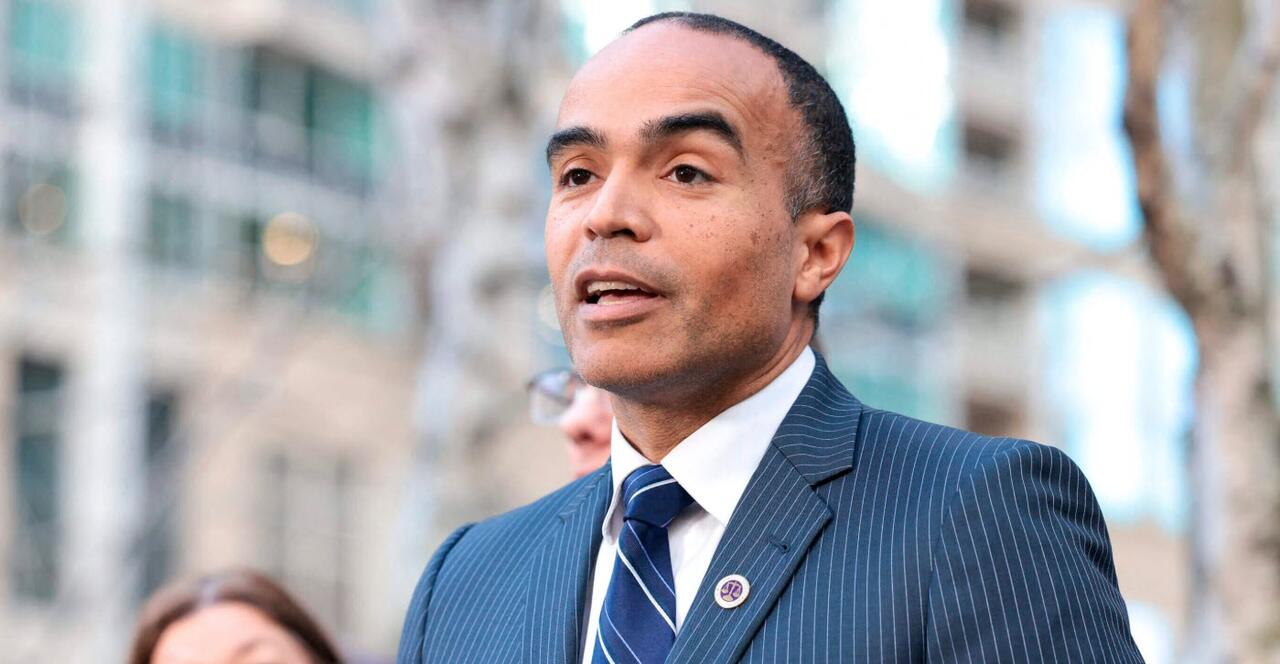
The Washington state attorney general released a statement on X Tuesday evening warning independent journalists to stop investigating fraudulent Somali daycare centers or they could be charged with a hate crime.

“My office has received outreach from members of the Somali community after reports of home-based daycare providers being harassed and accused of fraud with little to no fact-checking,” State AG Nick Brown stated.

“We are in touch with the state Department of Children, Youth, and Families regarding the claims being pushed online and the harassment reported by daycare providers. Showing up on someone’s porch, threatening, or harassing them isn’t an investigation. Neither is filming minors who may be in the home. This is unsafe and potentially dangerous behavior.

Harmeet Dhillon, the Assistant Attorney General for Civil rights, issued a warning of her own in reaction to the Washington state AG’s post.

“ANY state official who chills or threatens to chill a journalist’s 1A rights will have some ‘splainin to do,” she wrote on X, Wednesday morning.

“[The DOJ Civil Rights Division] takes potential violations of 18 USC § 242 seriously!” Dhillon added.

This statute, known as the Deprivation of Rights Under Color of Law, makes it a crime for any person acting under the pretense of law to willfully deprive another individual of rights, privileges, or immunities secured by the Constitution or laws of the United States.

The clash of the AGs came after Youtuber Nick Shirley exposed about a dozen Somali-owned, state-funded childcare facilities in Minneapolis, Minnesota, that appeared to be completely deserted.

Shirley produced a 42-minute video, which has been viewed over 131 million times on X since it was posted on December 26,  alleging that Minnesota governor Tim Walz (D.) “knew about the fraud but never reported it.”

Inspired by Shirley’s bombshell report, citizen journalists in multiple states with large Somali populations have launched their own investigations in recent days.

In the Kent, Washington area Tuesday, YouTuber Chris Sims, a self-described “gonzo journalist,” visited seven suspicious Somali childcare sites and reported that they were “very unhappy” to see him.

Sims posted a video of him approaching a private home listed as a childcare facility that appeared to be not as advertised.

“There was no sign of kids or being a Daycare facility,” Sims wrote.

“I was told by a few they weren’t Daycares despite receiving tax payer dollars. One yelled ‘Call the police’ behind the door.”

On Monday, independent journalists Jonathan Choe and Cam Higby visited an alleged Somali daycare facility in Seattle that receives hundreds of thousands in taxpayers funds and the person who answered the door said there was no daycare there in the past or present.

Higby said “Dhagash Childcare” has received over $210,000 just this year alone.

Another listed childcare facility, a house in a residential neighborhood in Kent, Washington, has received over $863,000 since 2023, according to Higby.

“Residents say there IS NO DAYCARE HERE,” the journalist said.

Another reporter reporting on potential fraud in the Rainier Vista neighborhood of Seattle on December 29th, faced hostile reactions from the Somali residents, who called the police on him.

In his statement, the Washington State AG encouraged members of the Somali community “experiencing threats or harassment” to call the police or his office’s Hate Crimes & Bias Incident Hotline or report it to the state’s hate crime website.

Addressing the independent journalists, Brown added: “If you think fraud is happening, there are appropriate measures to report and investigate. Go to DCYF’s website to learn more. And where fraud is substantiated and verified by law enforcement and regulatory agencies, people should be held accountable.”

The Post Millennial’s Andy Ngo responded to Brown’s threat on X, saying: “It is the duty of journalists to visit taxpayer-funded nonprofits and businesses to investigate where you have failed. The journalists have documented their visits on camera and there is no harassing or threatening behavior. You are trying to threaten journalists by telling people to call police with false allegations of a hate crime.”