A priest meets an Adamson BBQ protestor
https://www.youtube.com/watch?v=
rally from around Ontario to support Adam Skelly, the brave restauranteur arrested for opening his restaurant
A priest meets an Adamson BBQ protestor
https://www.youtube.com/watch?v=
rally from around Ontario to support Adam Skelly, the brave restauranteur arrested for opening his restaurant

The New Intolerance: Social Justice Warriors Shut Down Toronto Eatery
Have you seen my latest video?
Despite the effects of the COVID-19 pandemic and the ensuing lockdowns, a Toronto Star editor caused the closing of a Toronto eatery because of “cultural appropriation.”
So much for “we’re all in this together” right?
The Toronto Star’s Evy Kwong went on Twitter to complain about the owner of Ripe Nutrition, a white woman, because she dared to sell food from another culture.
Seriously.
Have you ever cooked food from another culture?
Did you ever think you were committing “cultural appropriation?”
Of course not.
I’m so tired of cancel culture.
This is why True North will never hesitate to call these social justice warriors out – especially when they’re targeting small businesses at a time when so many Canadians are struggling to stay afloat.
Legacy media outlets like the Toronto Star receive thousands of taxpayers’ dollars courtesy of the federal government to pursue their leftist pet causes.
Unlike the legacy media, True North is not part of the government’s media bailout. We depend on Canadians like you to stand up for the truth and freedom.
If you’re comfortable doing so, please consider making a tax-deductible donation to support True North today.
Thank you,
Lindsay Shepherd Fellow, True North
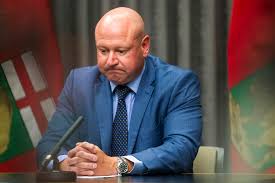
The province of Manitoba in the Dominion of Canada, one of Her Majesty Queen Elizabeth II’s Commonwealth Realms, is my home. We have seen two types of protests directed against the provincial government in recent months, both objecting to the province’s response to the spread of the Wuhan bat flu. One type of protest, such as that which took place in Steinbach on the 14th of November, expresses opposition to the public health orders as trampling all over our basic freedoms of association, assembly and religion and our prescriptive and constitutional civil rights. The other type of protest expressed the views of the socialist opposition party, its leader Wab Kinew and his health critic, and their far left echo chamber in the media which features such automatons as the CBC’s Bartley Kives and the Winnipeg Free Press’s Dan Lett and Ryan Thorpe. Those involved in this type of protest take the position that the government’s public health orders have been too few, too light, and too slowly enacted, and that the government by not imposing a harsh lockdown the moment the case numbers started to rise in the fall, is responsible for all the deaths we have seen since September.
My sympathies are entirely with the first group of protesters, as anyone who has read a word I have previously written on the subject already knows. I should say that my sympathies are with the protesters’ basic position. I don’t much care for the rhetoric of civil disobedience, rebellion, and populism in which that position is often expressed at those protests.
While the second group of protesters are certainly entitled to their opinion and the free expression of the same, a freedom that I note many if not most of them would prefer to deny to me and others who take my side of the issue, their position is easily debunked from an ethical point of view.
When a virus is spreading, government is not required to do everything in its power to slow or stop the spread. Indeed, it has a moral obligation NOT to do everything in its power to slow or stop the spread of the virus. This is because the government has the power to do tremendous evil as well as good.
Let us agree that saving lives that are at risk from the virus is in itself a good and worthy goal. Stopping and slowing the spread of the virus may be a means to that end, but whether it is a good means to a good end or a bad means to a good end is debatable. Slowing the spread of the virus increases the total length of the pandemic, stretching out the time we have to deal with this plague over a much longer period than would otherwise be the case. That can hardly be regarded as desirable in itself. Quite the contrary in fact. Whether this is an acceptable evil, worth tolerating in order to achieve the end of lives saved, depends upon a couple of considerations.
First it depends upon the effectiveness of the method of slowing the spread of the virus in saving lives. If the method is not effective, then the evil of artificially lengthening the period of the pandemic is much less tolerable.
Second it depends upon the means whereby the stopping or slowing of the virus, considered as an end itself, is to be accomplished. If those means are themselves bad, this compounds the evil of stretching out the pandemic.
Neither of these considerations provides much in the way of support for concluding that a longer pandemic is an evil made tolerable by a good end, such as saving lives.
With regards to the first consideration, it is by no means clear that any lives have been saved in this way at all. Indeed, at the beginning of the first lockdown, back when everyone was repeating the phrase “flatten the curve” ad naseum, the experts advising this strategy told us that it would not decrease the total lives lost but merely spread them out so that the hospitals would not be overwhelmed at once. This, in my opinion at least, was not nearly as desirable an end as saving lives and not one sufficient to make the lockdown measures acceptable.
This brings us to our second criteria. The means by which our government health officials have tried to slow or stop the spread of the virus are neither morally neutral nor positively good. On the contrary, they are positively evil. They inflict all sorts of unnecessary misery upon people. Advocates of the lockdown method sometimes maintain that the damage inflicted is merely economic and therefore “worth it” to save lives. This would be a dubious conclusion even if the premise were valid. The premise is not valid, however, and it is highly unlikely that those who state it seriously believe what they are saying.
Telling people to stay home and avoid all contact with other people does not just hurt people financially, although it certainly does that if their business is forced to close or their job is deemed by some bureaucrat to be “non-essential”. It forces people to act against their nature as social beings, deprives them of social contact which is essential to their psychological and spiritual wellbeing, which are in turn essential to their physical wellbeing. Mens sana in corpore sano. The longer people are deprived of social contact, the more loneliness and a sense of isolation will erode away at their mental health. Phone, e-mail, and even video chat, are not adequate substitutes for in-person social contact.
All of this was true of the first lockdown in the spring but it is that much more true with regards to the second lockdowns that are now being imposed. The first lockdown was bad enough, but the second lockdown, imposed for at least a month, coming right before Christmas in the same year as the first, will be certain to pile a sense of hopelessness and despair on top of the inevitable loneliness and isolation. The government has kept liquor stores and marijuana vendors open, even though the combination of alcohol and pot with hopelessness, loneliness, and despair is a recipe for self-destructive behaviour, while ordering all the churches, which offer, among other things, hope, to close. This is evil of truly monstrous proportions. It can only lead to death – whether by suicide, addictive self-destruction, or just plain heart brokenness.
The protesters who accuse Brian Pallister and the government he leads of murder for having re-opened our economy from the first lockdown and not having imposed a second one right away when the cases began to rise are wrong-headed about the matter as they, generally being leftists, are wrong-headed about everything. The government does not become morally culpable for deaths because it refrains from taking actions which are extremely morally wrong in themselves in order to achieve the goal of saving lives. Not imposing a draconian lockdown does not translate into the murder of those for whom the respiratory disease caused by the coronavirus becomes one health complication too many.
Where Pallister does bear moral culpability for deaths is with regards to all the people who will kill themselves, or perhaps snap and kill others, drink themselves to death or accomplish the same with drugs, or simply give up on life in hopeless gloom and despair because he has allowed Brent Roussin, once again, to impose these totalitarian public health orders.
Roussin has been going on television as of late, showing pictures of people who have died, and lecturing Manitobans on how these are not just numbers but people. This is a kind of sleight-of-hand, by which he hopes to distract the public from all the harm he is actively causing, and he knows full well that lockdowns are themselves destructive and lethal for he admitted as much a couple of months ago thus compounding his guilt now, by manipulating their emotions.
Does Roussin realize that this street runs both ways?
What about the young man, Roussin, who would otherwise have had decades of life ahead of him, much more than those whose deaths you have been exploiting to justify your bad decisions, but who killed himself because you cancelled his job as “non-essential”, took away his social life, and left him with the prospect of long-term isolation? Do you not realize that he is a person as well?
In the end, those who die from the lockdown may very well turn out to outnumber by far those who succumb to the bat flu. In which case all that Roussin will have accomplished will have been to exchange a smaller number of deaths for which he would not have been morally responsible for a larger number of deaths that leave his hands permanently stained with blood. Posted by Gerry T. Neal at 1:30 AM
Labels: addiction, Bartley Kives, Brent Roussin, Brian Pallister, CBC, COVID-19, Dan Lett, despair, hope, lockdowns, Manitoba, Ryan Thorpe, suicide, Wab Kinew, Winnipeg Free Press
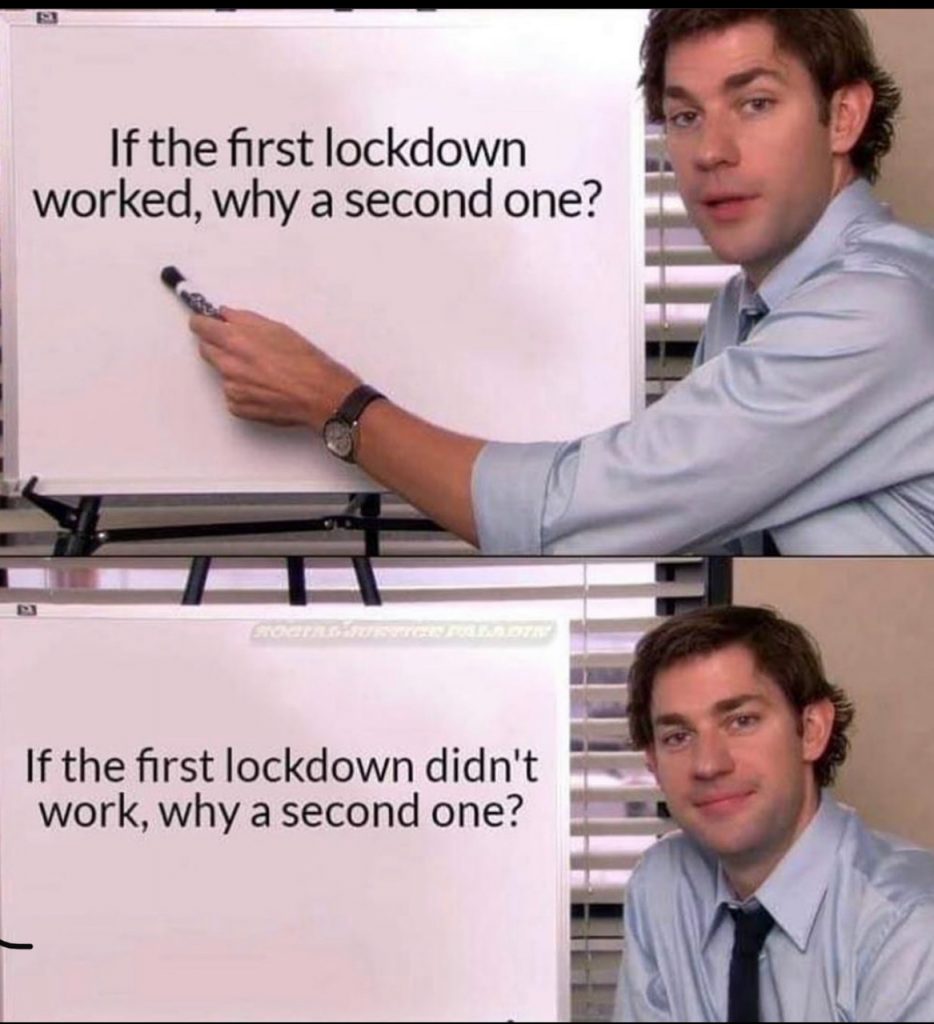
| Old Order Mennonites Must Close Their School & Church: Banned from Singing & A Farmer Forbidden to Access His Farm: Would They Do This to Sikhs or Moslems https://www.rebelnews.com/theyre_very_easy_targets_old_order_mennonite_churches_schools_shut_by_public_health?utm_campaign=kb_mennonites_11_27&utm_medium=email&utm_source=therebel https://www.rebelnews.com/theyre_very_easy_targets_old_order_mennonite_churches_schools_shut_by_public_health?utm_campaign=kb_mennonites_11_27&utm_medium=email&utm_source=therebel Public health officials are targetting the Old Order Mennonite community in Wellington County, Ontario. This small, religious community has been hit with restrictive health measures including mask mandates, gathering limits, and, most importantly, the closure of their schools and churches. These church shutdowns have been a gut-punch to the Mennonites because their communities revolve almost entirely around their churches. But unlike the resistance and civil disobedience that we’ve witnessed by some to these lockdowns, the Mennonite’s strict adherence to pacifism means that confrontation and rebellion run counter to their religious beliefs. Since the Mennonites don’t use computers, cellphones, or even automobiles, finding someone to talk to proved extremely challenging. Still, we did manage to connect with Amsey Martin, a Deacon at the local church, to share his thoughts on these unconstitutional measures. Politicians have strong-armed the Mennonites of Wellington County, whose pacifist nature and religious devotion has made them an easy target. The churches have been closed for nearly two weeks now, but it’s not clear when this community’s collective punishment will end, leaving this close-knit town completely isolated not just from the world, but from each other as well. Yours truly, Keean Bexte |
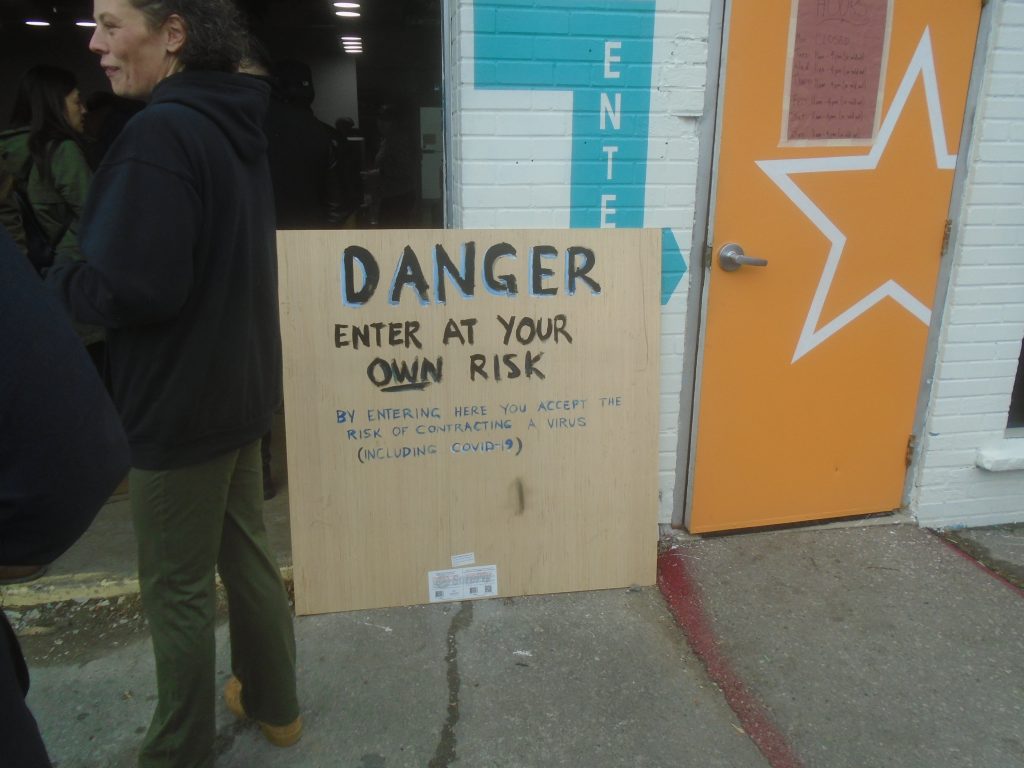
On day three of what will now be known as “The Great Canadian BBQ Rebellion,” I returned to Adamson Barbecue to continue to cover the incredible anti-lockdown protest that was sparked by Adam Skelly’s civil disobedience.
Skelly reopened his little restaurant in defiance of the stage one lockdown that was imposed by in the Toronto region, drawing hundreds of hungry protesters who supported Skelly’s efforts to speak out against the lockdown madness.
If you can believe it, Toronto police and public health enforcement officers changed the locks on Adamson Barbecue in an effort to prevent Skelly from opening his
doors. Under the guise of ‘public safety,’ they attempted to prevent
people from choosing to get a tasty meal at the family-owned
establishment.
And yet, I visited the Costco just down the road to find long lines and people packed into aisles like sardines in a can! Hypocrisy much?
In this video, I spoke to Adam Skelly about his flame-broiled defiance of the lockdown measures hurting small businesses just before he was arrested by Toronto police for trespassing on his own property!
Take a look at our footage, and ask yourself the question: Is this really the direction we are headed as a county?
If you’re a small business owner like Adam who is choosing to open your doors in peaceful defiance of the lockdown, you can tell us your story at iWillOpen.com. You can also pitch in a donation to help us fight the fines of Canadians cited for breaking arbitrary COVID-19 violations on our FightTheFines.com page.

https://torontosun.com/news/local-news/police-city-officials-locksmith-at-adamson-barbecue
Nov 26, 2020 • Last Updated 6 minutes ago • 2 minute read

Adamson BBQ owner Adam Skelly is led away from his restaurant by Toronto Police as supporters tried to wrestle him away on Thursday, November 26, 2020. Photo by Jack Boland /Toronto Sun
BREAKING: ADAM SKELLY HAS BEEN LED AWAY IN HANDCUFFS. FOLLOW LIVE COVERAGE AT THE BOTTOM OF THE STORY
Adamson Barbecue owner Adam Skelly, who has been refusing to follow a provincial lockdown order, has been arrested after officials locked him out of his restaurant Thursday.
Skelly had told the Sun that police told him if he messed with the door that had its locks changed he would be charged with obstruction of justice. He was taken away in handcuffs.
Toronto Police confirm that arrests have been made and officers remain at the scene. “We continue to ask for calm and cooperation,” the force tweeted.
Cops say a second man was arrested for assaulting a police officer.

Adamson BBQ owner Adam Skelly is led away from his restaurant by Toronto Police on Thursday, November 26, 2020. Photo by Jack Boland /Toronto Sun
More to come…
Mayor John Tory appeared on CNN Thursday morning, making it clear Adamson Barbecue will not be serving its slow-cooked beef on this day.
“He won’t be opening today, I can assure you that,” Toronto’s mayor told the American network on that country’s Thanksgiving.
This advertisement has not loaded yet, but your article continues below.
Not long after that quote started to move around Toronto media came word that the city had raided the Queen Elizabeth Boulevard restaurant with hired locksmiths.
The city told reporters on the scene that under order of public health they had changed the locks on the restaurant.
Skelly was joined by a crowd of supporters outside his restaurant. “Need locksmith & other hands at Etobicoke asap,” he had posted in an Instagram story earlier.
This advertisement has not loaded yet, but your article continues below.
On Wednesday, he told the Toronto Sun he not only fully intended to open today but would bring “five times” the amount of food to serve everybody.
He said this despite receiving nine tickets for various alleged (non criminal code) violations under several jurisdictions.
Skelly was ignoring earlier rulings from the province and then a closure order from Toronto’s medical officer of health Dr. Eileen De Villa.

Toronto Polcie officers block the side door outside Adamson Barbecue on Queen Elizabeth Blvd. Thursday, November 26, 2020. Photo by Jack Boland /Toronto Sun
Meanwhile, a man named Barry McNamar has started a GoFundMe account to help Skelly with his legal costs.
“I don’t know him but I do know that guys like him are in short supply during this overblown COVID nonsense and he deserves our support.”
Skelly has been a major big thorn in the side of Premier Doug Ford and Mayor John Tory this week.

Supporters and Toronto Police outside Adamson Barbecue on Queen Elizabeth Blvd. on Thursday, November 26, 2020. Photo by Jack Boland /Toronto Sun
“I was nice to the guy yesterday, but buddy, let me tell you something, you’re putting people’s lives in jeopardy,” Ford said Wednesday.
Tory’s frustration abut the situation was highlighted in a news release late Wednesday that said, “Neither Mayor John Tory nor city council direct enforcement of any kind,” however, “following (Tuesday’s) confusing series of events, caused in part by the fact the regulations are brand new, the mayor indicated he was dissatisfied with the outcome of the Adamson matter, asked repeated questions, and was assured at this morning’s COVID-19 Strategic Command Table meeting that there was alignment and that the various authorities were ready for an anticipated repeat opening.”
This occurred Thursday morning with the changing of the locks of Adamson Barbecue.
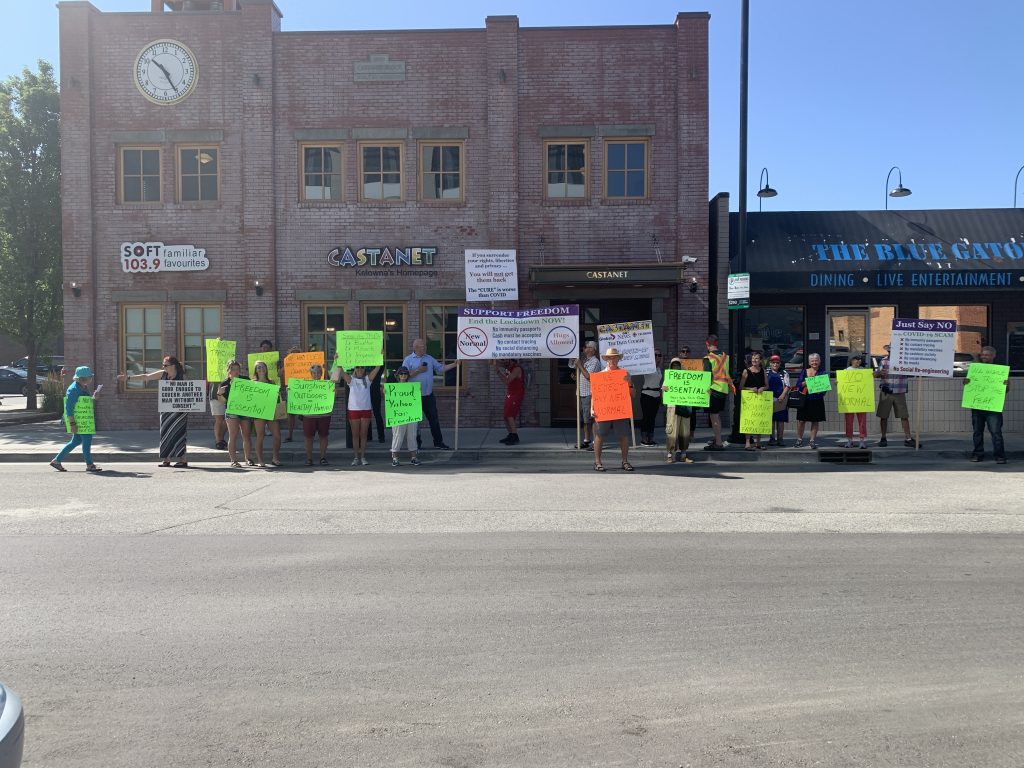
| Rebellion rising; the people have had enoughby Jon Rappoport Signs of the times— Large anti-lockdown protests are sweeping across Europe. Denmark, France, Germany, Italy, the UK, Poland. The media are trying to put a lid on coverage of these momentous events. In Southern California, five sheriffs of populous counties (17 million people) are refusing to enforce Governor Newsom’s new curfew order. A petition to recall the governor is gaining steam. In New York, members of the Chasidic sect held a wedding attended by several thousand people, sitting closely packed without masks. In a more intimate setting, up close and powerfully personal, gym members and owners in Buffalo, New York, shouted down cops and a public health officer, who had entered the gym because the gathering exceeded the prescribed limit. The gym personnel drove out the cops and followed them, to make sure they left the property. In Buffalo, protestors came to the house of Erie County Executive, Mark Poloncarz, to express their anger at new lockdown restrictions. The protest was also aimed at New York Governor Andrew Cuomo. Sheriffs in Fulton and Erie Counties (New York) are refusing to enforce Thanksgiving lockdowns which limit the number of people in private homes. In various areas of England, police have warned government officials they’re “sitting on a time bomb,” because lockdown rules make it illegal for two or more families to gather together for Christmas—and law-enforcement personnel are permitted to invade homes where violations are occurring. The time bomb is, of course, huge numbers of outraged citizens. In Australia, Qantas airline CEO Alan Joyce announced that travelers will be able to fly only after receiving the COVID vaccine, once it is approved. Soon afterwards, Joyce stood at a podium at an event to give a speech, and a grizzled Aussie walked up to him and shoved a pie in his face. Two women saw New Jersey Governor Phil Murphy eating dinner at a restaurant with his family. He was maskless. “You’re such a dick!” one woman told him. Murphy has just extended his state’s lockdown, the ninth time he has done so since March. At his dinner table, Murphy tried to remain calm. He put on his mask. Andrew Kudrick, the police chief of Howell Township in New Jersey, says he won’t enforce the governor’s “draconian” limit of 10 people for Thanksgiving dinners. The CDC has told Americans to stay home for Thanksgiving. Last weekend, two million Americans boarded flights. In a form of silent protest, 300,000 residents of New York have left the city since pandemic restrictions began. It should be noted that, among the several hundred thousand (or more) Trump supporters who gathered in Washington DC, at a Stop The Steal rally, few people wore masks, and no one paid attention to social distancing regulations. Across America, without fanfare, pockets of the economy are wide open—no masks, no distancing, no one is paying attention to government regulations. The walls of lockdown Medico-Stalinism are cracking, in large ways and small. Actually, there is no small. Every act inspired by the fire of freedom counts. |
Court
file No S -196032
Vancouver Registry
IN THE SUPREME COURT OF BRITISH COLUMBIA
holden at Vancouver
IN THE MATTER OF THE JUDICIAL REVIEW PROCEDURE ACT
[ RSBC 1996 ] Chapter 241
IN THE MATTER OF THE BC HUMAN RIGHTS CODE
[ SBC 1996 ] Chapter 210
BRITISH COLUMBIA HUMAN RIGHTS TRIBUNAL
1170 605 Robson Street Vancouver BC V6B 5J3
MORGANE OGER
C/o Allevato Quail and Roy
405 510 West Hastings Street Vancouver
V6B 1L8
Let all persons whose interests may be affected by the Orders sought TAKE NOTICE that the Petitioner applies to Court for the Relief set out in this Petition
This
proceeding has been started by WILIAM WHATCOTT, Petitioner, for the relief set out in Part 1, below
If
you intend to respond to this Petition, you or your lawyer must
(
a ) file a Response to Petition in Form 67 in the above-named Registry of this
court within the time for Response to
Petition described below, and
( b ) serve on the Petitioner
( i ) 2 copies of the response to Petition, and
( ii ) 2 copies of each filed affidavit upon which you intend to rely at the hearing
Orders,
including orders granting relief claimed, may be made against you, without any
further notice to you, if you fail to file the response to petition within the
time for response.
Time for response to Petition
A response to Petition must be filed and served on the Petitioner,
( a ) if you reside anywhere within Canada, within 21 days after the date on which a copy of the filed petition was served on you,
( b ) If you reside in the united states of America, within 35 days after the date on which a copy of the filed petition was served on you
( c ) if you reside elsewhere, within 49 days after the date on which a copy of the filed petition was served on you, or
(
d ) if the time for response has been set by order of the court, within that time
( 1 ) The address of the Registry is :
800 Smithe
Street Vancouver British Columbia
(
2 ) The ADDRESS FOR
SERVICE of the Petitioner, is :
Post
Office Box 47034 Langford British Columbia V9B 5T2
( 3 ) the Petitioner speaks for himself
FIRST
For an Order that, because therewas a reasonable apprehension of bias in the tribunal from before it even got underway, its ruling is thus set aside
SECOND
For Declaration that
sections 2 ( a ) 2 ( b ) 2 ( c ) and 2 ( d ) of the Canadian
Charter of Rights and Freedoms do override section 7 ( 1 ) of the B C Human
Rights Code. And for an Order that the ruling of the
Tribunal in the matter of OGER versus WHATCOTT
is thus a nullity
THIRD
For Declaration that section
2 ( b ) of the Canadian Charter of Rights and
Freedoms entrains the right of a citizen to receive
expressions of particular information previously unknown to him or her. And for an Order that, as the Tribunal failed to consider
the right of each elector in Vancouver Fraserview riding to receive information
via the publication in question, the Tribunal erred in law
FOURTH
For Declaration that by excluding certain witnesses whom WHATCOTT had called to
testify in his defence, the Tribunal denied him the right to make full answer
in defence
FIFTH
For Declaration that, by preventing the
Defendant testing the veracity of the proposition central to the case, ie,
Complainant’s assertion that he ‘is a woman’ then relying upon it as a fact when there was
no evidence supporting it, the Tribunal
made an error in law
SIXTH
For an Order that
Commissioner Cousineau’s ruling in the BC Human Rights Tribunal matter of OGER versus WHATCOTT,
having been predicated in abovementioned errors of law, is therefore set
aside ; a nullity
01 the FACTS which form the basis of this
matter are set out best in pages 1 to 3 of the
Amended Additional Response which is Item One in
the MATERIALS TO BE RELIED UPON. At all
times material to his complaint OGER was a vice president of the New Democratic
Party. In the provincial election in
June 2017 he was that party’s candidate in the Vancouver False Creek riding
02 OGER was
born in France. Official records in that
country reflect that he was born a male child, with the birth name “RONAN”.
[ page 44 lines 28 to 47 of the
transcript ] In
Canada, OGER married a woman and had
children with her. At the time those
children were born, Complainant identified himself as “Ronan Oger”.
Official records of the birth of each of his children show ‘Ronan Oger’
as their father. The transcript of the hearing shows OGER pitching to the
Tribunal that the flyer and subsequent commotion arising from it, affected his children. At no time in his
political activity, particularly in his campaign in the 2017 provincial
election, while declaring himself their parent, did OGER ever say that he was not the natural father of those children. Apparently – from his campaign literature /
public appearances – Complainant manipulated the Vital Statistics Branch of
British Columbia to change certain information in official records to pretend
he is now female.
03 After the election OGER originated a
formal complaint to the Human Rights Commision about the flyer in which
WHATCOTT critiqued OGER’s fitness to be elected. Devyn Cousineau was appointed to be the
sole commissioner presiding on the tribunal considering that complaint.
Appointment of Commissioners to preside over Administrative Tribunals falls
under the Ministry of Attorney General.
In the run-up to the hearing,
various citizens notified Attorney General Eby that Cousineau was a
long-time activist promoting the cause of “transgender rights”. AG Eby never dealt with complaints that her
presence on the tribunal was a reasonable apprehension of bias. Rather,
AG Eby appointed two more people to the tribunal with Cousineau in
charge.
04 The
Tribunal proceedings are best described in modern parlance as a charade trying
to give the pretence of impartial adjudication of law but in reality, it was
nothing more than a pro-LGBT kangaroo court in which there was not defence that
WHATCOTT was able to employ that would
have brought about a different result, other than him renouncing the truth that
Mr. Oger is man. To the chagrin of its
members, WHATCOTT correctly referred to
OGER as male, using the correct pronouns
‘he’ and ‘him’ when giving testimony in his own defence. During the hearing
adjudicator Norman Trerise in advertently spoke the truth, referring to OGER
four times using the correct pronouns even though he later concurred with the
other two adjudicators in finding WHATCOTT guilty and assessing additional
costs because WHATCOTT did the same. Diana Jurecivic revealed her bias by
ordering WHATCOTT to remove his teeshirt
that said Mr. Oger was a man, and had the Bible verse “God made them male and
female”
Genesis 5:2. But Jurecivic did
not order the homosexual and transgender activists in the room, to remove their
shirts with pro-LGBT slogans. Ms Jurecivic kept a score of the times WHATCOTT
refused to lie ( as he was ordered by the Tribunal, allegedly, to protect Mr
Oger’s feelings) And tallied each time
WHATCOTT used the correct male pronouns in his defence. The Tribunal refused to
consider that WHATCOTT would literally
be discrediting his own defence, his beliefs and his moral character if he
referred to the Complainant with female or gender-neutral pronouns. In its ruling the Tribunal assessed
WHATCOTT an additional $20,000 in costs,
because he refused to participate in the charade i.e ‘Mr. Oger is a woman’.
05 The
Tribunal delivered its ruling in March 2019.
On May 24th 2019 lawyer Daniel Mol originated a Judicial
Review on behalf of WHATCOTT. On
November 13th 2019 a private
citizen – acting completely independent of lawyer Mol nor WHATCOTT – took it
upon himself to serve Respondents with a copy of the Petition, only. UN-learned in the law, assuming that there
was no requirement to serve them because they were available electronically,
that individual did not serve hard copies of Affidavits which had been filed
when the Petition was originated.
Neither Respondent submitted a Response to that partial service. After May 29 2019 professional lawyer Daniel
Mol took no further step in the matter.
On October 15th 2020 William WHATCOTT took back
personal conduct of this matter. Mr
Mol is not counsel of record.
06 This Petition is brought in accordance with the Judicial Review Procedure Act to have a Justice of the Supreme Court review a ruling of a provincial body. For his argument for setting aside the ruling of the Tribunal, Petitioner adopts the reasoning including the authorities, published by his counsel at the hearing, the Summary a copy of which is Item Three in the MATERIALS TO BE RELIED UPON. And for certainty : said reasoning is set out in this PART using letters defining paragraphs instead of the numbers used in the original.
Reply
to Attorney General Submissions OGER versus
WHATCOTT
( a ) At stake is the future of political free
speech. The question is whether the
Province has jurisdiction to regulate the content of political free speech uttered
or stated in a publication in the course of an election campaign.
Is
the Subject Matter Within the Scope of Section 92 (13) read together with 92
(16) of the Constitution Act, 1867
and Within Provincial Jurisdiction ?
( b )
In Scowby, Estey J. at p. 233i, determined that the test for deciding
whether a section of a provincial human rights code falls within the
jurisdiction of the province, boils down to the
activities legislated. Housing, employment and
education were all activities that
are in relation to property and civil rights or were matters of a local and
private nature.
( c ) The activity of political free speech is at issue here. Is there absolute freedom to discuss the moral fitness of a political candidate running for public office?
( d ) The Respondent says that his liberty, personal autonomy, psychological integrity rooted in security of the person, all guaranteed by s. 7 of the Charter, is impaired by the coercive reach of s. 7 of the BC Human Rights Code (“Code”). Moreover, his deprivation of these constitutional freedoms is done by a governmental adjudicative process that violates fundamental principles of justice. Rulings made by the Tribunal, both before and during the hearing, resulted in the abandonment of the search for truth, a prohibition upon cross-examination of the complainant to test credibility, the application of a legal test for liability that eliminates mens rea, a legal test that eliminates good faith, a legal test that deems truth to be irrelevant, deprivation of a finder of fact composed of a representative jury, and the imposition of an order compelling speech to conform to gender specific pronouns.
( e ) The result is the imposition of strict liability based on an objective test of a hypothetical reasonable person. Although the norm in judicial review of administrative action is reasonableness, the Respondent says that the appropriate legal standard can only be one of correctness. This is because what is reasonable to the average person who forms part of the majority, does not take into consideration what is reasonable to discrete and insular minorities, who are powerless and marginalized because of unpopular views. To counter this imbalance, a finder of fact assessing this case, that is essentially about democracy, must give weight to unpopular dissenting views that are perceived as unreasonable or even hateful, by adopting a correctness standard, instead of a reasonableness standard that will only be certain to impose liability upon the Respondent.
( f ) The Respondent says that there is no authority, express or implied, within the scope of s. 92 of the Constitution Act, 1867 that grants jurisdiction to the province to regulate the content of political speech in the course of an election campaign. Section 7 of the Code strikes at the heart of democracy. Here is why.
( g ) The prohibition of alleged hate speech during an election campaign will exacerbate social problems and not relieve them. Banning free speech will bottle up steam that needs a way to peacefully vent. Restricting free speech disrespects individual autonomy and self-determination. The concept of democracy is self-government by the people. For the system to work, an informed electorate is necessary. In order to be knowledgeable, there must be no constraints on the free flow of information and ideas. Democracy will not be true to its essential ideal if there is law that can manipulate the electorate by withholding information to stifle criticism of the moral fitness of a political candidate.
( h ) Democracy thrives when there is no regulation of the content of free speech during an election. Good intentions to prevent hurt feelings to targeted candidates harms the political and democratic process. Free speech, not human rights law, is the antidote to the social diseases of prejudice and hate. In this war on free speech, the ultimate casualties are truth and democracy.
( i ) Whatcott’s flyer created a golden political opportunity and platform for Oger to expose Whatcott as a prejudiced bigot and to attack the Bible as a fount of hate literature. The activities of Whatcott identified him as a political opponent and revealed the precise nature of his thinking. This allowed Oger to counter with a strategic political response, by using religious clergy to oppose the biblical authorities cited by Whatcott.
( j ) The effect of legally supressing unwelcome political speech will outrage and alienate those who share Whatcott’s beliefs and views. This consequence marginalizes minorities who may then view the legal order as illegitimate and regard the electoral and democratic process as a one-sided sham. History teaches us that suppressing peaceful political speech in the short term can eventually lead to violence and illegal means to accomplish political goals. Conflicts are inevitable in any society, but what sets democracy apart from other political systems is that it offers the means to resolve conflicts peacefully without violence.
( k ) Regulating political speech means that the majority and “reasonable” viewpoint in society will attain power that can lead to abuse. Classifying dissenting minority speech as unprotected “hate” speech, will be an easy means to attack moralists who quote the Bible, and to expose people like Whatcott to detestation and vilification by the general public. People like Oger will use s. 7 as a shield to defend dominant groups that have protected status in law, and used like a sword to punish Whatcott, by stifling his political speech and to financially and socially destroy him, labeling him a hater and relegating him to marginal existence, all because Whatcott decided to meaningfully participate in the democratic electoral process and to manifest his religious faith.
( l ) The irony is that outliers and dissenters who are most in need of speech protection, will be denied that protection by any finding that s. 7 of the Code is constitutional and may regulate the content of political free speech. If the Tribunal disempowers those who advance biblical authority to justly criticize the moral fitness of a political candidate for public office, the enemies of Whatcott and what he stands for, will have cleverly set the stage for a direct attack on the Bible itself, as cesspool filled with hate literature, that condemns the immoral to eternal suffering and punishment for sin. All this will flow from an innocuous complaint regarding the content of a political and religious flyer that has not a shred or hint of posing any clear or present danger of criminal activity or hatred to the person of Oger or to anyone else associated with Oger’s gender identity.
( m ) All these aforementioned activities cannot be said to have any rational connection to the powers granted to a provincial government under s. 92. The inevitable conclusion is that s. 7 of the Code poses a grave threat to the very foundations of democracy itself.
( n )
Regulating the content of political
free speech and thus restricting Whatcott’s public participation in the
democratic electoral political process is incompatible with a free and
democratic society.
( o ) If s. 7 of the Code is constitutional, then the provincial government will have the authority to regulate the content of political expression during an election. Such a finding is opposite to the conclusion of the Tribunal in CJC v. North Shore News, para. 190, “Thus s. 7(1)(b) does not in any way restrict hateful expressions that are likely to expose … politicians … to hatred or contempt, because of their political affiliations …” Close scrutiny of Whatcott’s flyer reveals that his goal was to persuade other voters not to vote for the NDP, a political party advocating the political, legal, and social agenda of Oger, who is the current Vice-President of that same party.
( p ) The content of political free speech cannot be limited by provincial law, as this activity is outside the scope of s. 92 and arguably also s. 91. The written and unwritten constitution of Canada is a legal instrument that is superior to any positive law passed by any provincial government or by the federal government. Unregulated political free speech is in its own right, is a political institution of the highest order, enshrined by both the implied bill of rights found in the unwritten constitution and in the Constitution Act, 1982. Support for this is found in the Keegstra decision, where freedom of expression is regarded as the most powerful of all the s. 2 Charter rights. See: Brunner, p. 302.
( q ) In Switzman v. Elbing, at p. 328 [SCR], Abbott J. stated, “… neither a provincial legislature nor Parliament itself can ‘abrogate this right of discussion and debate.’” Political free speech is the lifeblood of democracy. Political free speech, like the air itself, is not confined to the physical limits of a building housing the elected members of parliament or the legislature, but extends everywhere as a treasured political institution that is at its highest level of importance, during an election campaign, when the freedom to choose a candidate is at stake.
( r ) In this case, the Whatcott flyer injects truth and Christian morality into the political debate, to dissuade voters from electing a party that nominated an individual perceived by Whatcott to be morally unfit. To mischaracterize a flyer intended to be the sunlight of truth as the darkness of hate, disregards the rule of law, which permits citizens to “explain, criticize, debate and discuss in the freest possible manner such matters as the qualifications … and social principles …” of a political candidate. See pp. 327-8, per Abbott J. in Switzman.
( s ) Do moral virtues and social principles derived from Judeo-Christian authority that informed the genesis and development of the common law and the rule of law still matter today? If the answer is yes, the message that Whatcott preached through his flyer cannot be properly interpreted as hateful at all.
( t ) While gender identity and expression is be legal as a protected class under human rights legislation, there is a hot political opposition from some feminists who argue that this kind of activity is unwelcome gender misappropriation, offensive to biological women. Does this mean that all political opposition to the legal status quo is uniformly hateful, whether based in feminist theory or in Christian doctrine? If only Christian doctrine is viewed as hateful, is this not bigotry and hate toward Christianity itself, manifested as Christphobia?
( u ) The human rights legislation includes religion as a protected class too. Is not the depiction of Whatcott’s flyer as hate, also an indirect attack on the Bible itself as hate literature? Where is the jurisdiction in the province to make a determination that the holy book of a major established religion is hate speech and cannot be quoted in an election to oppose the morality, political platform, and social principles of a political candidate? Assuming there is a hate finding against Whatcott, is this not State discrimination against Christian evangelists and activists, contrary to the statutory policies of the Code? Where is the jurisdiction in the division of powers that allocates such a sweeping mandate to a province? There is none.
( v ) A political proposal to repeal the protection of those people who identify as transgender might be regarded by some as hateful, and the subject of a complaint to the human rights tribunal. But however repulsive Whatcott’s political actions might be to Oger, who lobbied to amend the Code to protect gender identity, CJC Duff ruled in Reference re Alberta Statutes, at pp. 133-4 that “every point of view” is legitimate in both the advancement and in the attack upon political proposals. This freedom is governed by criminal laws that protect public order from violence and protects by tort law the reputation of individuals from defamation. Duff CJC does not identify the truth as a limitation that may be restricted by law.
Is the Subject Matter Within the Exclusive Jurisdiction of the Criminal Law, s. 91 (27) Constitution Act, 1867 ?
Specific Response to Paragraph 40,
AG Factum
( w ) The imposition of a penal sanction, such as the deprivation of physical liberty for a predetermined period of time, is not the only identifying characteristic of criminal law regarding the classification of legislation to be in pith and substance criminal law. Whatcott faces the possible lifetime deprivation of his liberty to evangelize, to manifest his religion in the public square, and to use the pronouns he chooses. He also risks losing his freedom to express his conscience and to publicly rebuke immorality, as part of his participation in a democratic election to urge voters not to vote for a candidate or a political party, or both, that he believes is morally unfit to hold public office and to exercise power. These infringements of liberty are far more insidious and restrictive of personal liberty and his psychological integrity, which is integral to his security of the person, than incarceration that imposes no control over the mind.
( x ) Section 7 of the Code resurrects the crime of seditious libel that was once regulated in the Criminal Code. Exclusive jurisdiction for the regulation of hate speech as a crime is conferred upon the federal government by s. 91(27). The Keegstra decision is an illustration of the exclusive authority of the federal government to regulate hate speech.
( y ) In this case, Oger asked the police to bring a hate crime prosecution against Whatcott. No charges were laid. That ought to have been the end of the matter. It is a violation of the rule of law and the division of powers to use human rights legislation as criminal law to accomplish the suppression of Whatcott’s views.
( z ) Had Whatcott been charged with a hate crime, he was entitled to be presumed innocent until proven guilty beyond a reasonable doubt, to test the credibility of Oger, to rely upon the defence of truth, to the admission of expert evidence from Dr. Gutowski, allotted more time to cross-examine and to make legal submissions, and if indicted, to be tried by a judge and a jury, just to name a few due process protections available under criminal law. Whatcott would have been far better off to be criminally charged and undoubtedly acquitted.
( aa ) The test for charge approval is that there is no likelihood of conviction and that it is not in the public interest to proceed. That was the right decision.
( bb ) However, s. 7 of the Code is bereft of the due process requirements of criminal law. In effect, Whatcott is unconstitutionally prosecuted for a human rights hate crime that is not only outside the jurisdiction of the province, but also is shamefully lacking legislative safeguards that ensure due process.
( cc ) The penal sanctions test deserved more than just a cursory look by the Attorney General to see if the Tribunal has the power to jail Whatcott or not. A proper analysis begins with the finding of liability. A finding of liability under the applicable statute attaches moral culpability and social stigma to the offender. The sanctions imposed by both a sentencing judge for a criminal offence and for a human rights offence are the same. The sanctions are designed to compel behaviour modification.
( dd ) Behaviour modification is the goal of sanctions that are designed to denounce, deter, rehabilitate and make reparations to the complainant and to society at large. In this case, this Tribunal is asked by Oger to make a finding of liability; to make a declaration that s. 7 of the Code was violated; to impose costs of $35,000 for alleged defiant and disrespectful behaviour, both in and out of the sight of the Tribunal members; to assess a severe monetary penalty of $35,000 to punish for the public expression of alleged hateful thoughts and ideas that allegedly harmed Oger’s dignity and reputation, to pay an unspecified large sum of money to a transgender-rights organization to pay for harm done to the larger transgender societal community; for an order that Whatcott be compelled to be re-educated by participating in a school designed to teach him a better understanding of gender identity, with the goal to humble and humiliate Whatcott by indoctrinating him with the Tribunal’s view of Whatcott’s legal obligations under the Code.
( ee ) Denunciation is accomplished by the declaration that Whatcott violated the Code and amounts to a societal miscreant who is a hateful bigot. The monetary penalty of $35,000 for harming Oger’s dignity and reputation serves as a deterrent to both Whatcott and others who might follow his example. The monetary penalty of $35,000 in costs also serves to deter Whatcott and others from criticizing the lack of due process, coercion and bias alleged by Whatcott to have permeated the human rights proceedings. The coerced donation to an organization supporting what Whatcott considers to be immoral political, social and cultural goals is designed to make reparations to a certain segment of society that identifies with the political advocacy of Oger. The order for coerced re-education is designed to rehabilitate Whatcott in the hopes that his thinking and behaviour will conform in the future to transgender values and objectives. The individual and collective sum of all these sanctions amount to behaviour modification through a combination of financial penalties, social stigma, and forced re-education of his mind by social engineering.
( ff ) These sanctions are indeed penal and to anyone with a sound knowledge of criminal law, recognize that these sanctions follow the basic principles of criminal law sentencing. In fact, the sanctions sought are more comprehensive and more draconian than simply a fine and a term of probation with conditions that is normally imposed as sanctions for summary conviction offences that result in a criminal record.
( gg ) A human rights record is no less odious than a criminal law record, and is perhaps even worse, because there is no process for a human rights pardon. Whatcott faces a lifetime of unemployment. No employer is required to hire an individual deemed by law to be a hate monger. He will be discriminated against, in spite of his Christian beliefs. Social isolation, ostracism and expulsion are other consequences. For an indigent individual like Whatcott, bankruptcy looms, and the financial penalties affect not only him, but his wife and two young children. Compulsory re-education imposes the state’s will upon Whatcott’s security of the person, in a similar manner to a judge unconstitutionally ordering the castration of a convicted sexual offender or the forced ingestion of unwanted prescription drugs upon a convicted person, to modify that individual’s behaviour and mental state. Compulsory re-education at a facility amounts in principle to a form of temporary incarceration to brainwash Whatcott so that he will modify his Christian beliefs to accept transgenderism. This sanction is similar to the current situation in China where over a million Muslim Chinese are confined to a detention facility to modify their religious beliefs so that the prevailing orthodox view of the secular state is unchallenged in society.
( hh ) For the Attorney General to conclude without any substantive analysis in paragraph 40 that “there is no penal sanction that could possibly make this [legislation] criminal law,” ignores the provisions of the human rights legislation, that permit sanctions that follow the principles of behavior modification and sentencing utilized in criminal and human law.
( ii ) There is no doubt that s. 7 of the Code in pith and substance is criminal law. Rand J. at pp. 12-13 [SCR] ruled in Switzman that prohibiting any part of political free speech “as an evil would be within the scope of criminal law,” and then referred to sections of the Criminal Code that dealt with sedition.
( jj ) Section 7 of the Code, according to the AG in para. 40, does not specifically ban the propagation of a political belief. If that is the case, why was this case not dismissed at an early stage upon the application of Whatcott? The evidence in this case is clear that Whatcott was expressing a political belief that was grounded in Christian morality.
( kk ) Duff, CJC read s. 92(13) and s. 92(16) together in Reference re: Alberta Legislation. At p. 26 [SCR] Duff summed up the law that leaves no doubt that s. 7 of the Code falls outside provincial jurisdiction: “Democracy cannot be maintained without its foundation: free public opinion and free discussion throughout the nation of all matters affecting the State within the limits set by the criminal code and the common law. Every inhabitant … is also a citizen … The province may deal with his property and civil rights of a local and private nature within the province; but the province cannot interfere with his status as a Canadian citizen and his fundamental right to express freely his untrammelled opinion about government policies and discuss matters of public concern.” [My emphasis]
( ll
) This conclusion is supported in
para. 47 of the AG factum. In OPSEU, Beetz J. held, “… neither
Parliament nor the provincial legislatures may enact legislation the effect of
which would be to substantially interfere with the operation of this basic
constitutional structure.” The
structure is the right to abrogate the right of free public discussion and debate
referred to in the immediately preceding authorities cited, of Switzman and Alberta Statutes.
( mm )
The law is clear: the mandatory and
prohibitory provisions of s. 7 of the Code are ultra vires of the provincial legislature.
07 Section 32 of the British Columbia Human Rights Code Application of Administrative Tribunals Act to
tribunal, particularly, its section ( i ) states section 45 [ tribunal without jurisdiction over Canadian
Charter of Rights and Freedoms issues ]. Cousineau et al. were statute-barred from
entertaining the OGER complaint until Charter issues had been canvassed in the Supreme
Court of B C. As a
lawyer knowing perfectly-well that
the matter invokes the Charter ab initio, and that the Defendant had
already voiced such defence to the Commission in the run-up to the
hearing, Commissioner Cousineau ought
not to have gone ahead with OGER’s complaint, at all.
08 UN-learned
in the law as he was prior to the hearing,
it was not incumbent upon WHATCOTT to point out to the tribunal that the
BC Human
Rights Code is fatally-flawed. Even if he was remiss in not challenging
that aspect in the run-up, he hereby
raises it now pursuant to section 24 of the Charter of Rights and Freedoms
AS REGARDING THE THIRD DECLARATION AND ORDER SOUGHT
09 Several
people applied to Intervene in the hearing but were denied standing. One of them being Gordon S Watson, who had
stood as a candidate in the provincial election of 2001. He funded part of the cost of publishing the
flyer in question. Watson’s submission
to the Tribunal prior to the hearing proves he did intend to argue that the
reciprocal of the right to expression, is the right to receive information.
Thus every one, whether known to a
publisher or not, has the right to receive new information by any and all
media, especially the free press. And
that as an Intervenor he could best make this argument. Shutting out his pitch re such right directly
on-point legitimacy of speech in the fray of the election, the Tribunal evaded its duty to hear from a
stake-holder as it dealt with a kind of complaint never encountered before.
REASONABLE APPREHENSION
OF BIAS
10 Because of
the fact that political activist Cousineau had been appointed to preside over
the OGER WHATCOTT matter, when it was well known she was a longtime activist in
the “trans-gender” cause, there was apprehension of glaring bias such that the
Tribunal was convened illegally ab initio.
Item four the MATERIALS TO BE RELIED UPON, find a photograph of her in
full throat in her activist mode. The
location, ie. on the public sidewalk outside the MLA constituency office of
Premier Clark, is important.
MLA Christie Clark – miraculously – moved the “transgender” amendment to the
B C
Human Rights Code through the Legislature via
3 readings in one day, while the gallery was packed with supporters of that
political cause.
11 Any
reasonable person who learned that AG EBY had picked Cousineau to preside on
the OGER WHATCOTT matter, involving this vice president of the New Democratic
Party ( OGER ) can see that that was done so the goal of OGER and Cousineau’s
personal political campaign would have the color of law. Allowing this matter
to go ahead under Cousineau, after
her bias had been brought to his attention, AG Eby knowingly evaded his duty to
ensure WHATCOTT’s civil right to due process of law
: ‘the fix was in’ and the Attorney General himself was in on the fix.
12 After
the fact, Cousineau’s prejudice is
proven in her Reasons where she changed the very words spoken in the hearing,
inserting feminine pronouns where the official transcript shows WHATCOTT having
used “he” “his” “him” when referring to OGER.
13 The nature of evidence is
that it can be tested. If it cannot be tested, it isn’t evidence
Had
OGER’s core delusion been put to the test in cross-examination, his credibility
would have been ruined. Example being, at page 47 lines 43- 44 of the
transcript of examination in Chief, where OGER
relates an exchange with someone who believes he is mentally ill. For
the Tribunal to prevent WHATCOTT’s counsel from testing OGER’s assertions that
he was somehow ‘a mom … her children … who she is’ [ lines 17 to 20 page 41 transcript of his
evidence in Chief ]
while relying upon that absurdity as a fact, is an error of law.
14 Compelling
his accuser to take the witness stand so he can be exposed as a liar is a
fundamental right of a Defendant within British jurisdiction. This right is long established … predating
the Canadian
Charter of Rights and Freedoms. WHATCOTT was entitled to exercise that right
in order get at the facts regarding OGER’s mental state, especially the
delusion that he “is a woman”. The term for the mental
illness suffered by OGER is gender dysphoria. Such people are
“brittle” personalities. When their
preposterous self image is challenged, they come un-glued. Based on its acceptance that what the
Complainant said was so, but for which there was not a scintilla of evidence
then the Tribunal’s ruling is as patently absurd as OGER’s belief he “is”
a woman.
Petitioner estimates that the Review will take one full day of Court.
All of which is respectfully submitted
Dated this 24th day of November 2020 A. D.
______ __________________
signature
of Gordon S Watson
Agent for Petitioner WILLIAM WHATCOTT
By Cosmin Dzsurdzsa – November 25, 2020 Share

A number of Canadian journalists and pundits are not happy about a Toronto small business defying Ontario’s lockdown orders.
On Wednesday, the owner of Adamson Barbecue Adam Skelly opened his doors a second time for indoor dining in defiance of the province’s latest coronavirus restrictions.
Although Skelly received a lot of support from Canadians, a few journalists expressed their unhappiness with his business re-opening.
CTV pundit tells business owner to “get bent” calls for restaurant to be chained up
On Tuesday afternoon, CTV News correspondent Scott Reid tweeted in response to Adamson Barbecue’s re-opening by saying that authorities to “chain the joint” and for Skelly to “get bent.”
According to Reid’s LinkedIn, he has been a correspondent with the national news agency since 2011 and he was once the Director of Communications for Liberal Prime Minister Paul Martin from 2003 to 2006.
CP24 editor gloats about small business getting shut down
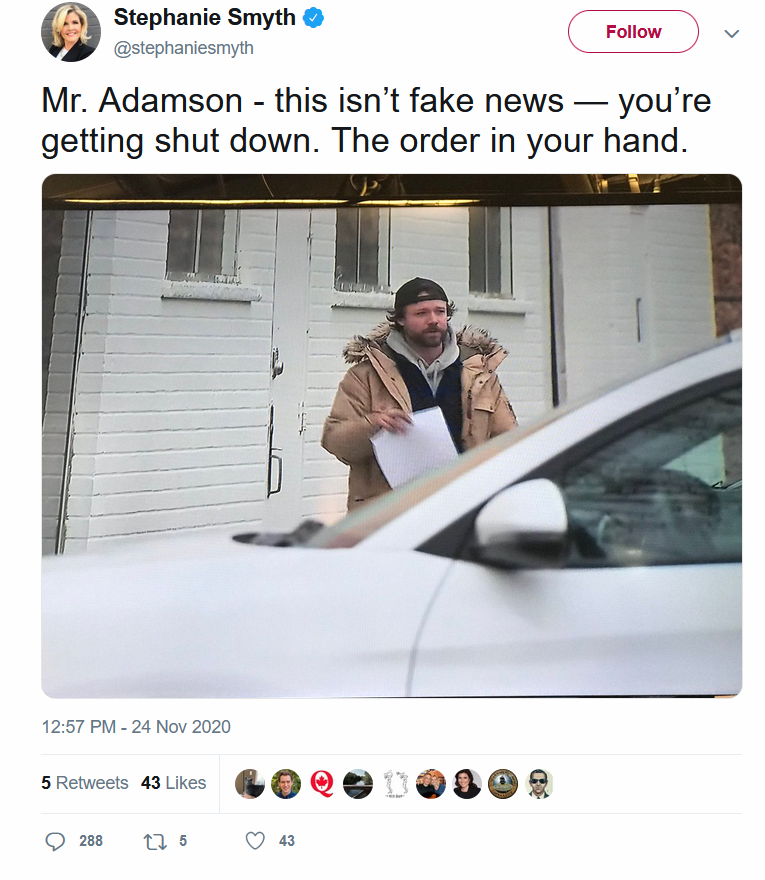
While local officials were notifying Skelly that his business had been ordered to close, CP24 Managing Editor Stephanie Smyth commemorated the event by taking a jab at the small business owner on Twitter.
The tweet which has since been deleted shows Smyth telling Skelly “you’re getting shut down.”
Nora Loreto accuses business owner of “extreme white guy energy” and cries racism
Controversial freelance writer and commentator Nora Loreto took the opportunity to lecture fellow journalists for not making the Adamson Barbecue story about race.
Loreto then went on to say that “it’s just extreme white guy energy to pull of [sic] what he’s trying in Etobicoke…”
Far-left journalist and editor says business owner is trying to make “more of a profit”
Journalist and editor of the far-left publication, Passage, Davide Mastracci suggested in a tweet on Wednesday that Skelly was violating lockdown orders to try and make a profit for his business.
Earlier this month, Mastracci was advocating for TV journalists to be banned from wearing a Remembrance Day poppy while on air.
Toronto Star journalist complains about Trump hats and children eating inside
Toronto Star reporter Jennifer Pagliaro, who was on scene for Adamson BBQ’s opening on Wednesday live-tweeted a thread in which she complained about restaurant patrons wearing Trump hats and a family with children enjoying their dine-in meal.
In an opinion article published that day, Pagliaro was also quoted as saying that being at the restaurant “felt the way I imagine it felt like at Trump rallies.”
We’ve been asked to stay off the property so I can’t see what enforcement is up to but @rlautens tells me one possible patron has a Trump hat on— Jennifer Pagliaro (@jpags) November 24, 2020
A family with small children continues to enjoy their food at a windowside table as a country tune plays— Jennifer Pagliaro (@jpags) November 24, 2020
Columnist accuses business owner of having a “child’s selfishness”
In a column published on Wednesday, Toronto Star columnist Bruce Arthur referred to Skelly’s actions as “a child’s selfishness” and of having “misinformation brain.”
“This is misinformation brain, in action,” wrote Arthur.
“We shouldn’t join the people who confuse a child’s selfishness with freedom; instead, we should support our local businesses as best we can without endangering one another, and governments should add to that support, as soon as it can.”