
From Magna Carta to Tyndale’s Bible, how Christian conviction built the liberties we now take for granted
Right Times with Kathy Gyngell
Aug 07, 2026
A guest post by Bob Robinson.
FREEDOM of speech is under threat from authorities seeking to impose international rules on nation states and deny access to information. This is not the first time English people have been called upon to oppose the centralisation of power and control of knowledge. Civil wars were fought in defence of the principles of Magna Carta. The Reformation removed the corrupt and stifling influence of the Catholic Church. International wars have been fought against the ambitions of authoritarian regimes.
This year marks the 500th anniversary of William Tyndale’s English translation of the New Testament. Its impact on the development of the English language, religious liberty, and national identity was immense. Tyndale, a multi-lingual scholar from Gloucestershire, translated the Bible into English from its Latin, Greek and Hebrew versions, enabling more people to read and understand Scripture for themselves. Before then, religious teaching had been restricted to an elite group of learned men deemed to be ‘best qualified’ to decide how Scripture should be interpreted and explained to the majority.
The invention of the printing press dramatically increased access to information in books and pamphlets. In a similar way, the internet has democratised knowledge and the seeking of truth. When the printing and distribution of his Bible was banned in England, Tyndale travelled to Germany where a clandestine printer produced hundreds of pocket editions of his translated Bible. These were then smuggled into England. He was hunted across Europe and eventually captured in Antwerp, where he was executed by strangulation and then burned at the stake. Today, Tyndale should be remembered as one in a long line of Englishmen who stood up for freedom of conscience and the right to free speech.
Share Right Times with Kathy Gyngell
Christianity has a remarkably long association with the people of the British Isles. Folklore tells of Christ visiting England alongside his metal-trading uncle, Joseph of Arimathea. According to Orthodox tradition the first Bishop of Britain was Saint Aristobulus, one of the Seventy Apostles sent around the Roman Empire. He arrived in Britain shortly after the Roman invasion in AD 43. At this time, Christians who proclaimed their faith were persecuted by the authorities; nevertheless, they remained defiant and refused to stay silent about their beliefs. The early Church was characterised by cults built around local Romano-British martyrs, such as Saint Alban. Many of these saints have since been lost to the Anglican Church, but are still celebrated by the Orthodox Church.
Following the Roman withdrawal in AD 410, indigenous Romano-Britons were unable to prevent the widespread settlement of Anglo-Saxon pagans. Christianity was confined to the western and northern parts of the British Isles, and was introduced to the Anglo-Saxons in England in the early 7thcentury. Biblical principles and Christian moral guidance underpin English common law, which developed from a series of legal precedents taken from the wisdom, customs, and traditions of the Anglo-Saxons. For hundreds of years, this legal system has provided a defence of individual freedoms and rights.
The ‘Golden Rule’ in the Gospel of Luke ‘to do unto others as you would have them do to you’ is lost on many in the modern secular age. Unnecessarily abusive social media posts considered ‘hurtful’ are used as an excuse by authorities to clamp down on freedom of expression and speech. This has been helped by the English legal system moving away from flexible, common-sense case law and towards poorly defined statutory codes that are open to subjective interpretation by social media platform moderators and unelected judges.
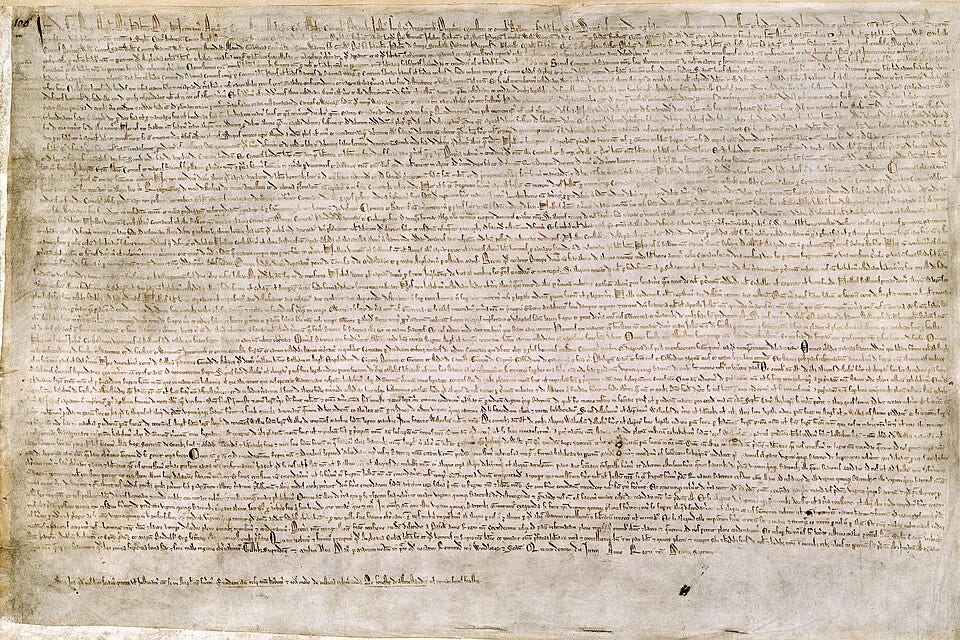
Magna Carta was sealed by King John in 1215. Its principal author, Stephen Langton (Archbishop of Canterbury at the time), opposed the notion that monarchs could act above the law. He believed that morally upstanding citizens were a prerequisite for a just and prosperous Christian society. Individuals needed to operate with honour and integrity to find their true sense of spiritual and secular purpose. For this to happen they had to be free, and a system of law based on truth, fairness and transparency had to underpin these freedoms. If all people were treated were treated equally under the law, individual rights and freedoms would be respected across society. Today, this basic concept, the cornerstone of Western civilisation, is at risk from legally enforceable protected characteristics which have created a hierarchy of victimhood and ill-defined differentiation.
In the 14th century, English dissenters challenged the authority and corruption of the Catholic Church. The Lollards (a ‘proto-Protestant’ movement) included academics such as John Wycliffe (the first translator of the English Bible), and radical priests including John Ball (one of the leaders of the Peasants’ Revolt). Although many dissenting Lollards were hunted down by the authorities, their ideas never disappeared. Wycliffe’s work would later influence reformers such as Martin Luther. In the 16th century, a new Protestant theology based on a deep understanding of the Bible emerged in parts of Europe and in England.
Tensions between Catholicism and various strands of Protestantism existed at this time. Christian attitudes towards religious tolerance were influenced by the 17th century English philosopher John Locke, who argued for a separation of government and religion. This was based on a recognition that individuals could not be forced into a particular faith or way of thinking, as this only came with a genuine change of mind. Furthermore, while governments have powers to impose laws by force, they have no power to change what an individual believes to be true. The Toleration Act 1689 put much of this reasoning into law.
Western nations have since thrived in an atmosphere of tolerance, underpinned by the right to freedom of speech. For Christians, the role of nations is integral to God’s redemptive plan, and in the Gospel of Matthew there is reference to Jesus telling his disciples to ‘go and make disciples of all nations’. The new covenant in the New Testament is a promise from God that does not just apply to one specific group. Anyone in any nation who believes can be part of the covenant, and each nation should protect the right of every person to have a faith if they chose to.
Share Right Times with Kathy Gyngell
English missionaries spread Christianity across northern Europe during the early Middle Ages. In the 18th and 19th centuries, they took the Gospel message around the world, helping to end slavery, human sacrifice and widow-burning. English Christians developed a just legal system, reformed a corrupt Church, and introduced greater religious and political toleration. It is worrying that modern-day secular leaders fail to acknowledge our Christian heritage. The freedoms and liberties we enjoy today did not just arrive overnight. They have been fought for over many generations. While we remember the sacrifice made by William Tyndale some 500 years ago, we should also remember that it takes only one or two neglectful generations to erase a historic legacy that represents the pinnacle of human achievement.
Bob Robinson is the author of
Identity Lost, Identity Regained: The Story of England and the English People.
Thank you for reading and supporting us. Please
Free Speech: Five Centuries of Struggle and One Forgotten Hero
From Magna Carta to Tyndale’s Bible, how Christian conviction built the liberties we now take for granted
Right Times with Kathy Gyngell
Aug 07, 2026
A guest post by Bob Robinson.
FREEDOM of speech is under threat from authorities seeking to impose international rules on nation states and deny access to information. This is not the first time English people have been called upon to oppose the centralisation of power and control of knowledge. Civil wars were fought in defence of the principles of Magna Carta. The Reformation removed the corrupt and stifling influence of the Catholic Church. International wars have been fought against the ambitions of authoritarian regimes.
This year marks the 500th anniversary of William Tyndale’s English translation of the New Testament. Its impact on the development of the English language, religious liberty, and national identity was immense. Tyndale, a multi-lingual scholar from Gloucestershire, translated the Bible into English from its Latin, Greek and Hebrew versions, enabling more people to read and understand Scripture for themselves. Before then, religious teaching had been restricted to an elite group of learned men deemed to be ‘best qualified’ to decide how Scripture should be interpreted and explained to the majority.
The invention of the printing press dramatically increased access to information in books and pamphlets. In a similar way, the internet has democratised knowledge and the seeking of truth. When the printing and distribution of his Bible was banned in England, Tyndale travelled to Germany where a clandestine printer produced hundreds of pocket editions of his translated Bible. These were then smuggled into England. He was hunted across Europe and eventually captured in Antwerp, where he was executed by strangulation and then burned at the stake. Today, Tyndale should be remembered as one in a long line of Englishmen who stood up for freedom of conscience and the right to free speech.
Share Right Times with Kathy Gyngell
Christianity has a remarkably long association with the people of the British Isles. Folklore tells of Christ visiting England alongside his metal-trading uncle, Joseph of Arimathea. According to Orthodox tradition the first Bishop of Britain was Saint Aristobulus, one of the Seventy Apostles sent around the Roman Empire. He arrived in Britain shortly after the Roman invasion in AD 43. At this time, Christians who proclaimed their faith were persecuted by the authorities; nevertheless, they remained defiant and refused to stay silent about their beliefs. The early Church was characterised by cults built around local Romano-British martyrs, such as Saint Alban. Many of these saints have since been lost to the Anglican Church, but are still celebrated by the Orthodox Church.
Following the Roman withdrawal in AD 410, indigenous Romano-Britons were unable to prevent the widespread settlement of Anglo-Saxon pagans. Christianity was confined to the western and northern parts of the British Isles, and was introduced to the Anglo-Saxons in England in the early 7thcentury. Biblical principles and Christian moral guidance underpin English common law, which developed from a series of legal precedents taken from the wisdom, customs, and traditions of the Anglo-Saxons. For hundreds of years, this legal system has provided a defence of individual freedoms and rights.
The ‘Golden Rule’ in the Gospel of Luke ‘to do unto others as you would have them do to you’ is lost on many in the modern secular age. Unnecessarily abusive social media posts considered ‘hurtful’ are used as an excuse by authorities to clamp down on freedom of expression and speech. This has been helped by the English legal system moving away from flexible, common-sense case law and towards poorly defined statutory codes that are open to subjective interpretation by social media platform moderators and unelected judges.
Magna Carta was sealed by King John in 1215. Its principal author, Stephen Langton (Archbishop of Canterbury at the time), opposed the notion that monarchs could act above the law. He believed that morally upstanding citizens were a prerequisite for a just and prosperous Christian society. Individuals needed to operate with honour and integrity to find their true sense of spiritual and secular purpose. For this to happen they had to be free, and a system of law based on truth, fairness and transparency had to underpin these freedoms. If all people were treated were treated equally under the law, individual rights and freedoms would be respected across society. Today, this basic concept, the cornerstone of Western civilisation, is at risk from legally enforceable protected characteristics which have created a hierarchy of victimhood and ill-defined differentiation.
In the 14th century, English dissenters challenged the authority and corruption of the Catholic Church. The Lollards (a ‘proto-Protestant’ movement) included academics such as John Wycliffe (the first translator of the English Bible), and radical priests including John Ball (one of the leaders of the Peasants’ Revolt). Although many dissenting Lollards were hunted down by the authorities, their ideas never disappeared. Wycliffe’s work would later influence reformers such as Martin Luther. In the 16th century, a new Protestant theology based on a deep understanding of the Bible emerged in parts of Europe and in England.
Tensions between Catholicism and various strands of Protestantism existed at this time. Christian attitudes towards religious tolerance were influenced by the 17th century English philosopher John Locke, who argued for a separation of government and religion. This was based on a recognition that individuals could not be forced into a particular faith or way of thinking, as this only came with a genuine change of mind. Furthermore, while governments have powers to impose laws by force, they have no power to change what an individual believes to be true. The Toleration Act 1689 put much of this reasoning into law.
Western nations have since thrived in an atmosphere of tolerance, underpinned by the right to freedom of speech. For Christians, the role of nations is integral to God’s redemptive plan, and in the Gospel of Matthew there is reference to Jesus telling his disciples to ‘go and make disciples of all nations’. The new covenant in the New Testament is a promise from God that does not just apply to one specific group. Anyone in any nation who believes can be part of the covenant, and each nation should protect the right of every person to have a faith if they chose to.
Share Right Times with Kathy Gyngell
English missionaries spread Christianity across northern Europe during the early Middle Ages. In the 18th and 19th centuries, they took the Gospel message around the world, helping to end slavery, human sacrifice and widow-burning. English Christians developed a just legal system, reformed a corrupt Church, and introduced greater religious and political toleration. It is worrying that modern-day secular leaders fail to acknowledge our Christian heritage. The freedoms and liberties we enjoy today did not just arrive overnight. They have been fought for over many generations. While we remember the sacrifice made by William Tyndale some 500 years ago, we should also remember that it takes only one or two neglectful generations to erase a historic legacy that represents the pinnacle of human achievement.
Bob Robinson is the author of
Identity Lost, Identity Regained: The Story of England and the English People.
Thank you for reading and supporting us. Please






 A makeshift memorial is seen outside the former Kamloops Indian Residential School in Kamloops, B.C., after the possible discovery of 215 unmarked graves on the property in May 2021.Photo by Cole Burston/AFP via Getty Images/File