
Mayoralty Candidate Paul Fromm Was Right Blasting Andrea Horwath for Harassing the Dominion Society: Hamilton police viol­ate the Charter – City cru­sad­ing against anti-immig­rant con­fer­ence

City cru­sad­ing against anti-immig­rant con­fer­ence

National Post - (Latest Edition)

JOHN CARPAY John Carpay is pres­id­ent of the Justice Centre for Con­sti­tu­tional Freedoms.

8 Sep 2026Rewind 15 secondsListenForward 15 secondsSwitch to focused listening

The mayor and police in Hamilton have decided that some Cana­dians have the wrong kind of opin­ions and should not be allowed to rent pub­lic facil­it­ies.

Last week, Hamilton Mayor Andrea Hor­wath declared the Domin­ion Soci­ety is not entitled to rent city-owned prop­erty to hold a con­fer­ence. The pre­dict­able res­ult was to force the group to seek a private venue in which to hold its meet­ing.

The Hamilton Police Ser­vice then diver­ted some of its stretched resources to imped­ing the efforts of the Domin­ion Soci­ety, issu­ing a polit­ical state­ment denoun­cing it as “divis­ive and exclu­sion­ary,” and as neg­at­ively impact­ing “the sense of safety and belong­ing within our com­munity.” The police even asked the pub­lic to con­tact them with inform­a­tion about any efforts the group might make to secure a venue.

Hamilton’s police and mayor are behav­ing much like Que­bec’s former tour­ism min­is­ter, Car­oline Proulx. In 2023, she ordered the Centre des congrès de Québec, which is owned by a Crown cor­por­a­tion, to can­cel its con­tract with Har­vest Min­is­tries to hold a Chris­tian con­fer­ence. The sole reason for can­cel­ling the con­tract was that Proulx vehe­mently dis­agreed with the Chris­tian group’s beliefs about abor­tion.

The Super­ior Court of Que­bec recently ruled Proulx had abused her author­ity and viol­ated the Charter-pro­tec­ted free­dom of expres­sion of Har­vest Min­is­tries. The court awar­ded gen­eral and pun­it­ive dam­ages to Har­vest Min­is­tries.

The Domin­ion Soci­ety describes itself as “ded­ic­ated to pro­mot­ing Cana­dian iden­tity, her­it­age and nation­al­ism.”

It advoc­ates for remig­ra­tion: send­ing immig­rants back to their coun­tries of ori­gin. Neither Hamilton’s mayor nor its police force have accused it of being viol­ent, crim­inal or ter­ror­ist. It there­fore has the same right as every other non-profit in Canada to oper­ate peace­fully within the law, and to advoc­ate for its beliefs.

Polls have shown roughly half of Cana­dians believe immig­ra­tion levels are too high. Let’s say for argu­ment’s sake only eight per cent of Cana­dians sup­port remig­ra­tion, and 92 per cent oppose it. Should hav­ing only eight per cent sup­port for your opin­ion mean los­ing your right to rent gov­ern­ment-owned facil­it­ies, and to use pub­lic spaces like parks and side­walks?

If yes, then no gov­ern­ment facil­it­ies should be avail­able for rental by the NDP, which garnered only 6.3 per cent of the pop­u­lar vote in Canada’s most recent fed­eral elec­tion. Almost 94 per cent of Cana­dians rejec­ted the NDP in 2025. Yet the NDP is not dis­qual­i­fied from being able to exer­cise its Charter freedoms of expres­sion, asso­ci­ation and peace­ful assembly.

Politi­cians and police officers have every right to express their polit­ical opin­ions for or against vari­ous groups and causes. At the same time, Canada’s may­ors, cab­inet min­is­ters and police forces have no right to treat gov­ern­ment prop­erty as though it were their own private prop­erty, avail­able only to “good” people who have the “cor­rect” polit­ical beliefs.

The Hamilton Police Ser­vice has a sol­emn duty to fight crime. Its decision to waste its scarce resources on polit­ics is a betrayal of tax­pay­ers and free cit­izens alike. Indeed, unlike other pro­fes­sions, police have a legal duty to enforce the Crim­inal Code, as well as numer­ous non-crim­inal laws (such as traffic safety).

The politi­ciz­a­tion of the Brit­ish police should serve as a stark warn­ing to Cana­dians. What began with the mon­it­or­ing and record­ing of “non-crime hate incid­ents” quickly led to Brit­ish cit­izens being crim­in­ally charged for what essen­tially amoun­ted to thought crimes.

Their crimes included shar­ing opin­ions about top­ics like immig­ra­tion and trans­gen­der­ism. David Woot­ton was sen­tenced to two years in prison for an “offens­ive” Hal­loween cos­tume. This is why police should be 100 per cent focused on fight­ing crime and zero per cent focused on polit­ics.

If Canada is to remain a free soci­ety, the gov­ern­ment should uphold the law equally for all Cana­dians, includ­ing those who hold unpop­u­lar beliefs. Oth­er­wise, there will be little to sep­ar­ate us from Fas­cist, theo­cratic, Com­mun­ist or national social­ist regimes, under which the gov­ern­ment decides which views are cor­rect.

This is why tax­payer-fun­ded facil­it­ies like con­ven­tion centres, and pub­lic spaces like side­walks and city parks, are — and must always be — avail­able to all cit­izens, regard­less of their polit­ical beliefs.

Hamilton Police, Who Gave You the Right To Police Speech?

Hamilton Police: Who gave you the authority to decide who gets to speak in Hamilton?

I have listened to the recorded conversation between WireTap Media and Inspector Darren Murphy of the Hamilton Police Service concerning the Dominion Society of Canada’s proposed conference in Hamilton, and I find what I heard deeply disturbing.

Let me be clear about something from the outset: my personal opinion of the Dominion Society’s political beliefs or messaging is completely irrelevant to this issue. I am not defending or attacking their politics. I am addressing what appears to be the use of police authority to interfere with a lawful political gathering.

According to Inspector Murphy, Hamilton Police are asking people to identify venues that have booked the Dominion Society so that police can contact those venues and make them “aware” of who they are booking. When asked why, Murphy referred to public safety and then stated that the Dominion Society is “not an organization that we would like holding a conference in the City of Hamilton.” He further described its messaging as something “that the Hamilton Police Service supports”—or, more precisely, does not support. When the caller summarized his position by saying, “You just said that we don’t want them in the City of Hamilton,” Murphy answered: “Absolutely.”

That should concern every Canadian, regardless of their political beliefs.

The police are not supposed to be political gatekeepers. Their job is to enforce the law, investigate crime and protect public safety. If they have credible information that someone intends to commit violence, investigate it. If there is a specific criminal threat, deal with it. If a venue needs security advice, provide it. But if the concern is simply that the police don’t approve of an organization’s political message, that is an entirely different matter.

And let’s deal with the semantic defence before it starts. Perhaps the police will say, “We aren’t ordering venues not to rent to them. We’re merely making them aware of who they are.” Fine. Then I have a very simple question: What is the purpose of making them aware?

Why are police contacting private businesses about a lawful political organization at all? If the purpose isn’t to influence the venue’s decision, what exactly is the purpose? And if the police are simultaneously telling those businesses that Hamilton Police don’t want this organization holding a conference in Hamilton, are we really supposed to pretend that carries no pressure whatsoever?

A police officer does not make a telephone call with the same authority as an ordinary citizen. The person answering the phone knows who is calling. The police have enormous institutional power. They don’t necessarily have to say, “You are ordered not to rent to them” for their intervention to have a chilling or coercive effect.

This is why the issue potentially engages the Charter protections for freedom of expression, peaceful assembly and freedom of association. It may also raise questions of civil liability, including potential intentional interference with economic relations, depending upon the full facts and what can ultimately be established.

And this is much bigger than the Dominion Society.

If we allow police services to make it difficult for lawful political organizations to obtain meeting space because the police don’t approve of their message, what happens when the political winds change? Today it may be one organization. Tomorrow it could be a socialist organization, a religious organization, an environmental organization, a labour organization, an anti-government organization, or a political movement that you personally support.

The police do not get to decide which political ideas are acceptable.

That is not their job.

There is now going to be an interesting test of this principle. In light of what has happened, the Dominion Society intends to proceed with plans for a conference in Hamilton specifically to raise funds to pursue whatever legal remedies may be available, including a potential constitutional challenge and, where supported by the facts and law, a civil action concerning the conduct of the Hamilton Police Service.

So here’s the question I would like answered:

Will Hamilton Police try to interfere with that conference in the same way?

Will they again contact venues and tell them that the police don’t want the organization holding a conference in Hamilton? 

Will they again attempt to persuade private businesses not to provide a venue?

 And if they do, will they attempt to interfere with a political gathering whose specific purpose is to raise money to investigate and potentially challenge the conduct of the Hamilton Police themselves?

If Hamilton Police believe what they did was a legitimate exercise of their public-safety responsibilities, then they should have no difficulty explaining precisely what threat justified it, who authorized it, and what legal authority permits it.

If they cannot do that, then perhaps the question isn’t whether the Dominion Society should be allowed to hold a conference.

Perhaps the question is why the Hamilton Police Service believes it has any business deciding who is allowed to hold one.

I have written a full letter to Inspector Murphy, the Chief of Police and the Mayor of Hamilton laying out the issues and the questions I believe they need to answer.

Read the full letter here:

https://www.facebook.com/share/p/1DAFiN3zJB/

OPEN LETTER TO INSPECTOR DARREN MURPHY, THE CHIEF OF THE HAMILTON POLICE SERVICE, AND THE MAYOR OF HAMILTON

Re: Hamilton Police Service Intervention Concerning the Dominion Society of Canada Conference

Inspector Murphy, Chief of the Hamilton Police Service, and Mayor of Hamilton:

I have listened carefully to the recorded telephone conversation between Inspector Darren Murphy of the Hamilton Police Service and Jason Willett of WireTap Media concerning the proposed Dominion Society of Canada conference in Hamilton. Having now heard the conversation, I believe the conduct described by Inspector Murphy raises serious questions about the proper exercise of police authority, the constitutional protection of political expression and peaceful association, and potentially the civil liability of those who deliberately interfere with lawful contractual and economic relationships.

Let me be absolutely clear about what this letter is and is not about. My personal opinion of the Dominion Society of Canada’s political beliefs or messaging is completely irrelevant to me, and I am not interested in debating those matters here. The organization is entitled to be judged by its conduct and by the law, just as every other organization is. The issue before us is considerably more fundamental: what gives a police service the authority to intervene with private venue operators because it does not want a lawful political organization holding a conference in its city?

That is not a rhetorical question. Inspector Murphy’s own statements have put it squarely on the table.

When asked why Hamilton Police were asking members of the public to contact police if they knew of a venue that had recently been booked, Inspector Murphy explained that police wanted to make venues and proprietors “aware” of whom they were booking. When pressed about why police considered this necessary, he referred to public safety and public awareness. But the conversation ultimately revealed something considerably more specific: the Hamilton Police Service did not want the Dominion Society holding its conference in Hamilton.

At approximately the 2:15 mark, Inspector Murphy stated that the Dominion Society of Canada was “not an organization that we would like holding a conference in the City of Hamilton.” He then described the organization as “exclusionary” and said that its messaging was “not something that the Hamilton Police Service supports.” When the caller challenged him on the fact that the organization was not being identified as committing a crime, Murphy did not retreat from the position. When the caller subsequently summarized it by saying, “You just said that we don’t want them in the City of Hamilton,” Inspector Murphy answered, quite plainly, “Absolutely.”

That is not a minor statement. It is an admission of institutional opposition to a lawful political gathering.

The police are not a political party. They are not an advocacy organization. They are not a private pressure group entitled to use their public standing to persuade businesses which political organizations should be permitted to rent their facilities. The police are an arm of government, entrusted with coercive powers precisely because the public expects those powers to be exercised for lawful policing purposes and not according to the political preferences of individual officers or the institution itself.

Inspector Murphy may respond that the Hamilton Police Service did not order any venue to cancel a booking. Fine. That is not the question.

The question is why the police were contacting the venues at all.

If the purpose of these calls was not to influence the venue’s decision, then what exactly was the purpose? Why did police need to identify the organization to private venue operators? Why did they need to tell those operators about the organization’s political messaging? Why did the police need to communicate that the Hamilton Police Service did not want the organization holding its conference in Hamilton? What legitimate policing function was being served by doing this?

There is an obvious and entirely legitimate circumstance in which police should contact a venue about an upcoming event: where police possess credible information about a specific threat to public safety. If there is credible intelligence that someone intends to commit violence, investigate it. If there is a specific criminal threat, deal with it. If a venue requires additional security because of a demonstrable risk, tell the venue what that risk is so that appropriate precautions can be taken. Those are legitimate police functions.

But telling a venue that a lawful political organization is “exclusionary,” that its messaging is not supported by the Hamilton Police Service, and that the police do not want the organization holding a conference in Hamilton is something else entirely. That begins to look less like policing a threat and considerably more like policing a political message.

The distinction matters because people are permitted to have strong feelings about political expression. They are permitted to be offended by it, angry about it, disgusted by it, or vehemently opposed to it. They are permitted to protest it, criticize it, ridicule it, boycott it and attempt to persuade others not to support it. What they are not permitted to do is use the coercive authority of the state to suppress lawful political expression simply because they disapprove of the message.

That principle applies with particular force to police services. A police officer calling a private venue is not merely another citizen offering an opinion. The person on the other end of that telephone knows that the caller represents the police. The institutional authority of the police is present in that conversation whether or not the officer expressly threatens to exercise any police power.

This is why the distinction between ordering a venue not to rent to an organization and strongly discouraging the venue from doing so cannot simply be dismissed as a matter of semantics. A police service does not necessarily escape constitutional scrutiny by carefully avoiding the words “you are ordered not to do this.” If the practical purpose of the communication is to cause a private party to withdraw from or refuse a lawful arrangement, the absence of an explicit command does not answer the constitutional question.

The Charter of Rights and Freedoms protects freedom of thought, belief, opinion and expression under section 2(b), peaceful assembly under section 2(c), and freedom of association under section 2(d). Those protections are not conditional upon the approval of the police. They do not protect only popular speech, respectable speech, politically convenient speech, or speech that happens to be consistent with the prevailing views of a police service. They exist precisely because governments cannot be trusted with unrestricted authority to determine which ideas citizens may assemble to express.

The potential constitutional problem becomes particularly acute where government attempts to interfere indirectly with expression by using a private intermediary. A government actor cannot necessarily do indirectly, through a private business, what the state itself could not lawfully do directly. If the police cannot simply prohibit a lawful political organization from holding a conference, then it is reasonable to ask whether they can accomplish substantially the same objective by contacting the private businesses upon which the organization depends and attempting to persuade those businesses not to provide the necessary facilities.

I am not suggesting that the recording, by itself, conclusively establishes a Charter violation. The full facts and applicable law would have to be examined by competent counsel and, if necessary, determined by a court. What the recording plainly does establish is that a senior representative of the Hamilton Police Service acknowledged that the Service did not want the Dominion Society holding a conference in Hamilton and acknowledged that police were contacting venues to make them aware of whom they were booking. Those facts are sufficient to raise a serious question about whether police authority is being used for a purpose that is inconsistent with the Charter’s protection of political expression, peaceful assembly and association.

There is also a potential civil-law issue that should not be ignored. If police intervention was undertaken deliberately for the purpose of causing venues to withdraw from contractual or prospective contractual relationships with the Dominion Society, and if the requisite elements can be established, that conduct may potentially give rise to a claim for intentional interference with economic relations or another applicable tort. Again, that is ultimately a matter for legal counsel and the courts, not something to be declared conclusively from a five-minute recording. But the possibility is sufficiently obvious that it deserves investigation rather than being waved away because the police chose not to issue a formal prohibition.

The semantic distinction between “we ordered them not to rent to you” and “we told them who you are and that we don’t want you here” is particularly unconvincing when one considers the position of the venue operator. Imagine being the proprietor of a hotel or conference centre and receiving a call from the police about one of your prospective customers. The officer does not need to say, “You will face consequences if you rent to them.” The proprietor already knows who is speaking. The police have deliberately inserted themselves into a private commercial relationship and have communicated their institutional opposition to the proposed customer.

The obvious question for that proprietor is: Why is the police service calling me?

The next question is: What does the police service expect me to do with this information?

And if the answer is, “Nothing; we are merely making you aware,” then we are entitled to ask why the police believe it is appropriate to spend police resources contacting private businesses about the political identity and messaging of their customers in the first place.

The Hamilton Police Service cannot have it both ways. If these calls were genuinely about public safety, then identify the specific public-safety concern. If they were about criminal conduct, identify the conduct. If they were about credible threats of violence, explain the nature of the threat. But if the purpose was to discourage venues from hosting the organization because the police do not support its messaging, then the public deserves to know why the police believe that falls within their mandate.

I therefore have the following questions for Inspector Murphy, the Chief of Police, and the Mayor of Hamilton:

    1. Did Hamilton Police Service personnel contact private venues concerning the Dominion Society of Canada or its proposed conference?

    2. How many venues were contacted, and over what period of time did those communications occur?

    3. Who authorized those communications? Was this Inspector Murphy’s initiative, a direction from a superior officer, an established Hamilton Police Service practice, or a directive from the Chief of Police?

    4. What specific public-safety threat justified contacting private venues about this organization and its proposed conference?

    5. What specific criminal conduct by the Dominion Society, its organizers, members, speakers, or prospective attendees was identified as the basis for those communications?

    6. What information were officers instructed to provide to the venues they contacted?

    7. Were officers instructed to tell venues that the Hamilton Police Service did not want the Dominion Society holding its conference in Hamilton?

    8. If so, why was that considered a legitimate policing function?

    9. Were officers instructed to encourage, recommend, suggest, or otherwise attempt to persuade venues to reconsider bookings with the Dominion Society?

    10. If so, what legal authority does the Hamilton Police Service rely upon for intervening in those private commercial relationships?

    11. Does the Hamilton Police Service believe that it is appropriate for police officers to contact private businesses and communicate institutional opposition to a lawful political organization’s message?

    12. Does the Hamilton Police Service believe that such conduct is consistent with the Charter protections for freedom of expression, peaceful assembly, and freedom of association?

    13. If the Service believes that there is no constitutional problem, what legal authority and jurisprudence does it rely upon to support that position?

    14. Does the Mayor of Hamilton endorse this conduct by the Hamilton Police Service?

These questions matter because the precedent being established here is far larger than the Dominion Society or a single conference. If police services can decide that a political organization is “exclusionary,” decide that they do not want that organization holding a conference in their city, and then contact private venues to make those venues aware of the organization’s identity and messaging, we have moved into territory that should alarm every person who cares about civil liberties.

It is particularly dangerous because the mechanism is so easily disguised. Nobody has to issue an official ban. Nobody has to write a regulation. Nobody has to stand at the door and announce that the meeting is prohibited. The police merely need to make a few telephone calls, identify the organization, explain that they do not support its message, and leave the private proprietor to draw the obvious conclusion. The state can then wash its hands of the result and say, “The business made its own decision.”

That is not an adequate answer.

The question is not merely whether the venue technically retained the freedom to ignore the police. The question is whether the police used the authority and influence of their office to interfere with the ability of a lawful political organization to exercise rights that the Charter protects. That is a question worthy of serious legal scrutiny.

And there is a particularly disturbing irony in the position taken by the Hamilton Police Service. Police are supposed to protect the public from unlawful conduct, not protect the public from political ideas. They are supposed to enforce laws impartially, not determine which organizations are sufficiently ideologically acceptable to receive the benefit of ordinary commercial services. They are supposed to facilitate the peaceful exercise of lawful rights, not make the exercise of those rights more difficult because they disapprove of the people exercising them.

If a group is lawful, the police do not get to decide that it is unwelcome.

If its members commit crimes, investigate the crimes.

If individuals make credible threats, investigate the threats.

If violence occurs, arrest those responsible.

If a venue needs police assistance to keep an event peaceful, provide it.

That is what policing looks like in a free society.

What policing does not look like is contacting private businesses because the police have decided that they do not want a lawful political organization holding a conference in their city.

There is now an additional question that the Hamilton Police Service will have to answer. In light of the conduct described above, the Dominion Society of Canada intends to proceed with plans for a conference in Hamilton, with the purpose of raising funds to retain appropriate legal counsel and pursue whatever legal remedies may be available, including a potential constitutional challenge and, where the facts and law support it, a civil action arising from the conduct of the Hamilton Police Service.

That raises a rather obvious question: will Hamilton Police attempt to interfere with that conference in the same manner?

Will officers again contact prospective venues and tell them that Hamilton Police do not want the organization holding a conference in the city? Will they again attempt to persuade those venues not to provide a place for the gathering? And if they do, will they attempt to interfere with a political assembly whose specific purpose is to raise funds to investigate and potentially bring legal proceedings against the very police service attempting to prevent the assembly from taking place?

Because if the Hamilton Police Service considers its conduct toward the previous conference to be a legitimate exercise of its public-safety responsibilities, then presumably it should be prepared to apply that same standard consistently. If, however, the police now recognize that attempting to discourage venues from hosting a lawful political gathering because of its message is inappropriate, then perhaps the time has come to explain why it was considered appropriate in the first place.

Either way, the conduct of the Hamilton Police Service will be watched very carefully. If the Service again attempts to use its institutional authority to prevent a lawful political gathering from obtaining a venue, it will no longer be merely a question of what the police said they were doing. It will become additional evidence concerning precisely how the Service exercises its authority when confronted with political speech it apparently does not wish to see expressed in the City of Hamilton.

The Hamilton Police Service has an opportunity to explain itself. It can identify the specific threat, the specific criminal conduct, the specific policing purpose, the specific authorization, and the specific legal authority upon which these actions were based. If those things exist, then the public deserves to hear them. If they do not, then the Service needs to explain why its officers were intervening in the first place.

The Mayor has an opportunity as well. This is not simply an argument between one journalist and one police inspector. The police exercise public power on behalf of the community. The political leadership of that community therefore has an obligation to take seriously the possibility that the police have exceeded the proper boundaries of that power. Silence is not an adequate response to a police service apparently declaring that it does not want a lawful political organization holding a conference in the city and then intervening with private venues concerning that organization.

Nobody is asking the police to endorse the Dominion Society.

Nobody is asking the police to endorse its message.

Nobody is asking the police to agree with anything being said at the conference.

The police are being asked to do something considerably simpler: enforce the law impartially and leave lawful political expression to the citizens whose rights are protected by that law.

That is not a radical demand. It is the minimum that should be expected of a police service in a constitutional democracy.

The issue here is therefore not whether the Dominion Society deserves anyone’s political approval. It is whether a police service is entitled to become an active participant in determining whether that organization can obtain a place to assemble and communicate its political views. If the answer is yes, then the Hamilton Police Service needs to explain where that extraordinary power comes from and what prevents it from being used against the next organization whose politics it dislikes.

If the answer is no, then the Service needs to explain why this happened.

And if the Service’s position is that it was merely “making venues aware,” then it should explain what it expected those venues to do with that information, why police resources were used to deliver it, and why Inspector Murphy expressly acknowledged that Hamilton Police did not want the organization holding its conference in Hamilton.

Those are not unreasonable questions.

They are questions the public has a right to ask.

And given the constitutional rights potentially implicated by the conduct described in this recording, they are questions that the Hamilton Police Service, its Chief, and the Mayor should answer before anyone becomes comfortable with the precedent being established here.

Because once a police service acquires the practical ability to make a lawful political gathering disappear without ever formally banning it, the distinction between a free society and a society in which political expression requires the tacit approval of the state becomes dangerously thin.

That is not a power that should belong to the police.

Not in Hamilton.

Not anywhere in Canada. — Robert Menard

Justice Centre Sends Legal Warning to Hamilton Mayor & Police for Pressuring Venues Not to Rent to the Dominion Society

Lawyers funded by the Justice Centre have sent a warning letter to Hamilton Mayor Andrea Horwath and Hamilton Police after they attempted to prevent a political conference organized by the Dominion Society of Canada from taking place in Hamilton.

Mayor Horwath urged local businesses not to host the conference. Hamilton Police then asked the public to report possible venues to police, despite identifying no crime.

Constitutional lawyer Hatim Kheir said, “The City of Hamilton and Hamilton Police are using both direct action and their influence to exclude a viewpoint they disagree with from the entire city. This is unconstitutional and fundamentally at odds with the way a free and democratic society operates.”

The legal warning letter calls on Hamilton officials to cease and retract their actions and respect Charter freedoms of expression and peaceful assembly. 🇨🇦

In Case You Missed Cuba: Hamilton Mayor & Political Cops Lean on Venues Not to Host Dominion Society Conference

, Today has been a whirlwind. The establishment is desperate to make sure DOMCON26 doesn’t happen. They are pulling out all the stops. They are completely weaponizing the system against us.  They know that if our ideas get any oxygen they will spread off like wildfire. After weeks of smears by anti-Canadian activists, hit pieces in the press, attacks from politicians, and getting censored by Instagram, now the Hamilton Police is involved.

Yesterday, executive officer Darren Murphy reached out to me threatening to impose any additional police expenses on the Dominion Society to try and get us to back down. Today we learn the Hamilton Police service has been going venue-by-venue telling owners they cannot host us. These are straight up mafia intimidation tactics! It’s one thing when it was just angry activists campaigning against us, but the police? We have committed no crimes. We are holding a peaceful political gatherings in line with our fundamental democratic rights and the police is doing everything they can to cancel our event.

This is the state of Canada. As a result of the actions of Hamilton Police, two venues have now cancelled on us. But we’re not backing down. All day we have been scrambling to solve the problems they keep throwing at us. Every challenge has been overcome. We will not be stopped.

It is a crucial that DOMCON26 takes place, not only for our organization but for the country.  We need to demonstrate to the establishment that the nationalist movement cannot be stopped, that they can’t just oppress us because they disagree with our politics. We have been forced to incur many last minute expenses to ensure DOMCON26 goes on as planned. We were already organizing the event at cost to provide an affordable but premium experience for our audience. If you can spare anything during this challenging time, please donate today. Despite their best efforts, DOMCON26 will be historic. Long Live Canada, Dominion Society Team

‘We Don’t Need A Political Police,” Says Fromm

‘We Don’t Need A Political Police,” Says Fromm
HAMILTON, August 27, 2026. “We don’t need a political police in Hamilton. This is not communist Cuba,”  Mayoralty candidate Paul Fromm said tonight on learning that the Hamilton Police has posted a message asked  ” Anyone with information regarding a recent venue booking for  August 29 [for the Dominion Society conference] is asked to contact Hamilton Police at 905-546-4707 or email dmurphy@hamiltonpolice.ca
“The duty of the Hamilton Police is to preserve law and order, not to censor opinion,” Fromm adds.
A voice message from Hamilton Police explains that the Dominion Society’s message is not “one we approve.” 
“The police are not tasked with approving political opinions, at least not in a democratic society,” Fromm insists. “Their statement that the Dominion Society’s messaging ‘is divisive and exclusionary’ is outrageous nonsense and irrelevant,” Fromm says.
“Any disagreement is divisive. Canada’s recent immigration policies which are replacing the European founding/settler people are ‘divisive’,” Fromm adds. “Recent mass immigration has stressed our medical, welfare and transportation systems,” Fromm says. “Even former Prime Minister Justin Trudeau admitted his policies had been too much too fast.”
“Nearly 16 per cent of Hamilton’s high tax burden goes to support the police,” Fromm explains. “Of course, policing is necessary and I’m not part of the defund-the-police crowd, but taxpayers have the right to expect politically neutral policing and policing that upholds the right of free speech.”
Paul Fromm is the director of the Canadian Association for Free Expression.______________________________________________________________________________STATEMENT FROM THE HAMILTON POLICE

DomCon Continues to Search for Hamilton Venue

Hamilton Police are aware that the Dominion Society of Canada continues to seek venues within Hamilton to host its DomCon conference, despite its statement to media indicating it will be moving the conference out of town.

An alternate booking had been secured at another local venue but was cancelled by the venue earlier this morning.

Hamilton Police continue to encourage venues to consider the impact this event and its messaging may have on the broader community when making decisions about hosting it. Anyone with information regarding a recent venue booking for August 29 is asked to contact Hamilton Police at 905-546-4707 or email dmurphy@hamiltonpolice.ca.

Hamilton Police are working closely with our local partners and have developed an operational plan to ensure appropriate resources are in place should the event proceed in Hamilton.

The messaging associated with DomCon is divisive and exclusionary and can negatively impact the sense of safety and belonging within our community. We have heard those concerns from members of the community and take them seriously.

Our priority remains the safety of everyone in Hamilton, and we will continue to monitor the situation and respond as appropriate

Freedom of Speech & Assembly Crushed in Ontario COVID Police State

Freedom of Speech & Assembly Crushed in Ontario COVID Police State

Hamilton police charge ‘Hugs Over Masks’ protest organizers in two separate events

The Canadian Press Staff

Contact Published Tuesday, January 12, 2021 1:03PM EST Hamilton Police
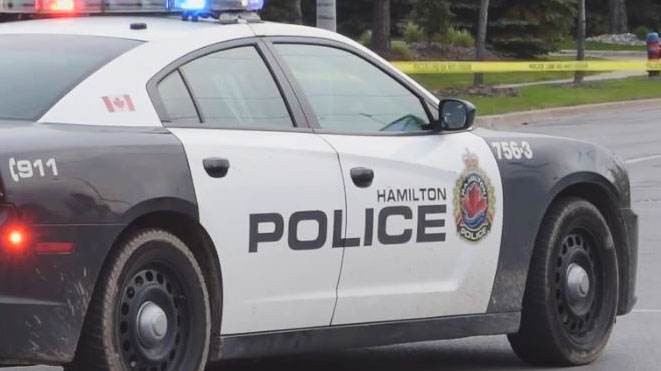
A Hamilton police cruiser is featured in this file photo. (Andrew Collins)

SHARE

TORONTO — Hamilton, Ont., police say they have charged two organizers of an anti-mask protest group for holding events that allegedly violated public health rules.

Police say the events were held in downtown Hamilton on Jan. 3 and Jan. 10.

The force alleges that 40 people attended first event and 60 attended the second.

COVID-19 Coverage from CTV News

Full coverage at CTVNews.ca/Coronavirus

Coronavirus vaccine tracker: How many people in Canada have received shots?

Ontario addresses confusion about new stay-at-home rules. These are the answers to your top questions

‘We did not want to waste them’: Top Ontario vaccine official says after non-front-line staff get shot

Ontario daily COVID-19 deaths expected to double in February, overwhelm health system: modelling

Expert warns that risk of transmitting COVID-19 outdoors during the winter is higher

How to check if your Toronto grocery store has a case of COVID-19

Parents of Ontario secondary students can now apply for their $200 payment. Here’s how

Current provincial restrictions limit gatherings to a maximum of 10 people outdoors.

Police say they informed the “Hugs Over Masks” organizers that the planned Jan. 10 gathering would result in charges, but they went ahead with the event.

They say a 27-year-old man and 38-year-old woman are facing charges under the Reopening Ontario Act that carry a minimum fine of $10,000 if convicted.

This report by The Canadian Press was first published Jan. 12, 2021.