Corbella: Emergency expert says we should quarantine care homes and open society

Corbella: Emergency expert says we should quarantine care homes and open society

“Governments took every emergency pandemic plan they’d ever written and threw them out the window when COVID arrived.” — Emergency management expert David Redman

Author of the article:Licia CorbellaPublishing date:Jan 15, 2021  •  1 day ago  •  9 minute read

David Redman, the president of the Brio Townhomes condo board, was on scene from the moment the fire started. He was having a coffee with his wife on his front porch when he heard screams for help on Wednesday, Aug. 28, 2019, in Edmonton. Fire crews are working on a lingering blaze at a north Edmonton townhome complex that razed four units. (Greg Southam-Postmedia)
David Redman — a retired Lieutenant-Colonel with 27 years of experience in the Canadian Armed Forces and the former head of Alberta’s Emergency Management Agency — says while every emergency is different the planning process should always be the same. Photo by Greg Southam /00088341A

There’s not much point staffing and funding emergency agencies and plans if when an emergency strikes neither are called upon.

But that’s pretty much what’s happened in Alberta and in every other government in Canada, says an emergency management process expert.

Pandemic housing market to stay hot in 2021, but economists expect a hangover later in…

David Redman — a retired Lieutenant-Colonel with 27 years of experience in the Canadian Armed Forces and the former head of Alberta’s Emergency Management Agency — says while every emergency is different the planning process should always be the same.

“Governments took every emergency pandemic plan they’d ever written and threw them out the window when COVID arrived,” says Redman. “No one followed the process — even though they had plenty of time and forewarning as we had the benefit of seeing what was happening in China, Italy, Spain and France before the virus hit us in March (2020). Instead, they panicked, started flying by the seat of their pants and put the doctors in charge.”

Redman was so alarmed with Canada’s pandemic response, in April he wrote a three-page letter to Premier Jason Kenney saying, “I am genuinely concerned by the GoA response to this pandemic. It appears that we have scrapped the Pandemic Influenza support plan, started from scratch and decided to ignore all principles of Emergency Management.”

To say that Redman knows what he’s talking about is putting things mildly. He has been to war and  led troops in the former Yugoslavia, he was in charge of closing down Canada’s army base in Lahr, Germany in the early 1990s. He did such a great job of closing down that small city of 18,000 troops, their families, equipment and 940 pieces of infrastructure, including the fourth longest runway in Europe,  that two years later he was deployed to Croatia and Bosnia to lead the unplanned withdrawal under the orders of Prime Minister Jean Chretien of Canada’s United Nations troops from the area, only to be charged again to establish the staging bases to bring the Canadian brigade structure back to the area this time under NATO command.

Lieutenant-Colonel David Redman (L) marches with then Calgary Mayor Al Duerr in the Freedom of the City parade in spring 1996, when 1 Service Battalion and Lord Strathcona's Horse Royal Canadians were moved from Calgary to Edmonton. One year later, the Princess Patricia's Canadian Light Infantry left the city in a controversial decision made by then Prime Minister Jean Chretien. Photo courtesy of the Canadian Armed Forces
Lieutenant-Colonel David Redman (L) marches with then Calgary Mayor Al Duerr in the Freedom of the City parade in spring 1996, when 1 Service Battalion and Lord Strathcona’s Horse Royal Canadians were moved from Calgary to Edmonton. One year later, the Princess Patricia’s Canadian Light Infantry left the city in a controversial decision made by then Prime Minister Jean Chretien. Photo courtesy of the Canadian Armed Forces Photo by Photo courtesy of the Canadian A /Photo courtesy of the Canadian A

After retiring from the military, Redman was in charge of the Alberta Emergency Management Agency when everything changed on Sept. 11, 2001. On Sept. 12, along with “26 of the smartest people in Alberta” many of them government and industry leaders from the various sectors of the Alberta economy, including healthcare and critical infrastructure such as power plant, electrical lines, rail lines, etc., Redman pulled together all that information gleaned from brainstorming sessions and designed a system to protect Alberta. He was, as a result, made head of the province’s counter-terrorism strategy.Paul Cellucci, the U.S. ambassador to Canada at the time, toured Alberta’s command centre and was so impressed with what he saw, he invited Redman, who has a master’s degree in electrical engineering, to Washington, D.C. to brief both the Senate and the House committees on national security. He has been keynote speaker at conferences on emergency preparedness, including with the Conference Board of Canada and fully retired in 2013.

In his April letter to Kenney — and he has since sent similar letters to every provincial premier and the federal government receiving only automated replies — Redman says the approach to battling COVID-19 has been all wrong. It has been focused almost entirely on limiting the number of deaths and we’ve failed at that.

Instead, Alberta’s 2014 Pandemic Influenza Plan has four goals:

• Controlling the spread of influenza disease and reducing illness and death by providing access to appropriate prevention measures, care, and treatment.

• Mitigating societal disruption in Alberta through ensuring the continuity and recovery of critical services.

• Minimizing adverse economic impact.

• Supporting an efficient and effective use of resources during response and recovery.

“We’ve failed in all of those objectives clear across the country because they didn’t stick to a plan. They panicked. They were constantly surprised at the beginning with every new outbreak and every death in a long-term care home, but it was completely foreseeable.

“Pandemics happen continuously,” he points out. A pandemic — even an unknown and tricky one like COVID-19 — is not a public health emergency, Redman insists, it’s a public emergency, since all areas of society are affected: the public sector, private sector, not-for-profit sector and every citizen.

Redman says putting doctors in charge of a public emergency is the wrong approach.

He points to forest fires as an example. In Alberta, during a forest fire, like the one that burned down swathes of the city of Fort McMurray in May, 2016, the Wildfire Operations centre, was the subject matter agency, but it did not lead the provincial government’s response to the wildfire.

“Their job is to fight the fire. Their job was not to ensure that there was food and water. Their job was not to evacuate the citizens of Fort McMurray. AEMA leads the cross-government, private sector and municipal response.”

Clearly that has not happened with COVID. Most Albertans have no idea what the head of AEMA looks like, let alone his name. The names listed on its website of the executive director and managing director are both incorrect.

“We can’t keep doing this — locking down our whole society,” says Redman. “We don’t have 400 billion more dollars to tell healthy people to lock themselves in their houses and not go to work.”

Redman points out that Alberta’s 2014 Pandemic Influenza Plan should have been dusted off last January after the Chinese government finally acknowledged to the world that a new, contagious coronavirus that originated in Wuhan, had started spreading in early Dec. 2019. Then it should have been rewritten to deal with the specific challenges of COVID-19.

Story continues belowThis advertisement has not loaded yet, but your article continues below.

Article content continued

Lieutenant-Colonel David Redman presides over the Change of Command ceremony in Lahr, Germany in 1992. Courtesy Lt-Col. David Redman
Lieutenant-Colonel David Redman presides over the Change of Command ceremony in Lahr, Germany in 1992. Courtesy Lt-Col. David Redman Photo by Courtesy Lt-Col. David Redman /Courtesy Lt-Col. David Redman

“In February we knew that over 95 per cent of the deaths in China and Europe were in seniors over the age of 60 with multiple co-morbidities,” says Redman, who backed uphis statements withreports.

“We should have immediately developed plans to protect our seniors over age 60 with co-morbidities, particularly those in long-term care homes. Our long-term care homes should have been placed into quarantine.”

Again, Redman points to Fort McMurray as an example, where many of its oilpatch workers do not live full time in that northern city. Many live not just outside of Fort Mac, but outside of the province of Alberta, working one month on followed by one month off of work.

Redman says LTC workers should have been asked to work one month on and one month off, living away from their families and being housed in accommodations set aside by the government.

Redman says, you wouldn’t need to force workers to do this, you would ask for volunteers.

“I never had a problem finding volunteers for really bad tasks in the armed forces,” explains Redman. “One of the things I was taught as a lieutenant is you never ask a soldier to do something that you wouldn’t do yourself. So you say, ‘I’m going? Who’s going with me?’

“For example, every day we ran convoys that left from the coast of Croatia, drove up over the mountains and into Bosnia and if you know what the 1995 war in Bosnia looked like it was particularly ugly because it was a civil war. It was neighbour versus neighbour. And they didn’t care that you were driving a white UN truck. They’d shoot at us just for fun. So the most dangerous job we had on most days was riding those convoys and protecting those convoys.”

Redman said he would “ride shotgun” armed with a C7 rifle at least once per week and as often as every four days. “I never had a shortage of people to volunteer to ride shotgun and we rotated who those people were.”

If you think care workers would never do that, Redman points to the care home near Lyon, France where for 47 days and nights 29 members of the 50 staff at the Vilanova home, brought in mattresses, sleeping bags and pillows and locked themselves in with their 106 residents in order to keep them safe from COVID. No residents died from COVID, though some passed away from other causes, and it was reportedly a joyous time.

Lieutenant-Colonel David Redman salutes during a Remembrance Day ceremony in the former Republic of Yugoslavia on Nov. 11, 1995. Photo courtesy Lt Col David Redman
Lieutenant-Colonel David Redman salutes during a Remembrance Day ceremony in the former Republic of Yugoslavia on Nov. 11, 1995. Photo courtesy Lt Col David Redman Photo by Photo courtesy Lt Col David Redm /Photo courtesy Lt Col David Redm

Providing generous compensation to care workers who would quarantine with LTC residents would ensure an appropriate number of volunteers.

That plan might have cost a couple of billion dollars, says Redman. Instead, we continually lock down the whole of society at a cost to the federal government alone of $380 billion, never mind the cost to the provinces, and of destroyed businesses, rising depression rates, increased spousal abuse, spiking overdose death rates, cancelled surgeries  leading to deaths and reduced quality of life, cancelled weddings and old people dying without families by their sides. Redman is also very concerned about what these lockdowns and on-again-off-again schooling is doing to the education and socialization of Canada’s children.

“To date, in Canada, over 96 per cent of our more than 17,500 COVID deaths have been in seniors, over the age of 60, with multiple co-morbidities,” said Redman. That is over 15,440 deaths. It is likely thousands of these deaths could have been avoided, as over 80 per cent of the deaths in the first wave occurred in long term care homes.

According to the Canadian Institute for Health Information, up until May 25, Canada had the highest death rates of residents in long-term care homes of any other OECD country.

“LTC residents accounted for 81 per cent of all reported COVID-19 deaths in Canada, compared with an average of 38 per cent in other OECD countries.” And yet, no comprehensive plan for LTC homes was established. It’s shocking.

According to the National Institute on Aging at Ryerson University, by Jan. 5, 2021, long-term care and retirement homes reported just 11 per cent of the Canadian totals of COVID-19 infections and 73 per cent of total deaths.

“The largest proportion of COVID-19 cases in Canada has been in individuals aged 20-29 years. The smallest proportion has been among people aged 70-79 years. However, most deaths from the disease have been among older Canadians — 71 per cent among people 80 years and older, and almost 97 per cent among individuals 60 years and older,” says the Library of Parliament report entitled: Long-Term Care Homes in Canada – The Impact of COVID-19.

On Wednesday, when Postmedia asked Alberta’s Chief Medical Officer of Health, Dr. Deena Hinshaw whether she and the government consulted the 2014 pandemic plan, Dr. Hinshaw said that she had.

“The 2014 pandemic plan was, of course, a large part of our planning in the early days. Much of that plan is relevant to COVID, some of it is less relevant to COVID. We did not create a separate plan,” she said.

Advertisement

Story continues belowThis advertisement has not loaded yet, but your article continues below.

Article content continued

That is obvious.

She added that she “liaised very closely” with the AEMA over the initial phases of the pandemic and we continue to liaise with them. We have an emergency operation centre in the Ministry of Health.”

Redman says the province and every other government in Canada had ample time to rewrite their pandemic plans to protect our seniors, particularly those living in LTC, none of them did. He also says that Premier Kenney should be the person relaying the government’s daily messages, not Hinshaw. She should have focused on creating surge capacity in our hospitals and passing on medical information to the public.

We all know hindsight is 20-20, but Redman was making these very points back in April.

“The only plan we’re using now is to lock down healthy people and hope that COVID isn’t brought into long-term care homes. Hope isn’t a plan,” he said.

Many more elderly people will die in Canada before they are all vaccinated and the healthcare of Canadians for generations to come will be compromised as we work to pay off our ballooning debt and deficits cause by the lockdowns. All for want of a good plan.

We must learn from this failure and never let it happen again.

Licia Corbella is a Postmedia columnist in Calgary. lcorbella@postmedia.com

Twitter: @LiciaCorbella

Liberals Plan to Introduce More Internet Censorship: Note: It’s Political or Religious Opinions They’re Targetting

Canadian government to introduce online “hate speech” regulations in early 2021

Canada’s ruling Liberal Party has made tackling online “hate speech” a major priority.

If you’re tired of cancel culture and censorship subscribe to Reclaim The Net.

The Canadian government plans to introduce “comprehensive” regulations that target “hate speech” on social media platforms.

The regulations will reportedly be tabled in 2021 and are being introduced “to promote a safer and more inclusive online environment.”

A briefing note on the new regulations from Canadian Heritage Minister Steven Guilbeault’s department stated:

“We are working to introduce regulations to reduce the spread of illegal content, including hate speech, in order to promote a safer and more inclusive online environment. We want to protect Canadians online.”

The briefing added that: “Social media platforms can also be used to threaten, intimidate, bully and harass people, or used to promote racist, anti-Semitic, Islamophobic, misogynist and homophobic views that target communities, put people’s safety and risk and undermine Canada’s social cohesion or democracy.”

Before winning reelection in 2019, Prime Minister Justin Trudeau’s Liberal Party made tackling online hate speech a major priority and proposed giving social media platforms a 24-hour deadline to remove hate speech or face “significant financial penalties.”

Last September, the Canadian government doubled down on its threat to regulate online hate speech with Canada’s Minister of Infrastructure and Communities, Catherine McKenna, warning: “We don’t have to regulate everything but if you can’t regulate yourselves, governments will.” One day later, the Canadian government promised to “redouble its effort by taking action on online hate.”

Trudeau has also expressed conflicting views on free speech. In October, he compared drawing Muhammed cartoons to “yelling fire in a crowded movie theatre” and said there are “limits” to free speech after a terrorist attack in France where a teacher was beheaded after showing Charlie Hebdo cartoons that depict the Prophet Mohammed.

After facing heavy criticism, Trudeau then backtracked on these anti-free speech comments and stated: “I think it is more important to continue to defend freedom of expression and freedom of speech. Our artists help us to reflect and challenge our views, and they contribute to our society.”

Critics have warned that online hate speech laws pose a threat to free speech because they risk criminalizing and jailing people for expressing controversial views.

But these warnings have largely fallen on deaf ears with Canada being just one of several countries to propose or introduce hate speech laws and regulations over the last few months.

For example, Scotland’s controversial “hate crime” bill, which would sanction the possession of “inflammatory media” and “problematic” social media posts, is looking increasingly likely to pass. And Norway recently passed a new law under which people can be jailed for hate speech in private conversations.If you’re tired of cancel culture and censorship subscribe to Reclaim The Net.

Shocking City of Toronto Employees Surveille & Compile a Dossier on Rebel Media for Covering Lawless Occupation of City Hall Square http://cafe.nfshost.com/?p=5521

Shocking City of Toronto Employees Surveille & Compile a Dossier on Rebel Media for Covering Lawless Occupation of City Hall Square

Remember that delightful encounter we had with those “peaceful” protesters that occurred back in June?

In case you don’t recall, here’s an abbreviated backstory: Toronto’s Nathan Phillips Square had been taken over by a collective of ne’er-do-wells known as Afro Indigenous Rising. And I do mean taken over. Think of this group as a poor man’s version of Antifa and/or Black Lives Matter.

Par for the course, they were vulgar and violent and their makeshift tent city was filthy. Oh, and they were also breaking some 11 sections of the Trespass to Property Act. (Even though it took authorities weeks to enforce it…)

When Rebel News went to the square to report, given that it was clear the mainstream media would be sitting this one out due to political correctness, our staff were physically assaulted. But even worse, City Hall security sided with the lawbreakers, actually charging us with trespassing. Yes… trespassing on the public square… a public square that had been surrendered to thugs…

We never did bend the knee. And even though the squatters didn’t want us there, nor the security guards, nor the police, we stood our ground and reported on the chaos at City Hall nevertheless.

But get a load of this: we recently issued a Freedom of Information request regarding this shameful story, and we were shocked to find out that the city had compiled an almost 300-page long dossier — not on the thugs, but on Rebel News staff, complete with bios, spy photographs, and personal information.

The emails that city employees sent back and forth regarding our reporting were astonishing. You see, it became clear that the goal from the get-go was not to remove the violent squatters (who the bureaucrats continually refer to as “peaceful protesters”), but rather to come up with schemes that would limit freedom of the press!

But that’s how they roll in John Tory’s sanctuary city — reward the takers; penalize the makers.

In the meantime, the question arises: why was the city compiling such a database on journalists who were simply practicing journalism? Who has access to this database? And what will it be used for in the future?

Looks like we’ll have to issue yet more Freedom of Information requests to find out

Freedom of Speech & Assembly Crushed in Ontario COVID Police State

Freedom of Speech & Assembly Crushed in Ontario COVID Police State

Hamilton police charge ‘Hugs Over Masks’ protest organizers in two separate events

The Canadian Press Staff

Contact Published Tuesday, January 12, 2021 1:03PM EST Hamilton Police

A Hamilton police cruiser is featured in this file photo. (Andrew Collins)

SHARE

TORONTO — Hamilton, Ont., police say they have charged two organizers of an anti-mask protest group for holding events that allegedly violated public health rules.

Police say the events were held in downtown Hamilton on Jan. 3 and Jan. 10.

The force alleges that 40 people attended first event and 60 attended the second.

COVID-19 Coverage from CTV News

Full coverage at CTVNews.ca/Coronavirus

Coronavirus vaccine tracker: How many people in Canada have received shots?

Ontario addresses confusion about new stay-at-home rules. These are the answers to your top questions

‘We did not want to waste them’: Top Ontario vaccine official says after non-front-line staff get shot

Ontario daily COVID-19 deaths expected to double in February, overwhelm health system: modelling

Expert warns that risk of transmitting COVID-19 outdoors during the winter is higher

How to check if your Toronto grocery store has a case of COVID-19

Parents of Ontario secondary students can now apply for their $200 payment. Here’s how

Current provincial restrictions limit gatherings to a maximum of 10 people outdoors.

Police say they informed the “Hugs Over Masks” organizers that the planned Jan. 10 gathering would result in charges, but they went ahead with the event.

They say a 27-year-old man and 38-year-old woman are facing charges under the Reopening Ontario Act that carry a minimum fine of $10,000 if convicted.

This report by The Canadian Press was first published Jan. 12, 2021.

Ralph Klein’s niece opens her barbershop in defiance of Kenney’s lockdown

Ralph Klein’s niece opens her barbershop in defiance of Kenney’s lockdown

Bladez 2 Fadez, a barbershop in central Alberta, first opened its doors in August 2020. It’s a tough economy to open any small business, but especially now, during a time of ever-evolving pandemic restrictions on retail and services.

Bladez 2 Fadez was, until yesterday, a recently closed barber shop. Premier Jason Kenney made a mid-December decision to ban all personal care services, including hair and nail salons as well as barbershops, as part of his latest swath of COVID-19 restrictions on business.

However, Tuesday morning at 9:00 a.m, Bladez 2 Fadez owner Natalie Klein served her first client in a month. Klein, despite the looming threat of fines, is opening her doors to the public. If that last name sounds familiar to you, it should. Klein is the niece of late, great Progressive Conservative Alberta Premier Ralph Klein.

I was on hand to talk with Natalie, her first customers and the locals from Innisfail and its surrounding communities — including Glen Carritt and Haley Wile of United We Roll, and Tracy Walker — a Red Deer salon owner who came to us at Rebel News’ IWillOpen.com with her own story of lockdown defiance.

Natalie told me that people have a right to support their families, and she knows she can work safely in her shop.

I promised Klein that if she received a ticket for her act of survival and civil disobedience, Rebel News would help her fight it at FightTheFines.com.

The day ended with no fines issued, but with intense pressure from Facebook tattletales, Natalie expects one to come soon.

Medico-Stalinist Tyranny in Norfolk County, Ontario: “Gathering” In Delhi Was A Mother Picking Up Her Children From Grandparents

UPDATE: “Gathering” In Delhi Was A Mother Picking Up Her Children From Grandparents

Norfolk County, ON, Canada / NorfolkToday.ca 98.9 myFM News/Oldies 99.7 staff Jan 14, 2021 7:09 AM

[Two comments here: First, note the growth of snitch culture — the woman was ratted out by some busybody neighbour; Two, the cops like to throw their weight around but remain silent when asked important questions. — Paul Fromm]

UPDATE: "Gathering" In Delhi Was A Mother Picking Up Her Children From Grandparents

A mother dropping her kids off at their grandparent’s in order to pick up groceries is facing charges.

Yesterday, we told you about charges related to an illegal gathering in Delhi.

On Saturday, police received a call about several people seen at a residence in the community and were able to stop a car seen leaving the home.

As a result, police charged the operator of the vehicle, a 34-year-old of Simcoe under the Reopening Ontario Act.

Also charged was the 58-year-old homeowner of Norfolk County.

Through comments on Facebook and messages to our page, we were able to track down the woman who was in the vehicle – and she claims she was driving away after picking up her young children after getting groceries and running errands.

She told us that she has taken time off work to help with virtual learning, and with her significant others’ work schedule, she has been dropping her children off at the grandparents in order to run to the store and get items for the family.

She explained her youngest child likes to grab everything and that it is safer for everyone if the child simply stays with someone, so she drops the kids off with family.

That being said, from a legal standpoint, it is still two households interacting with each other and a larger gathering than allowed.

She is challenging the charges, as she felt it was essential.

Because of this, she has asked her name not to be released at this time.

We have reached out to the Norfolk OPP who told us it would be inappropriate to provide any additional details surrounding this investigation as that would stray into evidentiary information.

We are also reaching out to the province for more clarification on this as well, and what is deemed essential care, as many parents have also spoke about having grandparents assist with virtual learning while both parents had to leave the house for work.

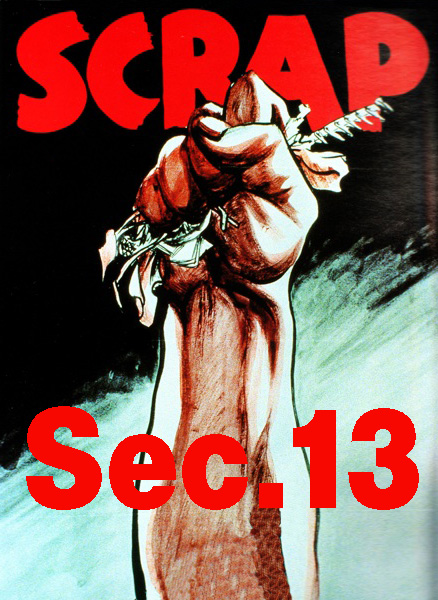
FREEDOM ALERT! Taxpayer Funded Canadian Anti- Hate Network Wants Return of Sec. 13 (Internet Censorship/Truthis No Defence)

Taxpayer Funded Canadian Anti- Hate Network Wants Return of Sec. 13

Sec. 13 of the Canadian Human Rights Act was inserted at the last minute, in 1977, on the request of Jewish lobby groups and the then-Deputy Attorney General of Ontario, to “get” one man, John Ross Taylor who was using a telephone answering machine with a recorded message to spread his views. This was in the late 1970s, before today’s Internet technology. Sec. 13 stated: “It is a discriminatory practice for a person or a group of persons acting in concert to communicate telephonically or to cause to be so communicated, repeatedly, in whole or in part by means of the facilities of a telecommunication undertaking within the legislative authority of Parliament, any matter that is likely to expose a person or persons to hatred or contempt by reason of the fact that that person or those persons are identifiable on the basis of a prohibited ground of discrimination.” These privileged groups included race, religion, sexual orientation or identity. Mr. Taylor and a number of others using telephone answering machines to spread their views were slapped with “cease and desist orders.” These had the force of a court order.

To broadcast the same or “similar” (whatever that is) messages was considered contempt and cold land you in jail. Happy Warrior John Ross Taylor, an honest and guileless man, was twice sentenced to a year in jail, the last time when he was 77 years of age.

By the  late 1990s, the Internet had replaced telephone answer machines. Sabina Citron, a bitter enemy of revisionist publisher Ernst Zundel, made a complaint against him about the Zundelsite, which was located in the U.S. and run by an American citizen, educator and novelist Ingrid Rimland (who would eventually become Mrs. Zundel). This was a hard fought case, which lasted from 1997 to 2002. CAFE was an intervenor. On the censorship side were a number of Jewish groups. The defence argued, inter alia, that the Internet was not “telephonic communication”, as the section was then worded. Bill C-36, an omnibus anti-terrorism law covering many things was brought in as a response to 9/11. It gave control of the Internet to the Canadian Human Rights Commission and clarified that it did cover the Internet.

Along came Richard Warman, an Ottawa lawyer and bitter enemy of free speech — he had earlier tried to get various venues for British author David Icke cancelled. Warman started filing a flurry of human rights complaints against various nationalist bloggers, historical revisionists and others. For a while he was even working for the Canadian Human Rights Commission
, in a way, drumming up business for them.

Most of his victims were poor and few could afford a lawyer. CAFE assisted a number of these victims (Terry Tremaine, Glen Bahr, Jessica Beaumont, Melissa Guille, and others, and intervened in the  Marc Lemire/Freedomsite case.

We witnessed a massacre. Along the way, it was ruled that truth was no defence, intent was no defence. No harm had to be proved. In one case, we proved that, prior to Warman’s complaint, only one person, anti-free speech offence hunter Richard Warman, had ever clicked on the offending comment. The wording of the Section “likely to expose” is very loose. What is “likely”? No evidence had to be presented that anyone actually saw the comments, believed them and started to hate a privileged minority. Hatred may be hard to define, but what about “contempt”? Contempt is a negative feeling toward a person.

As it turned out, ANY strong criticism of a privileged group, even if true or fair comment, could lower a person’s opinion of that group and, therefore, might “expose them to contempt.” We learned that there was no defence to a charge under Sec. 13. The anti-free speech complainants, the vast majority Warman’s, won in every case but one — a record only surpassed in North Korea. The press paid no attention to this bullzosing of freedom. Often, echoing the complainant they had demonized the victims as “neo-nazis” or “racists” or “White supremacists”.

Eventually, others decided to mimic the success of Jewish groups and Warman, who worked closely with them, to silence their critics. A group of Moslems, angry at Mark Steyn for his book on the Islamicization of Europe, which had been exerpted in Maclean’s made a Sec. 13 complaint against Maclean’s. Finally, the press paid attention and they learned that there basically was no defence to a charge and that the vast majority had been brought by one man.

Soon, religious groups began to pay attention. We had warned Real Women back in 1998 that having we their teeth on historical revisionists and immigration critics, the thought control freaks would move on to others — Christians who opposed abortion or the LGBTQ agenda. A groundswell of opposition arose to Sec. 13. A Conservative Party conference called for its repeal. A Conservative backbencher, Brian Storseth, introduced  a private member’s bill repealing Sec. 13, which passed in 2014.

Warman no longer has his favourite toy. The enemies of free speech have smarted ever since. Now, the Canadian Anti-Hate Network, on whose board sits Richard Warman and Bernie Farber, former CEO of the Canadian Jewish Congress and a decades-long advocate of censorship. Sadly this frenetically pro-censorship gropup has lucked into government money. Even worse, this summer they were the beneficiary of a $500,000 grant from the Bank of Montreal. [No, corporate Canada is no friend of free speech.]

Thus free speech supporters should be concerned by the following news from the Canadian Anti-Hate Network.:  “Earlier this month [December] we met with Heritage minister Steven Guilbeault and a number of social justice organizations to discuss legislation surrounding online hate. We argued that reinstating s. 13 is fundamental to successfully dealing with the problem. We were joined by numerous voices in support of these measures — the Mosaic Institute, the National Association of Friendship Centres, the Chinese Canadian National Council for Social Justice, and others — and we are committed to a coalition to realize a better solution for today.” The problem was views on the Internet dissenting from political correctness.

No injunction to save Christmas, but court action continues

No injunction to save Christmas, but court action continues

Dec 21st, 2020

EDMONTON: The Justice Centre is reviewing a ruling from the Alberta Court of Queen’s Bench, which denied a preliminary application for a temporary injunction to restore Charter rights and freedoms being denied by restrictions imposed by the Chief Medical Officer of Health (CMOH) and Alberta Government.

The full hearing of the Justice Centre’s application will take place sometime in 2021. The date has not been set yet. The Court will be asked to consider fully all of the various harms which lockdowns have inflicted, and are inflicting, on Albertans. The CMOH and other government officials will be required to answer questions under oath, and to provide evidence to justify the violation of Charter freedoms to move, travel, associate, assemble and worship.

In December, the Justice Centre filed a court challenge to Orders made by the CMOH, including an injunction application seeking a temporary suspension of certain lockdown measures until the Court fully considers the case. The Justice Centre is representing two churches and two individuals, alongside Rath & Company, who represents another individual.

Among other things, the Justice Centre argued that the Court should lift restrictions that effectively outlaw friends and family from gathering at each other’s homes to celebrate Christmas, and the public health order that prohibits outdoor hockey and other gatherings. Under this Order, grandparents cannot visit their grandchildren, and immediate family cannot be together if they do not live in the same household.

Since March 16, 2020, Alberta’s Chief Medical Officer of Health (CMOH) has pronounced 42 public health orders that have violated constitutionally-protected rights and freedoms as guaranteed by the Canadian Charter of Rights and Freedoms. At the heart of the case is a challenge to the constitutionality of Orders issued by one person without any consultation or review by the Alberta Legislature, contrary to the principles of democracy and the rule of law.

The latest CMOH Order declares illegal the celebration of Christmas among friends and family in a private home, restricts weddings and funerals to only 10 people, and completely prohibits all outdoor gatherings.

“On this application for a temporary injunction, the government was not required to demonstrate that its violation of Charter freedoms were justified. The fact the injunction was not granted does not mean the lockdown measures that violate people’s Charter rights are justified – that will be decided at the main hearing, to come in 2021,” states Justice Centre staff lawyer James Kitchen.

“The Court upheld the CMOH Orders simply by presuming that the Orders must be in the public interest. In regard to this application, the Court did not consider evidence as to whether the Orders actually are in the public interest or not. This, too, will be ruled on in 2021,” continues Mr. Kitchen.

“Dr. Deena Hinshaw swore and filed a cursory affidavit, with very little evidence in support of her opinions. Cross-examination prior to the injunction hearing was not possible, but will take place in 2021,” continues Mr. Kitchen.

“Justice Kirker agreed that Albertans are suffering irreparable harm – harm that cannot be remedied or compensated for – from the indoor and outdoor gathering restrictions imposed by the CMOH Order,” notes Mr. Kitchen.