To the CBC Ombudsman,
2026 June 23
Defamatory statements were made about Dr. Otto Schaefer during a recent CBC radio program, for which there was a complete lack of hard data and evidence. I am asking that the CBC make a formal retraction and a public apology for slander.
I happened to tune in to the tail end of the CBC radio program called IDEAS on May 12th, 2026. Imagine my surprise when I heard my father’s name Otto Schaefer being spoken, and then the shock when I realized that he was being smeared. I heard things being said about my father which I knew to be false and unfounded. As soon as the program finished, I searched online and found the show in the CBC radio archive for that day and was able to listen to the entire broadcast. It was called “How Canada forgot it once had a segregated health system”, and the host was Nahlah Ayed. The discussion revolved around a book written by the late Elaine Dewar called “Oblivious: Residential Schools, Segregated Hospitals, and the use of Indigenous People as Slaves of Race Science”. Elaine Dewar had been interviewed shortly before she died, and the voice of her daughter and others who attended the recent book launch (posthumously for the author) were heard as well.
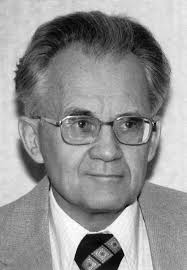
Otto Schaefer worked for many years at the Charles Camsell Hospital in Edmonton, and he was the founding Director of the Northern Medical Research Unit of the Department of National Health and Welfare Canada during the nineteen-sixties, seventies and eighties. He dedicated his life to the health and wellbeing of the aboriginal peoples of the north, in particular the Inuit. But because of my father’s country of origin – Germany ‒ and because of the time during which he attained his medical degree ‒ WW2 ‒ Elaine Dewar made assumptions about his motivation and about his goals, none of which she could verify. In her own words, all her red flags went up when she saw his name and learned from where and whence he came, because she was “a Jewish girl”. The host had introduced her as a Holocaust survivor one generation removed.
During the program the term “medical experiments” was used repeatedly, thus invoking rather sinister images. Conducting research on the health of the Inuit during a time of rapid changes in their lifestyle and nutrition is a very different thing from doing “medical experimentation”.
Elaine Dewar characterized Otto Schaefer’s research as “nonsense studies”. For example, she scoffed at his study of differing alcohol metabolic rates in different peoples. It just so happens that my father’s motivation to study this came after he found that the Whitehorse police were consistently releasing Caucasians from the “drunk tank” sooner than the Indians, after collecting the drunks off the streets the night before. (Presumably they were being protected from violence or from freezing to death in case they passed out on a cold winter night.) Schaefer complained to the police that they were being racist, always letting the White guys out first. So the Police Chief invited him, “Otto, please come tomorrow morning, and you make the determination whom to let out, and when.” Lo and behold, Otto found that the Whites were completely sober, but the Indians were still drunk in the morning. My father, having a curious mind and being very scientifically oriented, then set out to determine why this was so.
By coincidence some years later, a Swedish acquaintance of mine wrote to ask me if there was any connection between myself and Dr. Otto Schaefer, and I proudly told him that I was his daughter. This man had come across Schaefer’s ground-breaking research which explained the differences in metabolic processes between races on account of different enzymes which were either present or not. It seems to me this information is actually quite important. But according to Elaine Dewar, this was a “nonsense study”. And she called it racist. Ironically, it was my father’s concern about police racism which led him to conduct the study.
Elaine Dewar also spoke about the fact that Schaefer was the organizer of “so-called consent”, again, mocking him. She said that whichever language he was speaking [he spoke German, English, Inuktitut, and French], “everyone said it all sounded German anyway, so nobody could understand him.” Therefore she concluded that their informed consent was meaningless.
I can surmise wherefrom Dewar got this idea. It so happens that our family donated all of Otto Schaefer’s papers, books, slides, and journals to the University of Alberta. We felt that his important life’s work would be of greater use there than in one of his children’s basements. [Would we do that if we had any doubt about his impeccable character and integrity?] Elaine Dewar had access to all those donated materials. So, what might she have found that led her to the above mockery?
My father was a very humble man, and he liked to tell a self-deprecating humorous story about one of his lectures which he had delivered in French. He had started his talk with an apology for his imperfect French. A colleague in the audience quipped in a joking manner, “that’s okay Otto, it all sounds German anyway!” and everyone laughed. My father kept detailed journals and I imagine this was in one of those journals which Dewar had read.
Otto worked very hard at learning Inuktitut, the native language of the Inuit. He also made use of interpreters, to be certain of clear communication. The very doctor who was responsible for and insistent upon the informed consent protocol was now being slandered by Elaine Dewar as having done exactly the opposite. She had no hard data for her defamation of a much-loved and respected doctor. I say much-loved, because I was astonished and moved by the volume of tributes and letters we received from the north, from the Inuit people themselves, after his death in 2009. It was clear that they dearly loved my father.
Otto Schaefer quarrelled many times with his boss, the Deputy Minister for Northern and Indian Affairs, because he was constantly advocating for the Inuit. He was a man of integrity and compassion. He had great respect for the Native people and their ability to survive and thrive in such a harsh environment. When he saw injustice, he sought to rectify the situation.
In 2021 there were rumours and allegations about medical experiments and bodies buried on the grounds of the Charles Camsell hospital. The owner of the former hospital conducted an investigation. He excavated the grounds and found nothing. However, it leaves me to wonder if Dewar was still affected by those false rumours when she made her unsubstantiated remarks about “experiments”.
The Canadian government apology to the Inuit just over a year-and-a-half ago for the alleged slaughter of a thousand sled dogs during the 1950s and 60s has relevance to this current complaint. I wrote a letter at that time to the CBC but never received a response. Here is the link to the article I published, which includes my letter: https://freespeechmonika.com/another-canadian-apology-for-alleged-wrongs-the-slaughter-of-inuit-sled-dogs/
The obituary which appeared in the International Journal of Circumpolar Health is far more indicative of my father’s work and character, than the speculative, biased and prejudiced characterizations made by Elaine Dewar. https://www.tandfonline.com/doi/10.3402/ijch.v68i5.17600?url_ver=Z39.88-2003&rfr_id=ori:rid:crossref.org&rfr_dat=cr_pub%20%200pubmed
The IDEAS program “How Canada forgot it once had a segregated health system” has put a blot on the reputation of my father. That stain must be removed. The CBC must publicly retract the defamatory statements made on that program, and make a public apology for having allowed all those unsubstantiated statements and accusations against the late Dr. Otto Schaefer.
I look forward to a positive response about this serious matter.
Sincerely,
Monika Schaefer
P.O. Box 516
McBride, BC V0J 2E0
250-569-7024