Josh Dehaas: There was no sedition, Mr. Carney:
Emergencies Act appeal to the Supreme Court shows Mark Carney is not so different from Justin Trudeau after all
6
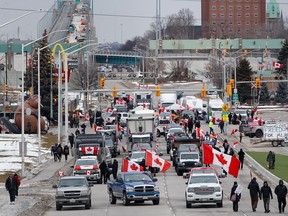
There was never any question what Prime Minister Mark Carney thought about the Freedom Convoy protesters in Ottawa. In a Globe and Mail op-ed published on Feb. 7, 2022, the “Ottawa resident and former governor of the Bank of Canada and the Bank of England” wrote that the convoy was “terrorizing” people, that women were being forced to “flee abuse,” and that the elderly were “afraid to venture outside their homes.” He accused the organizers of “blatant treachery” and “sedition,” and proposed the government respond by “choking off the money.”
A week later, Prime Minister Justin Trudeau followed Carney’s advice, invoking the Emergencies Act for the first time in history to create shocking regulations that banned funding of or travelling to protests and ordered financial institutions to search for and seize bank accounts of suspects without warrants. This authoritarian overreach echoed around the world.
Still, I held out hope that the findings by a Federal Court judge and three judges of the Federal Court of Appeal that the invocation of the Act was unlawful and that the regulations made under it violated Charter rights would give Carney pause. Perhaps he believes in Charter rights more than his predecessor? If not, I thought maybe he would stand down from an appeal to emphasize a break with his predecessor. Turns out I was foolish to have been hopeful. In an application for leave to the Supreme Court of Canada that landed in my inbox on the last possible day, I learned that Carney is doubling-down on Trudeau’s illegal invocation.
In their application materials, the federal government makes the same basic argument they made before: some Freedom Convoy supporters had blockaded border crossings, and a handful of individuals near the Coutts, Alta., border blockade were found with a cache of firearms, so it was reasonable for Trudeau to take unprecedented measures to shut down freedom of expression and invade the privacy of all Freedom Convoy supporters nationwide.
As alarming as the blockades and the Coutts cache were, they were nothing police couldn’t handle using the Criminal Code. In fact, they had made their arrests and ended the border blockades by the time Trudeau dropped the bomb. As we, at the Canadian Constitution Foundation, explained in the federal courts — with agreement from all four judges who looked at the question — there was no justification offered by Trudeau for declaring a national emergency, suspending the right to support and travel to certain kinds of protests, and temporarily tossing away the ancient right to security against unreasonable searches by freezing bank accounts without warrants.
In their leave application, the government argues that the Federal Court of Appeal decision “hamstrings governments’ ability to respond effectively to future crises,” but this is simply not true. The Emergencies Act is explicit that governments can take extraordinary measures to deal with situations that pose a serious risk of violence and that cannot be dealt with using existing laws.
We must not forget that the Emergencies Act was Parliament’s genuinely noble response to previous prime ministers who had abused their power in times of crisis, including interning Japanese Canadians during the Second World War and denying habeas corpus to innocent Quebeckers during the 1970 October Crisis. It was designed to prevent prime ministers from over-reacting and suspending rights except when genuinely warranted. Like any law, it can be amended if Parliament sees fit. But why bother with democracy when you can roll the dice in the courts instead, I suppose? It turns out Carney is not so different from Trudeau after all. (National Post, March 18, 2026)
Josh Dehaas is Counsel with the Canadian Constitution Foundation, a legal charity that challenged the invocation of the Emergencies Act and the rules made under it in the Federal Court and Federal Court of Appeal.