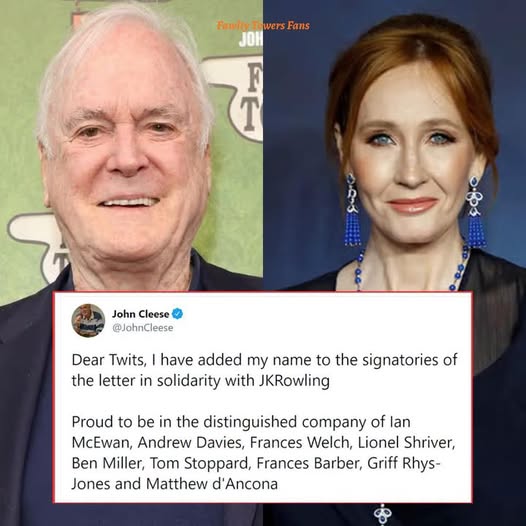
John Cleese has spent a lifetime making a career out of saying exactly what he thinks, regardless of who might be offended. It turns out, that wasn’t just an act for the cameras.
In recent years, Cleese has been vocal about his disdain for what he sees as the stifling of free speech and the rise of cancel culture. This isn’t a new development for the man who co-wrote “Life of Brian,” a film so controversial it was banned in several countries. Cleese has always believed that the right to offend is fundamental to comedy and to a free society.
When he added his name to a letter in solidarity with JK Rowling, he wasn’t just supporting a fellow author; he was planting his flag in a much larger cultural battle. The letter, signed by numerous high-profile figures in the arts and media, pushed back against the intense criticism Rowling faced for her views on gender identity. For Cleese, the issue wasn’t necessarily about the specifics of the debate, but about the right to have the debate in the first place without facing professional ruin.
It’s a stance that perfectly aligns with the man who created Basil Fawlty — a character defined by his absolute, unwavering certainty that he is right, and his utter contempt for anyone who disagrees. The difference is that while Basil’s rage was always played for laughs, Cleese’s real-world convictions are deadly serious.
Do you think comedians have a responsibility to speak out on cultural issues, or should they stick to making us laugh